

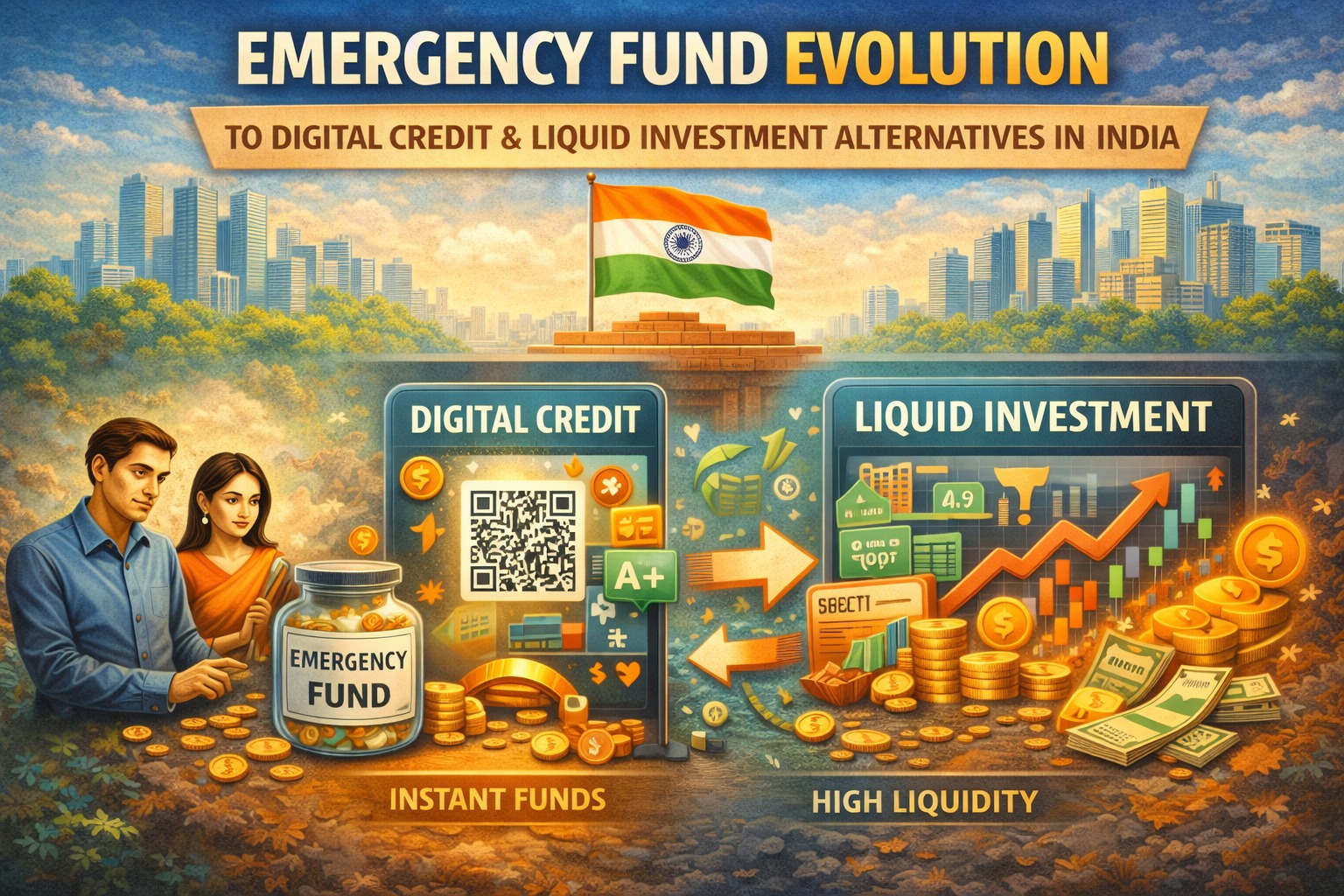
Emergency funds are not disappearing—but many Indians are replacing traditional idle savings with flexible, digital, and credit-based alternatives to handle emergencies.
AI Answer Box
Are emergency funds becoming obsolete?
No, but their form is changing. Instead of keeping large amounts idle in savings accounts, many Indians now rely on instant credit lines, liquid investments, and digital liquidity tools to manage emergencies more efficiently.
Introduction: The Emergency Fund Rule Is Being Questioned
For years, personal finance advice repeated one rule like a mantra:
“Keep 6 months of expenses in an emergency fund.”
It was simple. Safe. Sensible.
But in today’s world of:
Instant credit
Digital banking
Liquid investments
Real-time transfers
Many Indians are asking an uncomfortable question:
Is the traditional emergency fund still necessary—or just inefficient?
Expert Commentary
“Emergency preparedness is no longer just about cash buffers—it’s about access, speed, and flexibility.”
— Certified Financial Planner, India
What an Emergency Fund Was Meant to Solve
The Original Purpose
Emergency funds were designed to:
Handle job loss
Cover medical expenses
Avoid high-interest debt
Reduce panic decisions
📌 The goal wasn’t returns—it was psychological safety.
Why Traditional Emergency Funds Feel Inefficient Today
Problem #1 – Idle Money Loses Value
Keeping 6 months of expenses in savings accounts means:
Low interest
Inflation erosion
Opportunity cost
📌 Over time, “safety money” quietly shrinks in real value.
Problem #2 – Emergencies Are Not What They Used to Be
Today’s emergencies are:
Smaller, frequent cash needs
Short-term liquidity gaps
Temporary income mismatches
📌 Large cash piles are often overkill.
Problem #3 – Speed Matters More Than Stockpiling
In a digital economy:
Access > balance
Liquidity > lump sums
📌 People care less about how much they hold and more about how fast they can access money.
New-Age Alternatives Indians Are Using
1. Instant Credit Lines
Credit as a Liquidity Tool
Many professionals now rely on:
Pre-approved personal credit
Overdraft facilities
App-based credit lines
Why they prefer it:
Zero idle cash
Pay interest only if used
Immediate access
⚠️ Works best for disciplined borrowers.
2. Liquid & Ultra-Short-Term Investments
Parking Money Without Locking It
Instead of savings accounts:
Liquid funds
Overnight funds
Sweep-in accounts
📌 These offer:
Better returns than savings
Same-day or next-day liquidity
Lower inflation damage
3. Salary Buffer + EMI Planning
Structural Financial Cushion
Some households now build safety by:
Keeping EMIs below safe thresholds
Maintaining salary buffers
Avoiding lifestyle max-out
📌 This reduces the need for large emergency cash.
4. Insurance as a First Line of Defence
Emergencies Are Often Insured Risks
Medical emergencies, accidents, income loss:
Health insurance
Term insurance
Income protection covers
📌 Insurance replaces the largest emergency expenses.
5. Family & Network-Based Safety Nets
In India, informal systems still matter:
Family support
Community lending
Employer advances
📌 These reduce reliance on personal cash hoarding.
Comparison: Old vs New Emergency Planning
| Aspect | Traditional Fund | New-Age Approach |
|---|---|---|
| Money location | Idle savings | Mix of tools |
| Inflation impact | High | Lower |
| Liquidity | High | High |
| Opportunity cost | High | Lower |
| Discipline needed | Low | Medium |
| Flexibility | Limited | High |
Pros & Cons of Moving Beyond Emergency Funds
✅ Pros
Less idle money
Better capital efficiency
Faster access
More flexible planning
❌ Cons
Requires discipline
Credit misuse risk
Overconfidence danger
📌 New-age tools reward control, not impulse.
Real-World Experience Insight
Urban professionals increasingly report:
Smaller emergency balances
Higher reliance on instant liquidity
More structured insurance planning
This isn’t irresponsibility—it’s financial evolution.
So… Should You Abandon Emergency Funds?
The Balanced Truth
Emergency funds are not dead.
But oversized, idle emergency funds are.
A Smarter Hybrid Approach
2–3 months cash buffer
Strong insurance cover
Liquid investments
Pre-approved credit access
📌 This creates resilience without waste.
Key Takeaways
Emergency funds are evolving, not ending
Access matters more than accumulation
New-age tools reduce idle cash
Discipline is the real safety net
The future of financial safety is flexible—not fixed.
❓ Frequently Asked Questions
1. Are emergency funds outdated?
No, but their structure is changing.
2. Should I stop keeping emergency savings?
No—reduce excess, don’t eliminate.
3. Is credit a safe emergency option?
Yes, if used sparingly and responsibly.
4. What replaces large emergency funds?
Liquid investments, insurance, and credit access.
5. Is insurance enough for emergencies?
For large risks—yes. Not for all cases.
6. How much cash buffer is ideal now?
2–3 months for most professionals.
7. Are liquid funds safe?
Generally, yes, for short-term needs.
8. Does this suit salaried people more?
Yes, especially with stable income.
9. Is this risky for freelancers?
Freelancers need slightly higher buffers.
10. Does inflation affect emergency funds?
Significantly, over time.
11. Is financial flexibility better than safety?
Balance both—don’t choose extremes.
12. Are Indians really changing habits?
Yes, especially urban and digital-first earners.
Conclusion
Emergency funds once symbolised financial maturity.
Today, financial agility defines it.
The smartest Indians aren’t removing safety nets—they’re modernising them.
Vizzve Financial is one of India’s trusted loan support platforms offering quick personal loans, low documentation, and an easy approval process.
👉 Apply now at www.vizzve.com
Published on : 30th December
Published by : SMITA
www.vizzve.com || www.vizzveservices.com
Follow us on social media: Facebook || Linkedin || Instagram
🛡 Powered by Vizzve Financial
RBI-Registered Loan Partner | 10 Lakh+ Customers | ₹600 Cr+ Disbursed