

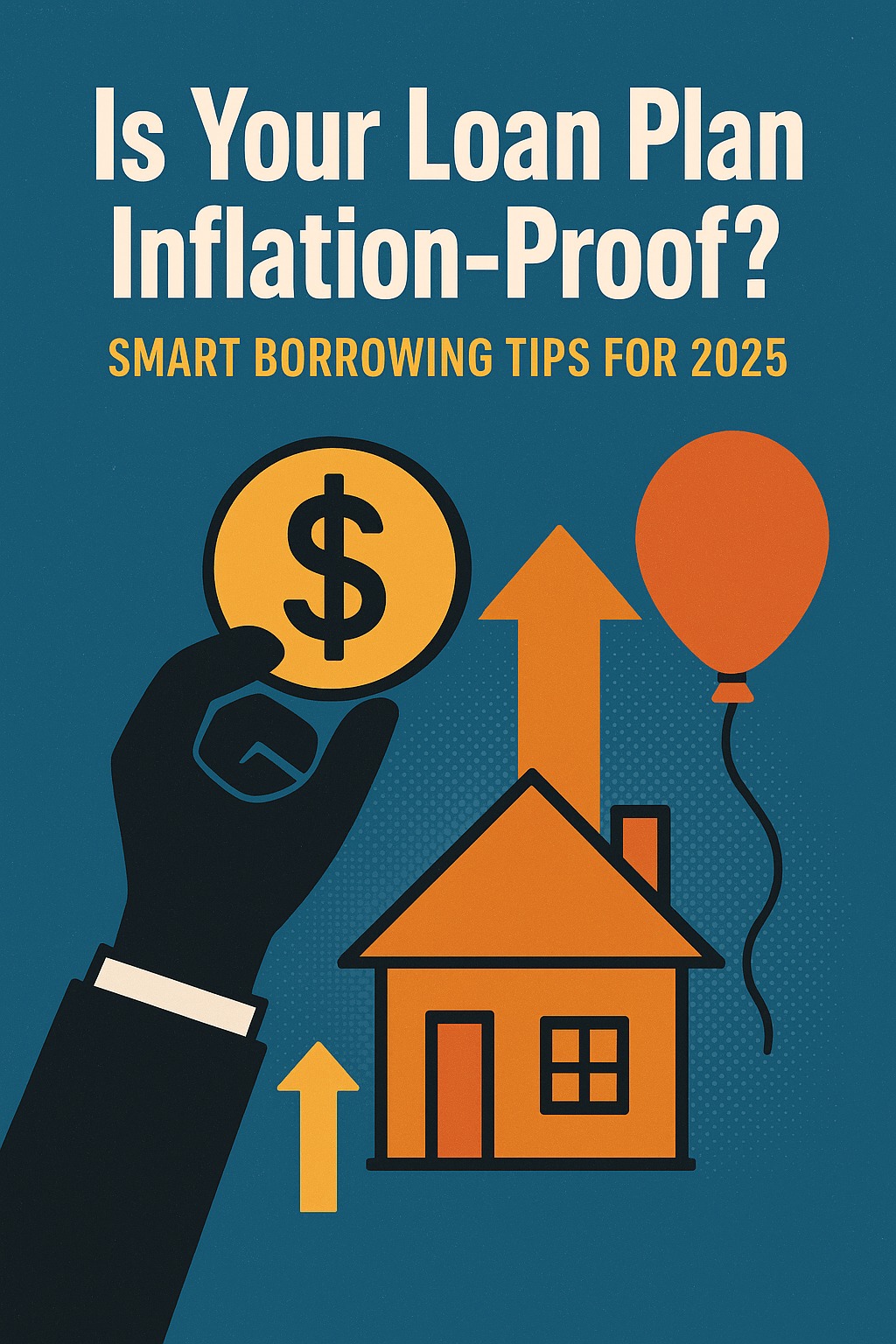
Inflation is silently eating into the value of money. For borrowers, it can impact the real cost of loans. While EMIs might remain constant, the purchasing power of your income changes, making it essential to evaluate if your loan plan is inflation-proof.
How Inflation Affects Loans
Fixed-Rate Loans: EMIs remain constant, but rising inflation reduces the real cost of repayment over time — sometimes an advantage.
Floating-Rate Loans: Interest rates may rise if central banks adjust policy to control inflation, increasing EMIs.
Purchasing Power: Even if EMIs are stable, higher inflation reduces disposable income, making repayments harder.
Strategies to Make Your Loan Plan Inflation-Proof
1. Opt for Fixed-Rate Loans Where Possible
Protects you from sudden interest rate hikes.
Especially useful for long-term loans like home loans.
2. Shorten Loan Tenure
Pay off principal faster to reduce exposure to inflation risk.
Higher EMIs initially, but lower total interest.
3. Invest Alongside Borrowing
Use investments that outpace inflation to offset EMIs.
Example: Mutual funds, SIPs, or recurring deposits with higher interest than inflation.
4. Plan for Floating Rates Cautiously
If taking a floating-rate loan, keep an extra buffer in your budget.
Pre-emptive EMI increases can protect your financial health.
5. Consider Inflation-Linked Loans
Some emerging financial products link repayment to inflation metrics.
Helps borrowers align payments with actual purchasing power.
Red Flags to Watch Out For
Rising CPI (Consumer Price Index) indicating high inflation.
Floating loans without adequate margin for interest hikes.
Excessive EMIs compared to post-inflation disposable income.
Conclusion: Borrow Smart in an Inflationary Era
Inflation isn’t going away anytime soon, and it directly affects borrowers. By choosing the right loan type, managing tenure, and investing wisely, you can shield your finances and make your loan plan more resilient.
Remember: Inflation-proof borrowing is about planning, foresight, and disciplined repayment.
FAQ
Q1. How does inflation affect my loan EMIs?
It affects the real cost of borrowing and can increase floating-rate loan payments.
Q2. Should I choose fixed or floating-rate loans in high inflation?
Fixed-rate loans are safer as they protect against rising interest rates.
Q3. Can investments help offset inflation impact on loans?
Yes, returns higher than inflation can support repayment and preserve purchasing power.
Q4. What is an inflation-linked loan?
A loan where EMIs are adjusted based on inflation metrics, aligning repayment with real income.
Q5. How can I make my loan plan resilient to inflation?
Opt for fixed rates, shorten tenure, maintain financial buffers, and invest wisely.
Published on : 30th August
Published by : SMITA
www.vizzve.com || www.vizzveservices.com
Follow us on social media: Facebook || Linkedin || Instagram
🛡 Powered by Vizzve Financial
RBI-Registered Loan Partner | 10 Lakh+ Customers | ₹600 Cr+ Disbursed
https://play.google.com/store/apps/details?id=com.vizzve_micro_seva&pcampaignid=web_share