

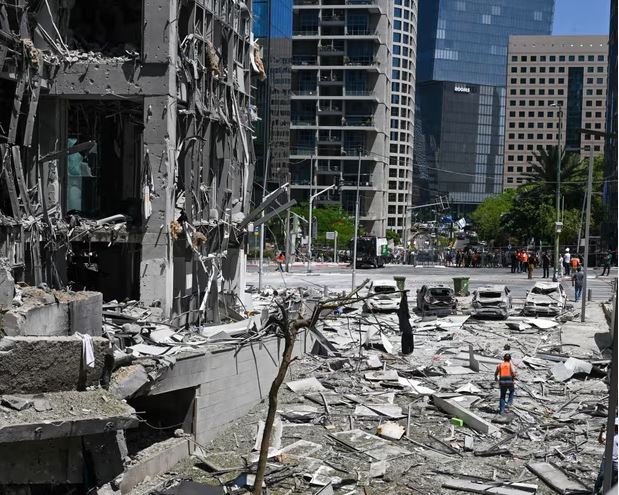
Israel’s Attack Has Exposed Iran’s Lack of Firepower – But Conflict Could Yet Turn in Tehran’s Favour
The latest Israeli airstrikes on Iranian-linked targets have not only escalated regional tensions but also laid bare critical deficiencies in Iran’s military capabilities. Despite Tehran’s aggressive rhetoric and wide-reaching proxy network, its direct combat response remains constrained by outdated technology, limited aerial defense, and economic sanctions that have hampered military modernization.
Yet, experts warn that writing Iran off too soon could be a strategic miscalculation.
A Tactical Blow, Not a Strategic Defeat
Israel’s precision strikes, which reportedly disabled several key weapons facilities and intelligence assets, underscore its superior command over airspace and intelligence gathering. These attacks dealt a significant tactical blow to Iran, highlighting vulnerabilities in its missile defense systems and coordination among its Revolutionary Guard units.
However, Iran’s reaction has been notably restrained. Rather than launch a full-scale counterstrike, Tehran has leaned on diplomatic channels, regional allies, and cyber operations to signal that its response may come in unconventional or delayed forms.
Tehran’s Strategic Depth Lies Beyond Firepower
While Iran’s direct military arsenal may trail behind Israel’s, it wields influence through asymmetric strategies. Tehran continues to leverage its proxy groups in Lebanon, Syria, Iraq, and Yemen to destabilize its adversaries. It has also invested heavily in cyber capabilities and drone warfare, tools that can be harder to detect or preempt.
Moreover, Iran’s regional narrative as a counterweight to Western influence helps it retain loyal non-state actors, public sympathy, and, in some quarters, diplomatic cover.
Shifting Regional and Global Alignments
Iran may also find support through shifting international alignments. As global powers like Russia and China deepen ties with Tehran for economic and geopolitical reasons, Iran gains a buffer against complete isolation. Additionally, discontent over Israel's policies in Gaza and the West Bank may give Tehran a propaganda edge in the broader Islamic world.
The Conflict is Far From Decided
While Israel currently holds the upper hand militarily, the dynamics of Middle Eastern conflicts are rarely settled by firepower alone. With regional loyalties, economic leverage, and hybrid warfare capabilities at play, Iran may still find ways to recalibrate the battlefield — politically, economically, and militarily.
FAQs: Israel–Iran Conflict and Firepower Dynamics
Q1. What prompted the latest Israeli attack on Iran-linked targets?
Israel targeted Iranian military and intelligence assets in response to perceived security threats and Tehran’s growing influence in the region.
Q2. What did the attacks reveal about Iran’s military?
The strikes exposed key weaknesses in Iran’s aerial defense systems, response coordination, and its ability to counter high-tech strikes.
Q3. How has Iran responded?
Iran has not launched a major military counterattack but is using diplomatic pressure, cyber tactics, and regional proxies to respond indirectly.
Q4. Does Iran have allies that could support it in future conflicts?
Yes. Iran maintains strong ties with non-state actors in Lebanon, Syria, Yemen, and also has growing support from Russia and China on the global stage.
Q5. Can Iran turn the conflict in its favour despite military disadvantages?
Yes, through asymmetric warfare, regional influence, cyber capabilities, and global alliances, Iran can reshape the conflict beyond traditional military means.
Published on: June 20, 2025
Uploaded by: Pankaj
www.vizzve.com || www.vizzveservices.com
Follow us on social media: Facebook || Linkedin || Instagram
🛡 Powered by Vizzve Financial
RBI-Registered Loan Partner | 10 Lakh+ Customers | ₹600 Cr+ Disbursed