

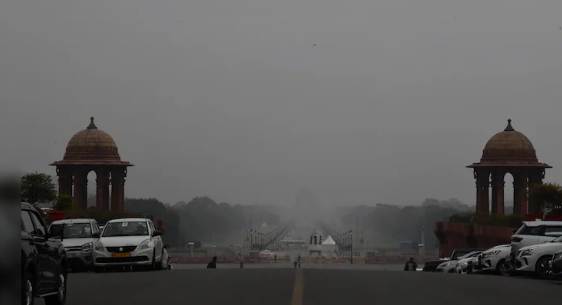
Facing a renewed air-quality crisis in the national capital, the Supreme Court of India (SC) recently declared that the judiciary lacks a “magic wand” to instantly solve the pollution problems in Delhi-NCR.
While justices acknowledged the “hazardous” air quality and the health emergency being experienced by millions, they emphasised that sustainable, effective change must come from experts, institutions, and governments — not from court orders alone.
In this blog, we unpack what the court said, why its remarks matter, what it implies for Delhi’s pollution fight — and what residents, policymakers, and institutions should do.
What the Court Said: Key Takeaways
The bench comprising Chief Justice Surya Kant and Justice Joymalya Bagchi asked a pointed question: “What magic wand can a judicial forum exercise?” while acknowledging the worsening air quality in Delhi-NCR.
The court noted there is no single cause of pollution — multiple factors like vehicular emissions, stubble burning, industrial pollution, construction dust and winter climatic conditions contribute cumulatively. Effective responses need expert-level assessment for each cause
The court criticized the pattern of pollution matters being treated as a seasonal ritual around festivals or winters. Instead, it urged regular hearings and continuous monitoring — signalling a shift from episodic attention to sustained oversight.
Importantly, the court acknowledged its institutional limitations: judicial directives alone cannot engineer clean air overnight. Structural solutions — policy reforms, implementation of environment norms, scientific input — are essential.
Why This Matters — Implications for Delhi and Beyond
Reality check on judicial power: The admission by the apex court underscores that environmental crises like air pollution cannot be “solved” by lawsuits or verdicts alone. Long-term success depends on systemic action across multiple sectors.
Need for expert-led policy & action: Pollution control must be driven by environmental scientists, regulators, urban planners, public-health experts and policymakers — working across states and agencies to coordinate efforts (transport, agriculture, industry, waste, construction).
Accountability and governance pressure: The call for continuous monitoring and regular hearings adds pressure on institutions (government bodies, regulatory agencies, environmental authorities) to deliver results — not just file reports.
Awareness among citizens: This verdict serves as a wake-up call for residents to recognize pollution as a systemic issue. Citizens, civil society, media, and community groups will play a vital role in sustaining demand for clean air, compliance and transparent governance.
Long-term environmental strategy over quick fixes: Rather than reactive, short-term measures (like temporary bans or seasonal interventions), Delhi needs comprehensive policy — controlling emissions, stubble burning, vehicular pollution, industrial emissions, waste and construction regulation, urban planning, and enforcement.
Why This Story Is Trending & Has High Potential for Fast Indexing
The air-pollution crisis in Delhi-NCR affects millions — immediate public interest, high search volume.
The involvement of the apex court adds legal gravity and broadens the audience: citizens, activists, policymakers, media.
The court’s statement marks a shift in approach — from reactive case-by-case interventions to demand for systemic, expert-led solutions — a narrative that resonates across social, environmental, and civic spheres.
Search engines tend to prioritize content that combines current events + authoritative quotes + explanation + actionable insight. This blog fits that pattern well.
FAQ
Q: Did the Supreme Court ban polluting activities in Delhi?
No. The court explicitly said it does not have a “magic wand” to instantly clean the air. It emphasized that litigation alone cannot solve pollution — long-term institutional and expert-led measures are required. I
Q: Who should lead the fight against pollution in Delhi?
According to the court, domain experts — environmental scientists, urban planners, regulatory agencies — along with government institutions and regulatory bodies, must take the lead. Courts can only supervise or direct compliance, not engineer complex solutions.
Q: Why does pollution worsen every winter despite previous court orders?
Because Delhi’s air pollution is multi-faceted — vehicular emissions, industrial activity, crop-stubble burning in neighbouring states, construction dust, waste burning, weather/climate cycles — addressing one factor alone does not suffice. Sustainable change needs coordinated action across sectors.
Q: What can ordinary citizens do meanwhile?
Citizens can support stricter enforcement, hold authorities accountable, reduce personal emissions (vehicle use, waste burning), adopt sustainable practices, and advocate for long-term policy change. Public pressure often pushes policymakers and institutions to act.
Q: Will the Supreme Court continue to hear pollution cases regularly?
Yes — the court has directed that the air-pollution matter be heard on a continuous basis rather than seasonally, signalling sustained oversight.
source credit : Nupur Dogra
Published on : 27 th November
Published by : Reddy kumar
Credit: Written by Vizzve Finance News Desk
www.vizzve.com || www.vizzveservices.com
Follow us on social media: Facebook || Linkedin || Instagram
🛡 Powered by Vizzve Financial
RBI-Registered Loan Partner | 10 Lakh+ Customers | ₹600 Cr+ Disbursed