

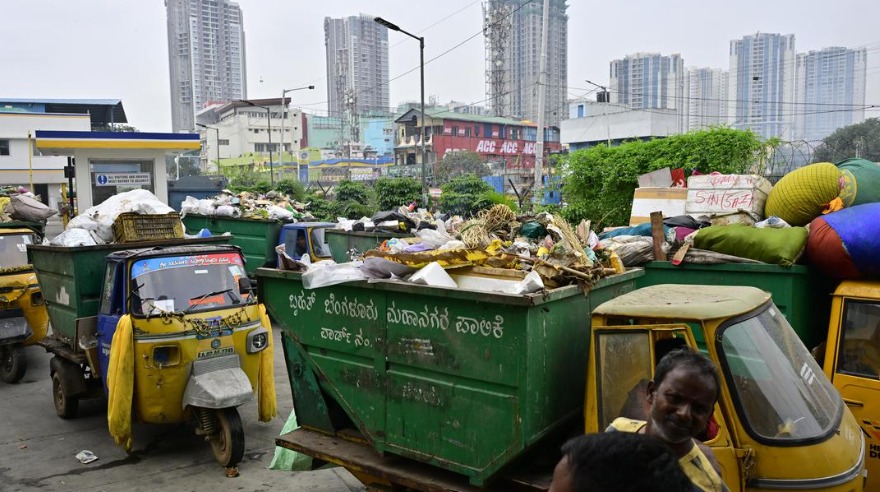
The Karnataka High Court on Friday permitted the state government to proceed with its much-delayed Bengaluru garbage tender, paving the way for a new solid waste management system in India’s technology capital.
In a significant move, the court also directed authorities to develop a technology-driven monitoring platform to ensure transparency, accountability, and efficiency in waste collection and processing across the city.
About the Case
The decision came in response to petitions challenging the Bruhat Bengaluru Mahanagara Palike (BBMP)’s process of inviting tenders for garbage collection and transportation contracts.
Several waste management contractors had questioned the tender conditions, alleging lack of transparency and favoritism.
After reviewing the matter, the High Court dismissed the petitions, allowing the government to move ahead with the new tenders under specific monitoring and compliance conditions.
Court’s Directions
A division bench of the Karnataka High Court emphasized that urban waste management requires both operational oversight and technological intervention.
The court directed the BBMP and the Urban Development Department to:
Develop a centralized tech-based platform for real-time waste tracking.
Ensure data integration from garbage collection vehicles, segregation points, and processing units.
Enable public access dashboards showing ward-level collection metrics.
Maintain vendor performance records and geo-tag waste pickup operations.
Why This Matters for Bengaluru
Bengaluru generates nearly 6,500 tonnes of solid waste per day, and waste management remains one of the city’s most persistent civic challenges.
The new order aims to:
Improve accountability in garbage collection contracts.
Eliminate manual data entry and corruption in waste handling.
Ensure timely waste segregation and recycling.
Promote sustainable waste disposal with traceability.
Environmentalists have welcomed the court’s direction for a digital waste management platform, calling it a “game changer” for urban cleanliness.
Government’s Response
Officials from the Karnataka Urban Development Department said that the new tender process will focus on ward-level efficiency and private sector participation.
A senior BBMP officer confirmed that the civic body has already begun exploring GPS-enabled waste collection vehicles and AI-based monitoring tools for real-time reporting.
“We are committed to using technology to make Bengaluru cleaner and more accountable,” said the official, adding that work on the digital platform will begin immediately.
Bengaluru’s Long Battle with Waste
Bengaluru has faced recurring issues with waste collection, segregation, and landfill overflows, prompting court interventions over the years.
Previous efforts to privatize or decentralize garbage handling have often been hindered by contract disputes and coordination failures.
With this court clearance, BBMP is expected to finalize new contractors for collection, transportation, and processing within the coming months.
Summary: What the Karnataka HC Ordered
| Key Aspect | Details |
|---|---|
| Court | Karnataka High Court |
| Issue | BBMP garbage collection and transportation tender |
| Verdict | State allowed to proceed with tender |
| Directive | Creation of tech-based waste management and tracking platform |
| Objective | Transparency, real-time monitoring, and accountability in waste management |
Conclusion
The Karnataka High Court’s decision marks a crucial step toward modernizing Bengaluru’s waste management system.
By emphasizing a tech-enabled governance model, the order could redefine how India’s urban centers approach civic services in the era of smart cities and sustainable urban living.
If implemented effectively, this move could help Bengaluru move closer to becoming a cleaner, data-driven, and more transparent metropolis.
FAQs:
Q1. What did the Karnataka High Court decide about Bengaluru’s garbage tender?
The court allowed the state government to proceed with the BBMP garbage collection tender, dismissing petitions that had challenged it.
Q2. What did the court direct regarding waste management?
It ordered the creation of a technology-based platform to track waste collection, segregation, and disposal in real time.
Q3. Why was the tender challenged in court?
Some contractors alleged bias and irregularities in the tender process and sought judicial intervention.
Q4. How will the tech-based system work?
The system will use GPS tracking, data dashboards, and digital logs to monitor garbage trucks, collection schedules, and processing units.
Q5. What’s the daily waste generation in Bengaluru?
The city generates around 6,500 tonnes of solid waste per day, making efficient management a major civic concern.
Published on : 8th November
Published by : SMITA
www.vizzve.com || www.vizzveservices.com
Follow us on social media: Facebook || Linkedin || Instagram
🛡 Powered by Vizzve Financial
RBI-Registered Loan Partner | 10 Lakh+ Customers | ₹600 Cr+ Disbursed
Source Credit : This article is based on a report by Express News Service, published in The Indian Express.