

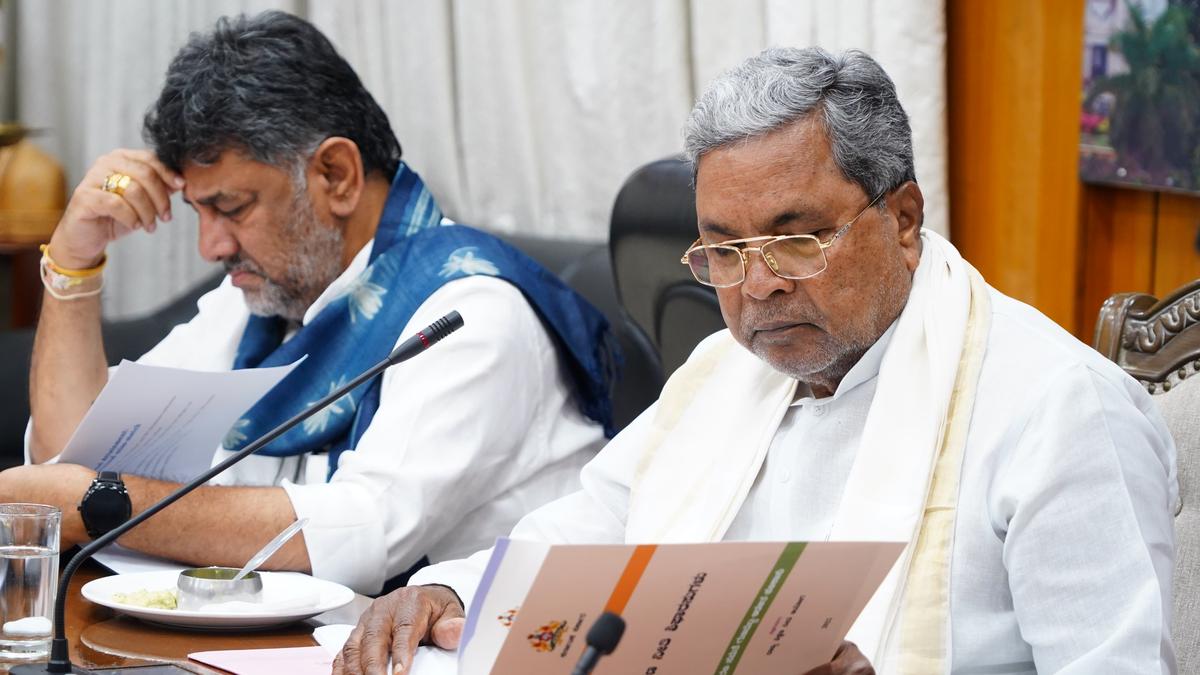
KARNATAKA SEP PANEL RECOMMENDS TWO-LANGUAGE POLICY,
KANNADA/MOTHER TONGUE AS MEDIUM OF INSTRUCTION
Key Highlights of the Karnataka SEP Panel Recommendations
The Karnataka State Education Policy (SEP) Commission, chaired by former UGC Chairman Prof. Sukhadeo Thorat, has submitted a comprehensive report advocating for significant reforms in the state's education system, with a focus on regional language and linguistic inclusivity:
A two-language policy is proposed for all school boards comprising Kannada or the mother tongue along with English, moving away from the National Education Policy's (NEP) three-language formula.
Kannada or the mother tongue should be the medium of instruction at least until Class 5, and preferably extended up to Class 12.
The panel emphasizes strengthening bilingual teaching methods by recommending specialized teacher training and proposing a dedicated language teaching centre.
The SEP commission's model suggests restructuring schooling phases into a 2+8+4 pattern (2 years pre-primary, 8 years primary, 4 years secondary) differing from the NEP's 5+3+3+4 model.
It recommends expanding the Right to Education (RTE) Act coverage from ages 6–14 to 4–18 years to include pre-primary and higher secondary education.
The report also calls for reduced reliance on NCERT textbooks in favor of a state-specific comprehensive curriculum (CCSE) that highlights Karnataka’s cultural and linguistic heritage.
Additional measures include forming a separate regulatory authority for private schools, ending contract/guest teachers’ hiring in government schools, and improving government schools to the quality level of Kendriya Vidyalayas.
Policy Goals and Vision
The SEP panel aims to create an education system that is culturally grounded, equitable, and regionally autonomous, ensuring:
Promotion of Kannada and mother tongues to preserve linguistic heritage.
Improved educational access and quality through localized and relevant curricula.
Inclusivity and support for diverse learners, including migrant children.
Constitutional value education and strengthening of civic responsibility through schooling.
The recommendations seek to affirm Karnataka’s educational independence and align policy with the state’s linguistic demographics and developmental realities.
FREQUENTLY ASKED QUESTIONS (FAQ)
Q1: What is the two-language policy recommended by Karnataka SEP panel?
The policy advocates for Kannada or the mother tongue alongside English as the two main languages taught in schools, replacing the NEP’s three-language formula.
Q2: Up to which class does the SEP panel suggest Kannada/mother tongue as medium of instruction?
Kannada or the mother tongue should be the medium of instruction at least up to Class 5, with preference to extend it up to Class 12.
Q3: How does this policy differ from the National Education Policy (NEP)?
Unlike NEP’s three-language approach, Karnataka’s policy promotes a two-language formula, focusing strongly on regional language preference.
Q4: What educational restructuring does the SEP propose?
A 2+8+4 schooling pattern is proposed: 2 years pre-primary, 8 years primary, and 4 years secondary education.
Q5: Is there any change suggested for the Right to Education (RTE) Act coverage?
Yes, the panel suggests expanding RTE from ages 6-14 years to 4-18 years to cover early childhood and higher secondary education.
Q6: What changes are recommended for school curricula?
The SEP panel recommends developing a comprehensive state curriculum, reducing dependence on NCERT textbooks, and localizing content to Karnataka’s culture and language.
Q7: How will teacher training be addressed under this policy?
Teachers will receive training in bilingual education methodologies, and a specialized language teaching centre is proposed.
Published on: August 9, 2025
Published by: PAVAN
www.vizzve.com || www.vizzveservices.com
Follow us on social media: Facebook || Linkedin || Instagram
🛡 Powered by Vizzve Financial
RBI-Registered Loan Partner | 10 Lakh+ Customers | ₹600 Cr+ Disbursed