

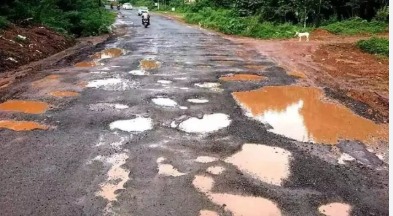
A simmering infrastructure dispute has recently erupted between Karnataka and Andhra Pradesh, raising eyebrows over road safety, investment allocation, and political accountability.
The disagreement revolves around pothole repairs, maintenance funds, and road investments, with each state accusing the other of negligence. While Karnataka officials claim Andhra Pradesh is ‘blackmailing’ them over delayed approvals, the latter argues that Karnataka’s inefficient infrastructure management is at the root of the problem.
The Pothole Controversy
Karnataka’s Position: Officials allege that Andhra Pradesh is holding back investment approvals for cross-border road projects unless certain conditions are met. They describe this as ‘blackmail’, emphasizing that such tactics harm commuters and trade.
Andhra Pradesh’s Stance: Andhra Pradesh counters that delays and poor road quality in Karnataka are causing damage to vehicles and disrupting commerce, calling the criticism ‘unfounded’ and a deflection from Karnataka’s inefficiency.
The dispute highlights how pothole management and investment allocation have become a political flashpoint rather than purely an administrative issue.
Implications for Commuters and Trade
Road Safety: Potholes pose significant hazards to daily commuters, especially two-wheeler riders and transport operators.
Trade Disruptions: Poor infrastructure affects interstate logistics, slowing down goods movement between Karnataka and Andhra Pradesh.
Political Tensions: The spat could escalate in the media and legislative assemblies, influencing public perception and upcoming regional elections.
Expert Perspective
Infrastructure analysts suggest that disputes like this are common when cross-border projects involve multiple jurisdictions. They argue for:
Joint monitoring committees to assess road quality.
Transparent fund allocation mechanisms to prevent political friction.
Timely maintenance schedules to reduce pothole-related accidents.
Without these measures, minor potholes could become major political and economic headaches.
FAQ
Q1: Why are Karnataka and Andhra Pradesh clashing over potholes?
A1: The dispute centers on road maintenance, investment approvals, and responsibility for cross-border road projects.
Q2: What are the main accusations from each side?
A2: Karnataka claims Andhra Pradesh is blackmailing them over approvals. Andhra Pradesh accuses Karnataka of inefficiency in road maintenance.
Q3: How does this affect commuters?
A3: Poor roads increase vehicle damage, accidents, and commute time, posing safety hazards.
Q4: Are there economic implications?
A4: Yes, delays in road maintenance can slow trade, affect transport costs, and impact local businesses.
Q5: What is the proposed solution?
A5: Experts recommend joint monitoring, clear fund allocation, and timely maintenance to prevent disputes.
Conclusion
The Karnataka-Andhra pothole dispute is more than just a quarrel over roads — it reflects broader issues of governance, accountability, and regional cooperation.
As citizens and commuters watch closely, the onus is on both states to resolve conflicts efficiently to ensure safe roads, uninterrupted trade, and smoother inter-state relations.
Published on : 15th October
Published by : SMITA
www.vizzve.com || www.vizzveservices.com
Follow us on social media: Facebook || Linkedin || Instagram
🛡 Powered by Vizzve Financial
RBI-Registered Loan Partner | 10 Lakh+ Customers | ₹600 Cr+ Disbursed
https://play.google.com/store/apps/details?id=com.vizzve_micro_seva&pcampaignid=web_share