

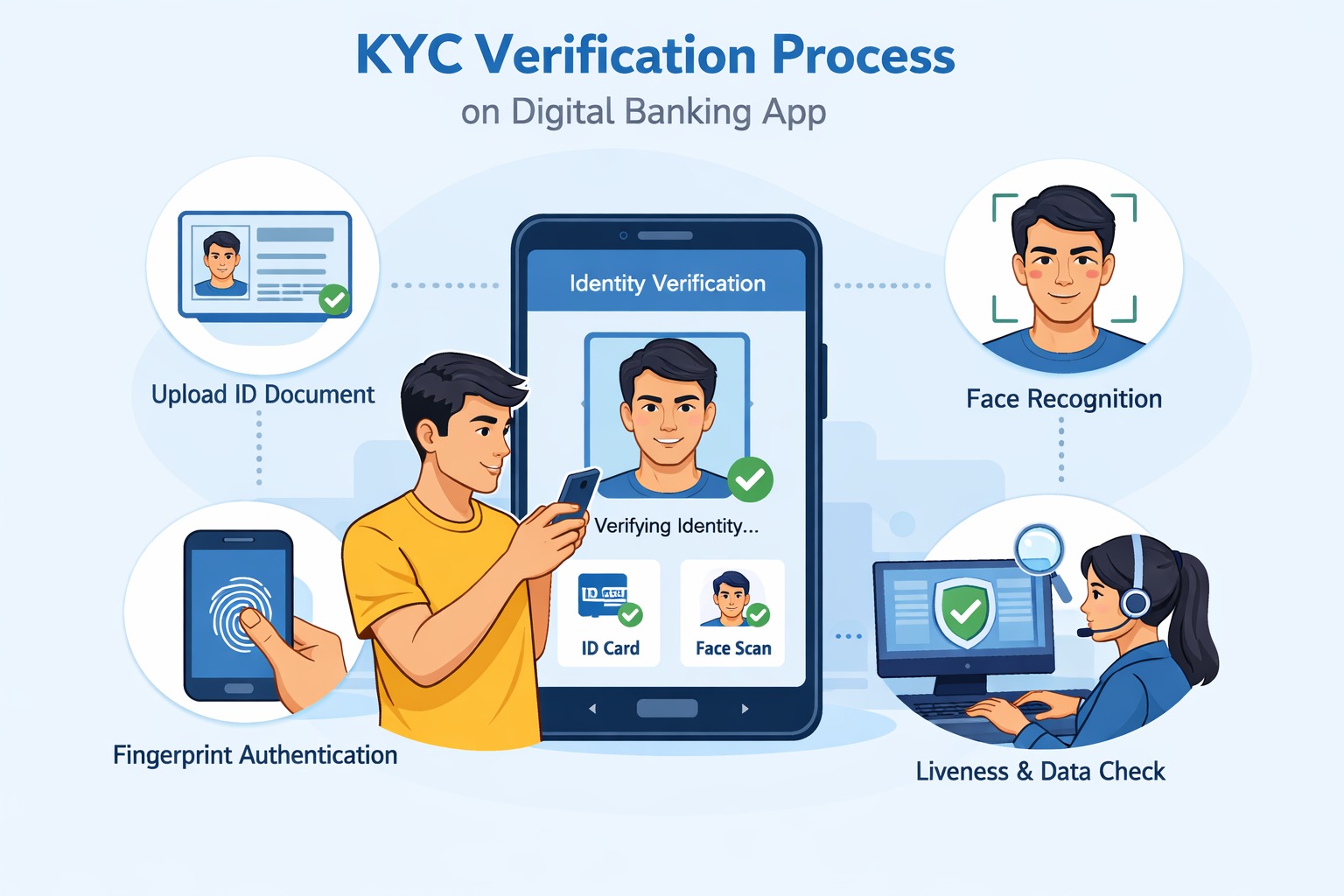
India’s financial regulators are tightening Know Your Customer (KYC) compliance checks across digital platforms ahead of stricter regulatory norms.
Institutions such as the Reserve Bank of India and the Securities and Exchange Board of India are strengthening KYC requirements to improve transparency, prevent fraud, and enhance financial security.
With the rapid growth of fintech platforms and digital onboarding, regulators are focusing on ensuring that customer verification processes remain robust and reliable.
AI Answer Box (Quick Summary)
Why are KYC rules being tightened in India?
Financial regulators are tightening KYC compliance to prevent fraud, improve transparency, and strengthen the security of digital financial systems.
Key Highlights
| Area | Impact |
|---|---|
| KYC checks | Stricter verification |
| Digital platforms | Higher compliance |
| Regulators | RBI & SEBI |
| Objective | Prevent fraud |
What Is KYC (Know Your Customer)?
KYC is a process used by financial institutions to verify the identity of customers before providing services.
Key Components of KYC
Identity verification (Aadhaar, PAN)
Address proof
Biometric authentication
Ongoing monitoring
KYC is essential for preventing financial crimes such as money laundering and fraud.
Why Regulators Are Tightening KYC Norms
1. Rise in Digital Financial Transactions
With the growth of digital platforms:
More users are onboarding online
Fraud risks have increased
Need for stronger verification
2. Preventing Financial Fraud
Stricter KYC helps:
Detect suspicious transactions
Prevent identity theft
Reduce financial fraud
3. Compliance with Global Standards
India is aligning with international compliance frameworks such as AML (Anti-Money Laundering) standards.
Key Changes in KYC Compliance
1. Enhanced Digital Verification
Updates
| Feature | Impact |
|---|---|
| Video KYC | Real-time verification |
| Biometric checks | Stronger identity validation |
| AI-based monitoring | Fraud detection |
2. Periodic KYC Updates
Customers may need to:
Update KYC details regularly
Re-verify identity
Submit updated documents
3. Stricter Monitoring of Transactions
Financial institutions will monitor:
High-value transactions
Suspicious activities
Account behavior patterns
Impact on Fintech and Digital Platforms
Positive Impact
Improved trust and security
Better regulatory compliance
Enhanced customer confidence
Challenges
Higher compliance costs
Longer onboarding process
Operational complexity
Impact on Users
What Users Should Expect
More verification steps
Possible re-KYC requirements
Enhanced security measures
While it may take more time, it ensures safer financial transactions.
Role of Financial Regulators
Key institutions involved include:
Reserve Bank of India
Securities and Exchange Board of India
Financial Intelligence Unit India
These bodies ensure compliance and financial system stability.
Challenges in KYC Implementation
Key Issues
Balancing convenience and security
Managing large user data
Ensuring data privacy
Regulators must ensure that stricter rules do not hinder user experience.
Future Outlook
KYC compliance is expected to become more advanced with technology.
Future Trends
AI-driven verification systems
Blockchain-based identity solutions
Faster digital onboarding
India’s financial ecosystem is moving toward secure and efficient digital identity verification.
Key Takeaways
KYC norms are being tightened across digital platforms.
Regulators aim to improve security and transparency.
Fintech companies must enhance compliance systems.
Users may face stricter verification processes.
The move strengthens India’s financial system.
Frequently Asked Questions
1. What is KYC?
KYC is a process to verify customer identity.
2. Why are KYC rules being tightened?
To prevent fraud and improve security.
3. Who regulates KYC in India?
RBI, SEBI, and other financial authorities.
4. What is digital KYC?
Online identity verification using digital tools.
5. What is video KYC?
A live video-based identity verification process.
6. Will users need to update KYC?
Yes, periodic updates may be required.
7. Does KYC prevent fraud?
Yes, it helps detect suspicious activities.
8. What documents are needed for KYC?
Aadhaar, PAN, and address proof.
9. Are fintech companies affected?
Yes, they must comply with stricter norms.
10. Is KYC mandatory?
Yes, for financial services.
11. What is AML?
Anti-Money Laundering regulations.
12. Can KYC be done online?
Yes, through digital verification.
13. Does stricter KYC slow onboarding?
It may slightly increase verification time.
14. Is KYC safe?
Yes, regulated systems ensure data security.
15. What is the future of KYC?
More digital and AI-driven processes.
Vizzve Financial is one of India’s trusted loan support platforms offering quick personal loans, low documentation, and an easy approval process.
Apply easily at www.vizzve.com
Published on : 20th March
Published by : SMITA
www.vizzve.com || www.vizzveservices.com
Follow us on social media: Facebook || Linkedin || Instagram
🛡 Powered by Vizzve Financial
RBI-Registered Loan Partner | 10 Lakh+ Customers | ₹600 Cr+ Disbursed