

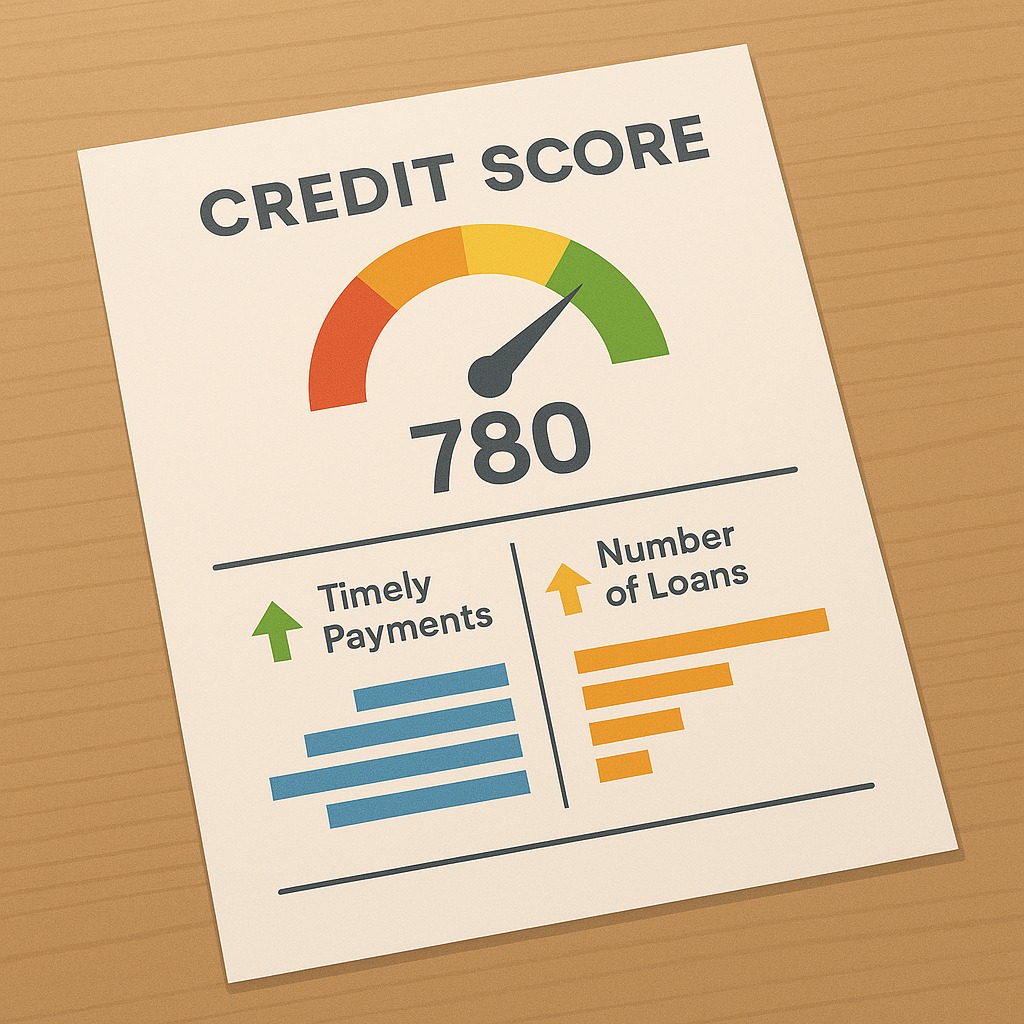
Many borrowers worry that having too many loans or credit cards automatically lowers their credit score.
However, CIBIL has clarified that your score does not drop simply because you hold multiple credit accounts.
The real damage comes from late payments, missed EMIs, and poor repayment discipline.
The update is important for India’s rapidly growing credit market, where more people are taking personal loans, credit cards, BNPL offers, and EMIs.
What Actually Affects Your Credit Score?
CIBIL explains that the following factors matter most:
1. Payment History (Highest Weightage)
This is the biggest scoring factor.
Even one delayed EMI or credit card payment can reduce your score sharply.
2. Credit Utilisation
Using more than 30–40% of your card limit signals risk.
3. Credit Mix
Having both secured and unsecured loans is healthy.
4. Length of Credit History
Older accounts help your score.
5. Hard Enquiries
Too many loan applications too quickly affect your score.
Number of Loans ≠ Lower Credit Score
CIBIL clarifies that:
Having multiple credit cards
Holding more than one loan
Taking frequent EMIs
DO NOT lower your score by themselves.
In fact, managing multiple accounts responsibly can strengthen your credit profile.
Why Late Payments Are the Real Threat
Late payments show lenders that the borrower may be:
Struggling to repay
Over-leveraged
Financially undisciplined
This increases the perceived risk, which results in:
Score drop
Higher interest rates
Lower approval chances
A 30-day delayed payment can reduce a credit score by 50–100 points depending on your past history.
Example: How Late Payments Impact Score
0 late payments: Score remains stable or improves
1 late payment: Immediate drop
Repeated late payments: Score may fall below 650
90+ day overdue: Turns into “NPA behaviour,” severely impacting your profile
Should You Worry About Having Many Credit Cards?
No — as long as you pay on time.
Having more cards can actually help by:
Increasing total credit limit
Lowering utilisation ratio
Improving credit mix
Giving longer payment flexibility
What harms your score is late or missed payments on those cards.
🧠 Tips to Maintain a High Credit Score
Always pay EMIs and credit card bills before due date
Keep utilisation below 30%
Don’t apply for too many loans at once
Maintain older credit cards
Check your CIBIL report regularly for errors
Set auto-debit for EMIs to avoid accidental delays
Conclusion
CIBIL’s clarification is a reminder that credit discipline matters more than the number of loans or cards you hold.
Late payments remain the biggest reason behind score drops, while well-managed credit accounts can actually help you build a strong financial profile.
Borrow smart, pay on time, and your credit score will stay healthy.
FAQs
Q1. Does having multiple credit cards reduce my CIBIL score?
No. Only late or missed payments impact your score.
Q2. What is the biggest factor affecting credit score?
Payment history — late EMIs cause the most damage.
Q3. Can I improve my score even if I have many loans?
Yes, as long as you pay all EMIs on time.
Q4. How much can one late payment affect my score?
A single delay can reduce your score by 50–100 points.
Q5. Is high credit utilisation harmful?
Yes. Using more than 30–40% of your limit signals risk and lowers the score.
Published on : 13th November
Published by : SMITA
www.vizzve.com || www.vizzveservices.com
Follow us on social media: Facebook || Linkedin || Instagram
🛡 Powered by Vizzve Financial
RBI-Registered Loan Partner | 10 Lakh+ Customers | ₹600 Cr+ Disbursed