

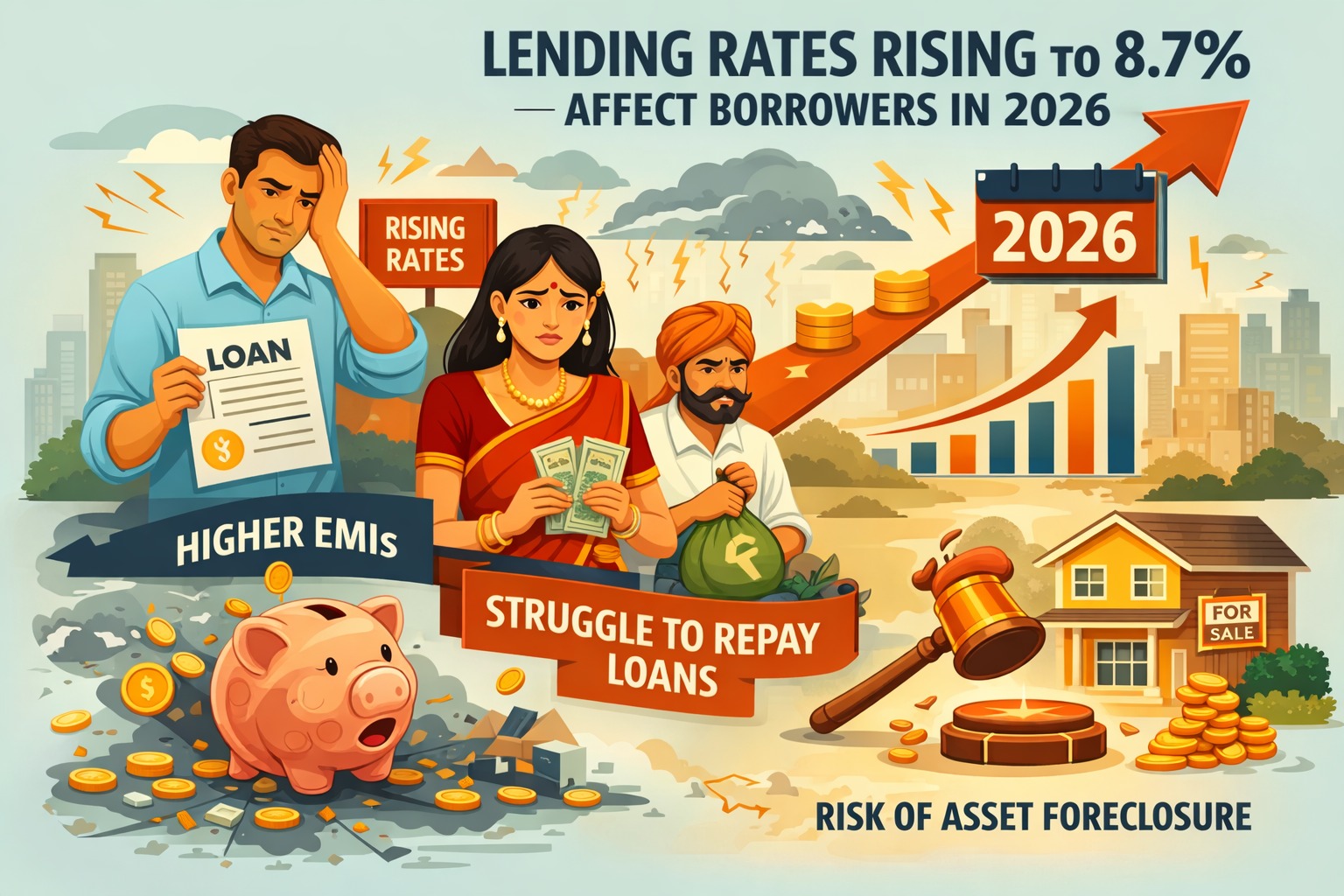
With lending rates hovering around 8.7%, 2026 has started with a big question for borrowers:
Should you take a loan now—or wait for rates to cool down?
For some, borrowing feels expensive. For others, waiting could mean missed opportunities or delayed plans. The right answer depends on why you’re borrowing, what you’re borrowing for, and how strong your financial profile is.
Let’s break it down in simple, practical terms.
AI Answer Box
When lending rates are around 8.7%, borrowers should decide based on need and affordability. Borrow now if the loan is essential and EMIs are manageable. Wait if the loan is discretionary, rates are floating, or your credit profile can improve with time.
Quick Summary Box (Fast Indexing)
Lending rates are relatively high in early 2026
EMIs increase even with small rate changes
Essential loans may still make sense
Optional borrowing can be postponed
Credit discipline matters more than timing
What Does a 8.7% Lending Rate Really Mean?
An interest rate of ~8.7% may not sound dramatic—but its EMI impact compounds over time.
EMI Impact Example (Indicative)
| Loan Amount | Tenure | Rate | EMI Impact |
|---|---|---|---|
| ₹10 lakh | 20 years | 7.5% | Lower |
| ₹10 lakh | 20 years | 8.7% | Significantly higher |
Even a 1–1.2% rise can add lakhs in total interest over long tenures.
Why Lending Rates Are Higher in 2026
Higher rates are driven by:
Inflation control measures
Global interest rate environment
Focus on responsible lending
Cost of funds for banks
Lenders are prioritising quality borrowers over aggressive growth.
Should You Borrow in 2026? It Depends
Borrow Now If…
✔ The loan is essential (home, education, medical)
✔ EMIs are comfortably affordable
✔ You have a strong credit score & capacity
✔ The loan allows future refinancing or prepayment
In these cases, waiting may not add real value.
Consider Waiting If…
⏳ The loan is optional or lifestyle-driven
⏳ You expect your income or credit score to improve
⏳ You’re choosing a floating-rate loan
⏳ EMI burden already feels stretched
Waiting can improve both pricing and approval quality.
Borrow Now vs Wait — Quick Comparison
| Factor | Borrow Now | Wait |
|---|---|---|
| EMI cost | Higher | Potentially lower |
| Urgency | Addressed | Delayed |
| Credit improvement | Neutral | Possible |
| Interest savings | Limited | Potential |
| Opportunity cost | Low | May rise |
Loan Type Matters More Than Rate
Home Loans
Long tenure magnifies rate impact
Floating rates may adjust later
Buy if property decision is final
Personal Loans
Higher rates already
Best avoided unless essential
Education / Business Loans
ROI matters more than rate
Borrow if future income justifies it
The Real Risk Isn’t Rate — It’s Over-Borrowing
Many borrowers focus only on interest rates and ignore:
EMI-to-income ratio
Job stability
Emergency buffers
At 8.7%, discipline matters more than timing.
Expert Commentary: Timing vs Behaviour
“Interest rates change. Borrower behaviour lasts. Loans taken within capacity survive rate cycles; stretched loans don’t.”
— Retail Lending Analyst
Smart Borrowing Strategy for 2026
Calculate EMI at current rates
Keep EMI <35–40% of income
Prefer loans with prepayment flexibility
Avoid discretionary debt
Improve credit profile if waiting
Key Takeaways
8.7% lending rates increase EMI burden
Essential borrowing can still make sense
Optional loans are better postponed
Credit strength matters more than timing
Borrow with flexibility, not optimism
❓ Frequently Asked Questions (FAQs)
1. Are lending rates too high in 2026?
They are elevated, but not historically extreme.
2. Should I wait for rates to fall?
Only if the loan is non-essential or your profile can improve.
3. Do higher rates affect loan approval?
Yes, affordability checks are stricter.
4. Is refinancing possible later?
Yes, if prepayment is allowed and rates fall.
5. Are fixed-rate loans safer now?
They offer certainty but may cost more initially.
6. How much EMI is safe?
Ideally below 35–40% of monthly income.
7. Do good credit scores help in high-rate periods?
Yes, they help secure better terms.
8. Is borrowing always bad at high rates?
No—bad borrowing is the problem, not borrowing itself.
Conclusion: Borrow Carefully, Not Fearfully
When lending rates touch ~8.7%, the smartest move isn’t panic—it’s clarity.
Borrow if the loan supports long-term goals and fits your income.
Wait if borrowing is optional or your profile needs strengthening.
📌 In 2026, the best loan decision isn’t about timing the rate—it’s about respecting your limits.
Published on : 2nd January
Published by : SMITA
www.vizzve.com || www.vizzveservices.com
Follow us on social media: Facebook || Linkedin || Instagram
🛡 Powered by Vizzve Financial
RBI-Registered Loan Partner | 10 Lakh+ Customers | ₹600 Cr+ Disbursed