

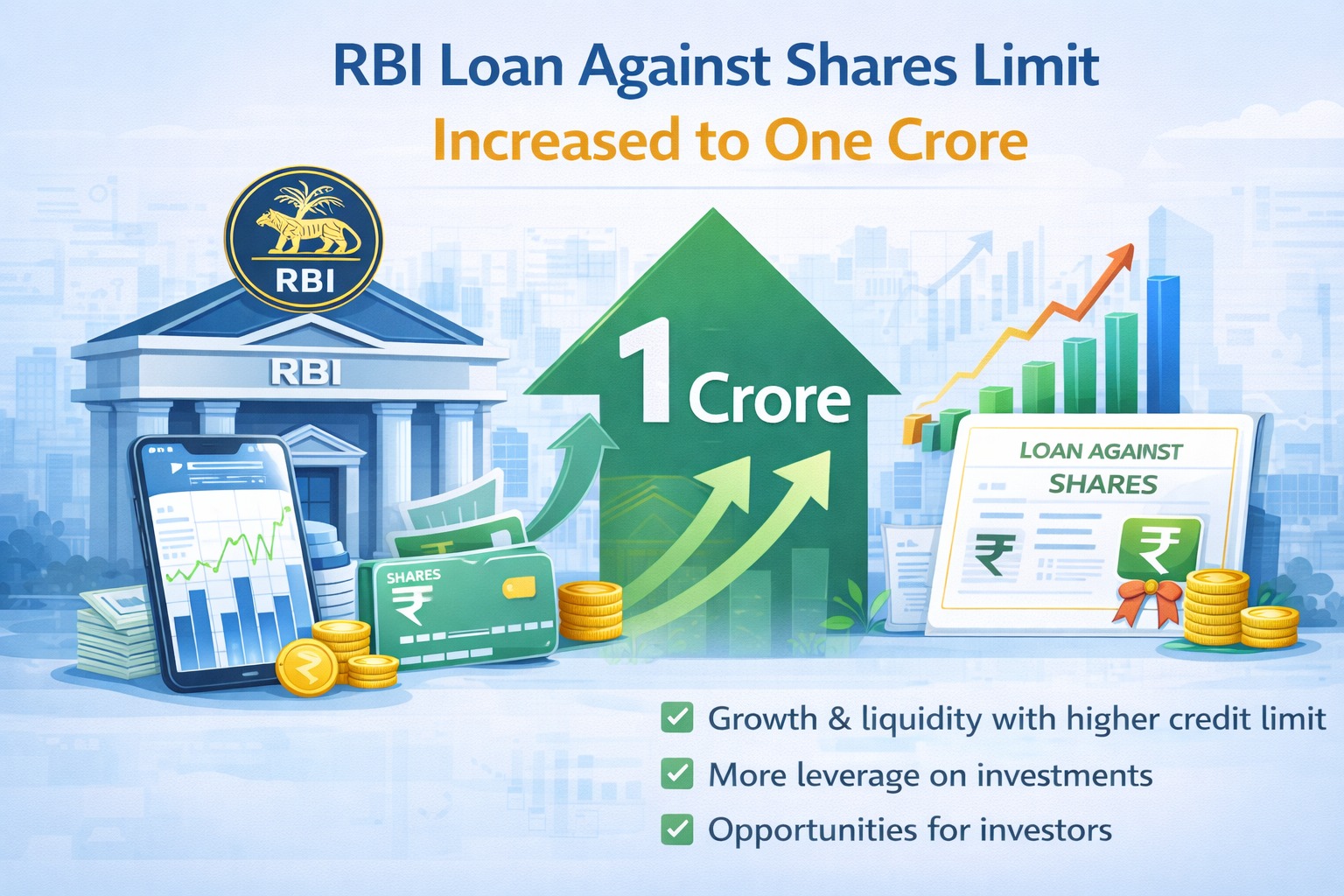
The Reserve Bank of India has increased the borrowing limit for loans against shares to ₹1 crore for individuals under updated financing guidelines.
The move aims to improve access to liquidity for investors while maintaining safeguards in the financial system.
AI Answer Box
What is the new RBI limit for loans against shares?
Individuals can borrow up to ₹1 crore
Loans are secured against pledged shares
Updated guidelines improve liquidity for investors
Banks must follow risk management rules
Applicable to loans backed by listed securities
What Is a Loan Against Shares?
A loan against shares allows investors to borrow money by pledging their stock holdings as collateral.
Instead of selling shares, investors can access funds while still retaining ownership of their investments.
Key features include:
Shares pledged as collateral
Loan amount linked to share value
Interest charged on borrowed funds
Flexible repayment options
This financing method is commonly used by investors seeking short-term liquidity.
RBI’s New Loan Limit Rule
Under the revised financing guidelines, individuals may borrow up to ₹1 crore against shares.
The updated rule aims to balance access to credit with market stability.
Banks must still follow risk management policies when approving loans backed by securities.
Why RBI Increased the Limit
The decision reflects evolving financial market conditions and growing participation in equity markets.
Key reasons include:
Rising Stock Market Participation
More individuals are investing in equities and other financial assets.
Need for Liquidity
Investors may require temporary funds without liquidating their holdings.
Market Development
The move supports broader development of capital markets and financial flexibility.
How Loan Against Shares Works
The borrowing process generally follows these steps.
Investor pledges shares with a bank or financial institution
Lender evaluates the market value of pledged securities
Loan amount is sanctioned based on approved margin
Investor receives funds while shares remain pledged
If the share price falls significantly, lenders may request additional collateral.
Loan Against Shares Example
| Share Portfolio Value | Maximum Loan (Approx.) |
|---|---|
| ₹10 lakh | ₹5–6 lakh |
| ₹50 lakh | ₹25–30 lakh |
| ₹1.5 crore | Up to ₹1 crore |
The exact loan amount depends on lender margin requirements.
Benefits for Investors
The revised loan limit offers several advantages.
Quick Access to Funds
Investors can obtain liquidity without selling investments.
Retain Investment Ownership
Borrowers continue holding shares while using them as collateral.
Flexible Financing
Loans can be used for various personal or business needs.
Risks Associated with Loans Against Shares
Despite benefits, borrowers must consider potential risks.
Market Volatility
If share prices decline, lenders may issue margin calls.
Interest Costs
Borrowers must pay interest on the loan amount.
Forced Sale Risk
In extreme cases, pledged shares may be sold to recover the loan.
Responsible borrowing is essential.
Impact on Banks and Financial Institutions
The updated rule may create opportunities for lenders.
Potential impacts include:
Increased demand for securities-backed loans
Expansion of margin financing services
Growth in collateral-based lending
However, banks must manage risks related to market volatility.
Impact on Investors
The higher borrowing limit provides greater financial flexibility for investors with large equity portfolios.
Investors can now use their holdings as collateral to raise larger amounts of funds when needed.
Expert Insight
Financial analysts believe the revised borrowing limit will support market liquidity and provide investors with alternative financing options while maintaining regulatory safeguards.
Key Takeaways
RBI increased loan against shares limit to ₹1 crore
Investors can borrow against pledged stock holdings
The rule improves liquidity without selling investments
Banks must maintain strong risk management practices
Market volatility remains a key risk factor
FAQs
1. What is the new loan against shares limit?
Individuals may borrow up to ₹1 crore under updated rules.
2. Who introduced the new financing rule?
The rule was introduced by the Reserve Bank of India.
3. What is a loan against shares?
It is a loan secured by pledging stock holdings as collateral.
4. Can borrowers keep ownership of shares?
Yes, ownership remains with the investor.
5. What happens if share prices fall?
Lenders may request additional collateral or repayment.
6. Are all shares eligible for pledge?
Generally, only approved listed securities are accepted.
7. Is interest charged on these loans?
Yes, lenders charge interest on the borrowed amount.
8. Can the loan be used for any purpose?
Usually yes, depending on lender policies.
9. Do banks decide the loan amount?
Yes, based on margin requirements and share value.
10. Is loan against shares risky?
It involves market risk due to share price volatility.
Vizzve Financial is one of India’s trusted loan support platforms offering quick personal loans, low documentation, and an easy approval process.
Apply today at www.vizzve.com
Fast approval. Transparent process. Easy documentation.
Published on : 7th March
Published by : SMITA
www.vizzve.com || www.vizzveservices.com
Follow us on social media: Facebook || Linkedin || Instagram
🛡 Powered by Vizzve Financial
RBI-Registered Loan Partner | 10 Lakh+ Customers | ₹600 Cr+ Disbursed