

Introduction
Digital lending has changed the way people apply for personal loans. Instead of visiting a bank or NBFC branch, borrowers can now complete many loan application activities through their smartphones.
From uploading identity documents to checking loan eligibility and receiving approval updates, most activities can be completed online.
However, this convenience also creates an important concern: How safe is your personal and financial information when you apply for a loan through a mobile application?
Loan applications may collect sensitive information such as PAN details, identity documents, bank statements, salary information, mobile numbers, and employment records.
If this information is not handled securely, borrowers may face identity theft, financial fraud, unauthorized data access, privacy violations, and misuse of personal documents.
Loan app data security is therefore an important factor to consider before choosing a digital lending platform.
In India, the Reserve Bank of India (RBI) has introduced digital lending requirements to improve transparency, responsible data collection, and customer protection. Data protection laws also establish requirements for organizations handling digital personal information.
This guide explains how loan app data security works, what information lending applications collect, common security threats, RBI requirements, and practical steps borrowers can follow to protect their financial information in 2026.
AI Answer Box: What Is Loan App Data Security?
Loan app data security refers to the methods and practices used to protect borrowers' personal, financial, and identity information from unauthorized access, theft, misuse, and data breaches.
When someone applies for an online loan, the application may collect information such as:
- Name and contact details.
- PAN and identity verification information.
- Salary slips and income records.
- Bank statements.
- Employment information.
- Credit and repayment details.
- Loan application records.
A secure lending application should use appropriate technical and organizational safeguards to protect this information.
Borrowers should also verify the actual lender, review the privacy policy, check app permissions, use secure networks, and avoid sharing confidential banking credentials.
Quick Answer: Choose a verified lending service that follows applicable RBI requirements, explains its data protection practices, and uses appropriate safeguards to protect customer information.
Full Blog Content
What Is Loan App Data Security?
Loan app data security refers to protecting information collected by digital lending applications during the loan application and repayment process.
When borrowers use an online lending platform, they share information required for identity verification, income assessment, credit evaluation, and loan processing.
This information must be handled responsibly to prevent unauthorized access or misuse.
Why Is Data Security Important in Digital Lending?
Data security is important because loan applications handle sensitive personal and financial information.
Here are some major reasons.
1. Protects Personal Information
Personal details such as names, addresses, mobile numbers, and identity documents should remain protected from unauthorized access.
2. Prevents Financial Fraud
Securing banking information and financial records can reduce the risk of fraud and unauthorized financial activity.
3. Reduces Identity Theft
Sensitive identity information may be misused by criminals if it becomes accessible to unauthorized individuals.
4. Builds Customer Trust
Borrowers are more confident when a lending platform clearly explains how it protects their information.
5. Supports Regulatory Compliance
Banks, NBFCs, and relevant digital lending service providers must follow applicable regulatory and data protection requirements.
What Information Do Loan Apps Collect?
Digital lending applications may collect different types of personal and financial information depending on the loan product and verification requirements.
Understanding what information is collected helps borrowers identify potential security risks.
Common Types of Information Collected by Loan Apps
| Information Type | Examples | Purpose |
|---|---|---|
| Personal information | Name, age, date of birth | Customer identification |
| Contact information | Mobile number, email | Communication and verification |
| Identity documents | PAN and permitted KYC details | Identity verification |
| Employment details | Company name, job type | Employment verification |
| Income information | Salary slips, income records | Repayment assessment |
| Banking information | Bank statements, account details | Financial assessment |
| Credit information | Credit history, credit score | Creditworthiness evaluation |
| Address information | Residential address | Customer verification |
| Loan information | Loan amount, EMI, tenure | Loan processing |
Is It Safe to Share These Details?
Sharing information with a verified lender through its official application can be part of a legitimate loan process.
However, borrowers should follow certain precautions:
- Verify the actual lending company.
- Read the privacy policy.
- Submit documents through official channels.
- Avoid sharing unnecessary personal information.
- Never disclose OTPs, passwords, or UPI PINs.
- Check why specific information is required.
Important: A loan application should not collect unlimited personal information simply because a customer is applying for credit.
How Do Loan Apps Protect Customer Data?
Responsible digital lending platforms should use appropriate security measures to protect customer information.
The exact security technologies and practices may differ between lenders.
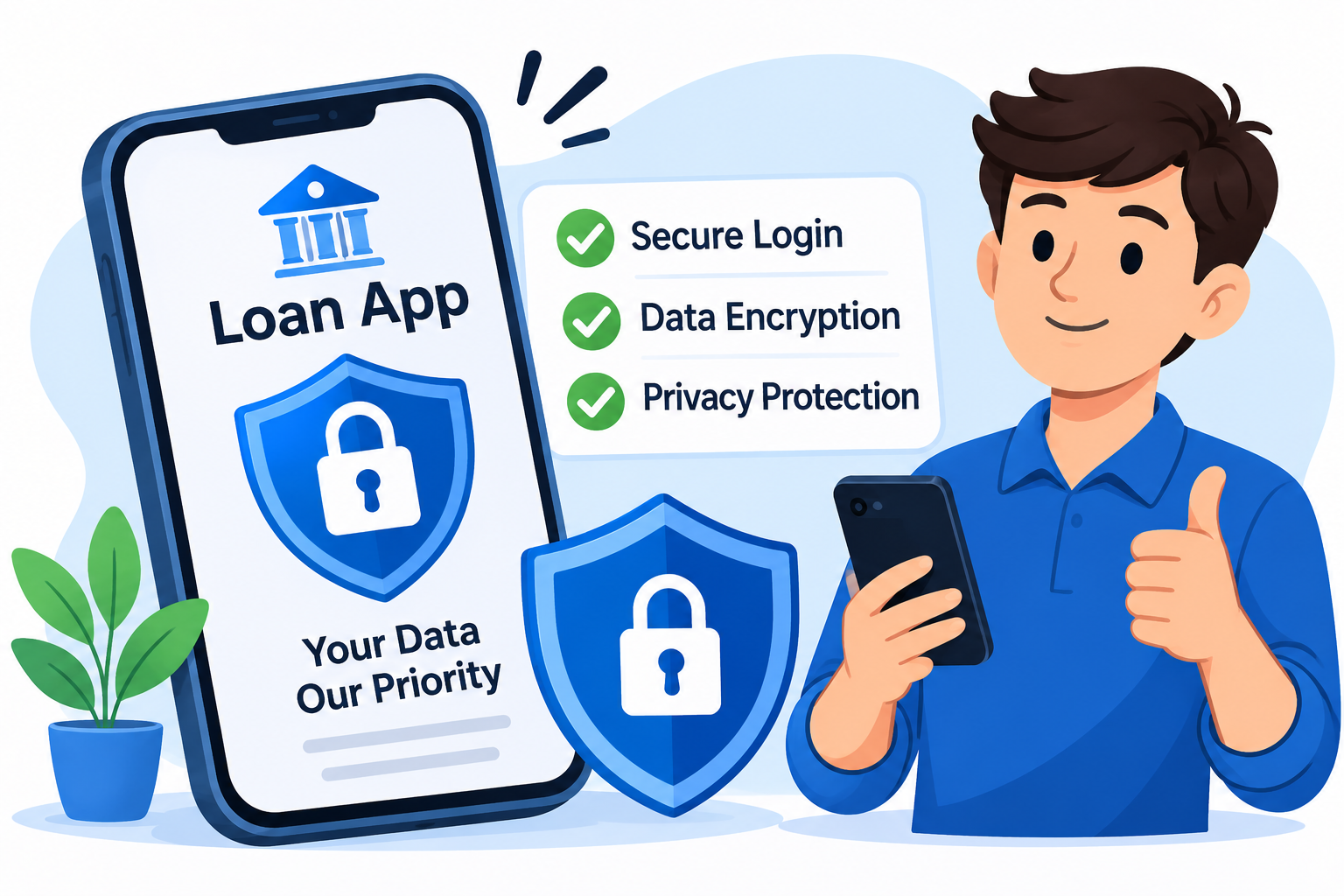
1. Data Encryption
Encryption converts readable information into a protected format that cannot easily be understood without the appropriate decryption key.
It can help protect information during transmission and storage.
For example, when a borrower submits financial documents through a properly secured application, encryption can help prevent unauthorized parties from reading the information while it is transmitted.
2. Secure Login and Authentication
Authentication helps confirm that the person accessing an account is authorized to use it.
Common security methods include:
- Password protection.
- OTP-based verification.
- Multi-factor authentication.
- Device authentication.
- Biometric authentication where supported.
These methods can reduce unauthorized account access.
3. Restricted Data Access
Not every employee or service provider should have access to all customer information.
Access controls help ensure that information is available only to authorized individuals who need it for legitimate business purposes.
4. Secure Document Storage
Loan applications may store identity documents, income records, and banking information.
Appropriate storage safeguards can help reduce unauthorized access, accidental exposure, and data loss.
5. Security Monitoring
Organizations may monitor their systems to identify suspicious activities, unusual login attempts, and potential security incidents.
Monitoring helps security teams detect problems and respond appropriately.
6. Regular Security Testing
Security assessments and vulnerability testing can help identify weaknesses in applications and systems.
Lenders and their technology partners should maintain appropriate security practices as their digital services develop.
7. Data Backup and Recovery
Secure backup procedures help organizations recover important information after technical failures or other incidents.
However, backup systems should also be protected against unauthorized access.
Common Data Security Risks in Loan Apps
Not every mobile lending application follows the same security standards.
Some unauthorized applications or poorly managed platforms may expose borrowers to different types of security threats.
Understanding these risks helps customers make safer borrowing decisions.
1. Data Breaches
A data breach occurs when personal information is accessed, disclosed, or exposed without authorization.
For example, customer documents stored in an inadequately protected system may become accessible to unauthorized individuals.
2. Phishing Attacks
Phishing involves fraudulent messages, emails, or websites designed to trick users into sharing sensitive information.
A borrower may receive a message pretending to come from a loan company.
The message may ask the customer to enter banking credentials or click an unfamiliar link.
3. Fake Loan Applications
Fraudsters sometimes create applications that imitate legitimate financial companies.
These applications may collect:
- PAN details.
- Identity documents.
- Mobile numbers.
- Bank account information.
- Personal photographs.
Borrowers should verify the application developer and actual lender before sharing information.
4. Unauthorized Account Access
Weak passwords or compromised login credentials may allow unauthorized individuals to access customer accounts.
Using strong, unique passwords and additional authentication can help reduce this risk.
5. Malware and Fake APK Files
Some fraudulent applications distributed through unknown websites or messaging platforms may contain malicious software.
Such applications can create risks for personal and financial information.
6. Unnecessary Permission Requests
Applications requesting excessive access to contacts, call logs, files, and other device resources may create privacy and security concerns.
RBI digital lending requirements restrict access to several mobile phone resources.
7. Social Engineering
Fraudsters may pretend to be bank employees, loan agents, or customer support representatives.
They may use convincing conversations to obtain confidential information.
Safety Tip: Never share your OTP, UPI PIN, banking password, or card security details with someone claiming to represent a lending company.
RBI Guidelines for Loan App Data Security in India
The Reserve Bank of India plays an important role in regulating digital lending activities involving entities under its supervision.
The RBI issued its Guidelines on Digital Lending on September 2, 2022, to improve transparency and strengthen borrower protection.
These requirements apply to regulated entities and relevant digital lending arrangements.
Important RBI Requirements Related to Data Protection
1. Need-Based Data Collection
Digital lending applications should follow applicable requirements for collecting borrower information.
Data collection should be necessary for the lending activity and supported by appropriate consent.
2. Explicit Customer Consent
Borrowers should receive information about what data is being collected and why.
Consent should not be treated as unlimited permission to access unrelated personal information.
3. Restrictions on Mobile Resource Access
RBI digital lending requirements restrict access to mobile phone resources such as:
- Contact lists.
- Call logs.
- Files and media.
One-time access to specific facilities, such as camera, microphone, or location, may be permitted where necessary for onboarding or KYC verification, with explicit consent.
4. Data Storage Requirements
RBI's digital lending framework includes requirements concerning the storage of borrower data.
Regulated entities must ensure that applicable data storage and processing requirements are followed.
5. Transparency in Data Sharing
Borrowers should be informed about how their personal information is used and shared.
6. Grievance Redressal
Regulated lenders must provide appropriate channels for customers to raise complaints and concerns.
Why Are RBI Guidelines Important?
These requirements help improve accountability in digital lending.
They also encourage responsible handling of customer information and reduce the scope for unnecessary data collection.
Official reference: RBI Digital Lending Guidelines
Digital Personal Data Protection Act, 2023 and Loan App Security
India's Digital Personal Data Protection Act, 2023 (DPDP Act) establishes a framework for processing digital personal data.
It is relevant to organizations that collect and process customer information through digital platforms.
Important Data Protection Principles
The framework addresses areas such as:
- Lawful processing of personal data.
- Providing information about data processing.
- Obtaining consent where required.
- Implementing reasonable security safeguards.
- Following applicable data retention requirements.
- Providing mechanisms for exercising data protection rights.
- Addressing personal data breaches as required by law.
How Does This Affect Loan App Users?
When borrowers submit identity documents, salary slips, or bank statements, the organization handling the information must follow applicable data protection requirements.
Customers should understand:
- What information is collected.
- Why the information is required.
- How the information is used.
- Whether information is shared with other organizations.
- How long the information is retained.
- How privacy-related concerns can be raised.
Official reference: India Code – Digital Personal Data Protection Act, 2023
Important: The Act and its implementing rules have commencement and transition provisions. Applicable obligations should be checked according to the relevant effective dates.
How to Identify a Secure Loan App Before Applying
Before submitting a loan application, borrowers should check whether the platform follows responsible security and privacy practices.
Step 1: Verify the Actual Lending Company
Find out which bank or NBFC is providing the loan.
Check the lender's details through official sources.
Remember that a digital lending application may be operated by a Lending Service Provider (LSP), rather than being the actual lender.
Step 2: Read the Privacy Policy
A transparent privacy policy should explain:
- What information is collected.
- Why it is collected.
- How it is protected.
- Whether it is shared with third parties.
- How long it is retained.
- How customers can raise privacy concerns.
Step 3: Check Application Permissions
Review the permissions requested by the application.
Be cautious if it demands unnecessary access to:
- Contacts.
- Call logs.
- Personal photographs.
- Videos.
- Messages.
- Unrelated device information.
Step 4: Check Application Reviews
Read recent customer feedback and look for complaints about:
- Unauthorized data collection.
- Suspicious payment requests.
- Data misuse.
- Unwanted marketing calls.
- Threatening recovery practices.
Reviews can provide useful warning signs but cannot independently establish whether an application is secure.
Step 5: Visit the Official Website
Compare the application information with the lender's official website.
Avoid downloading applications through unfamiliar links.
Step 6: Check Customer Support
A reliable lending service should provide clear customer support and grievance redressal information.
Step 7: Review the Loan Agreement
Before accepting a loan, understand the interest rate, repayment schedule, charges, lender details, and applicable terms.
Secure Loan Apps vs Unsafe Loan Apps: Comparison Table
The following comparison highlights common differences between responsible lending applications and suspicious applications.
| Feature | Secure Loan App | Unsafe or Suspicious Loan App |
|---|---|---|
| Lender details | Clearly disclosed | Hidden or misleading |
| Privacy policy | Available and transparent | Missing or unclear |
| Data collection | Purpose-based | Excessive or unexplained |
| App permissions | Limited and justified | Unnecessary access requests |
| Login security | Appropriate authentication | Weak security practices |
| Data protection | Appropriate safeguards | Security practices unclear |
| Loan agreement | Properly disclosed | Missing or incomplete |
| Customer support | Accessible | Difficult to contact |
| Payment details | Transparent | Suspicious payment demands |
| Recovery practices | Follows applicable rules | Threatening or abusive |
Expert observation: A professional-looking application does not automatically mean that customer information is secure. Always verify the actual lender and understand its privacy and security practices.
How to Protect Your Personal and Financial Information While Using Loan Apps
Borrowers can follow simple security practices to reduce the risk of data theft and financial fraud.
1. Download Applications From Trusted Sources
Use official application stores or links provided through the lender's verified website.
Avoid downloading unknown APK files.
2. Use Strong Passwords
Create unique passwords for financial applications.
Avoid using easily guessed combinations such as your name, date of birth, or mobile number.
3. Enable Additional Authentication
Use two-factor authentication or other available security features.
This provides an additional layer of protection.
4. Never Share OTPs or UPI PINs
Do not disclose OTPs, UPI PINs, passwords, or confidential banking credentials to loan agents.
5. Check App Permissions
Review permissions before granting access to your device.
Remove unnecessary permissions through your smartphone settings.
6. Avoid Public Wi-Fi for Sensitive Transactions
Use a trusted internet connection when submitting financial documents or accessing banking services.
7. Upload Documents Through Official Channels
Submit PAN details, salary slips, and bank statements only through verified applications or official websites.
8. Keep Your Smartphone Updated
Install operating system and application updates regularly.
Updates may contain important security improvements.
9. Monitor Bank Transactions
Check your account statements and transaction notifications regularly.
Report suspicious transactions to your bank immediately.
10. Avoid Suspicious Links
Do not click unfamiliar loan approval messages, payment links, or document verification links.
What Should You Do If Your Loan App Data Is Compromised?
If you suspect that your personal or financial information has been exposed, take action immediately.
Step 1: Stop Sharing Additional Information
Do not submit more documents or financial details until you verify the application.
Step 2: Secure Your Accounts
Change compromised passwords and secure your banking and payment applications.
Step 3: Contact Your Bank
If you suspect unauthorized financial activity, contact your bank immediately.
Ask the bank to take appropriate protective action.
Step 4: Preserve Evidence
Save relevant information, including:
- Screenshots of suspicious messages.
- Emails and communication records.
- Payment receipts.
- Loan application details.
- Suspicious links.
- Transaction information.
Step 5: Contact the Actual Lender
Inform the bank or NBFC responsible for the loan.
Use its official customer support or grievance redressal channel.
Step 6: Report Cybercrime
If you experience online financial fraud, identity theft, or other cybercrime, use official reporting channels.
| Reporting Channel | Purpose |
|---|---|
| National Cyber Crime Reporting Portal | Reporting cybercrime |
| Cybercrime Helpline 1930 | Reporting financial cyber fraud |
| RBI Complaint Management System | Complaints against regulated entities |
| CERT-In | Cybersecurity incident information and reporting guidance |
Official resources:
Data Privacy vs Data Security: What Is the Difference?
Data privacy and data security are closely connected, but they serve different purposes.
Data privacy focuses on how personal information is collected, processed, shared, and retained.
Data security focuses on protecting information against unauthorized access, theft, alteration, and loss.
Comparison Table
| Parameter | Data Privacy | Data Security |
|---|---|---|
| Main purpose | Responsible use of personal data | Protection of personal data |
| Focus | Collection, consent, and sharing | Security controls and safeguards |
| Example | Explaining why bank statements are collected | Encrypting stored bank statements |
| Customer concern | Who can use my information? | Can someone steal my information? |
| Importance | Transparency and control | Confidentiality and protection |
Both are essential for building trust in digital lending services.
Pros and Cons of Digital Loan App Data Security
Digital lending platforms offer convenience, but borrowers should understand the benefits and limitations of online data handling.
| Pros | Cons |
|---|---|
| Convenient online document submission | Sensitive information is shared digitally |
| Faster application processing | Cybersecurity threats may exist |
| Digital account access | Unauthorized access risks |
| Online application tracking | Data breaches are possible |
| Electronic loan documentation | Fake applications may collect information |
| Convenient customer communication | Unwanted communication may occur if data is misused |
How Can Borrowers Reduce These Risks?
- Choose verified lending platforms.
- Read privacy policies carefully.
- Avoid unnecessary permissions.
- Use secure passwords.
- Enable additional authentication.
- Never share confidential banking details.
- Monitor financial accounts regularly.
Real-World Examples of Loan App Data Security Risks
The following illustrative examples explain how borrowers may face data security problems during the loan application process.
Example 1: Fake Loan Application Collecting PAN Details
A borrower downloads an application that looks similar to a popular lending platform.
The application asks for PAN details, identity documents, and bank information.
Later, the borrower discovers that the application does not belong to the claimed lender.
Lesson: Always verify the actual lending company before submitting personal documents.
Example 2: Suspicious Loan Approval Message
A borrower receives a message claiming that a personal loan has been approved.
The message contains a link requesting banking credentials to complete verification.
Lesson: Do not enter confidential banking information through unfamiliar links. Contact the lender using official communication channels.
Example 3: Unauthorized Account Access
A borrower uses the same password for multiple financial applications.
After one account is compromised, an unauthorized person attempts to access other accounts.
Lesson: Use unique passwords and enable additional authentication.
Example 4: Unnecessary Document Collection
A lending application requests access to personal photographs and unrelated files even though the borrower only needs to submit one salary slip.
Lesson: Use limited file access and avoid granting unnecessary permissions.
Loan App Data Security Checklist Before Applying
Use this checklist before sharing your personal information with any digital lending platform.
| Security Check | What You Should Verify |
|---|---|
| Lender verification | Confirm the actual bank or NBFC |
| Privacy policy | Understand data collection practices |
| App permissions | Avoid unnecessary access |
| Website security | Use the official website |
| Login protection | Use strong authentication |
| Document upload | Submit through official channels |
| Data sharing | Understand third-party sharing |
| Loan agreement | Read all terms and charges |
| Customer support | Check grievance redressal details |
| Payment security | Avoid suspicious payment links |
Frequently Asked Questions (FAQs)
1. What is loan app data security?
Loan app data security refers to protecting borrowers' personal, financial, and identity information from unauthorized access, theft, exposure, and misuse.
2. Are personal loan applications safe to use?
Personal loan applications can be safe when operated by verified lending service providers and regulated lenders that follow applicable requirements and maintain appropriate security safeguards. Always verify the actual lender.
3. What information do loan apps collect?
Loan applications may collect names, mobile numbers, PAN details, identity verification information, salary slips, bank statements, employment details, and credit information.
4. How do loan apps protect customer data?
Responsible lending platforms may use encryption, secure authentication, restricted access controls, security monitoring, and protected document storage to safeguard customer information.
5. What are the common security risks associated with loan apps?
Common risks include fake loan applications, phishing attacks, data breaches, identity theft, unauthorized account access, and misuse of personal information.
6. How can I check whether a loan app is secure?
Verify the actual lender, read the privacy policy, check app permissions, review customer feedback, examine the official website, and understand the loan agreement.
7. Does RBI provide guidelines for loan app data security?
Yes. RBI's digital lending guidelines establish requirements concerning data collection, consent, mobile resource access, storage, transparency, and grievance redressal for regulated entities and relevant lending arrangements.
8. Can loan apps access my bank details?
Lenders may request banking information for legitimate loan processing and financial assessment purposes. Share such information only through verified channels and never disclose confidential banking credentials.
9. What is data encryption in loan applications?
Data encryption converts readable information into a protected format to reduce the risk of unauthorized access during transmission or storage.
10. How can I protect my financial information when applying for an online loan?
Use verified applications, create strong passwords, enable additional authentication, avoid suspicious links, review permissions, and submit documents through official channels.
11. What should I do if my personal information is stolen through a loan app?
Contact your bank and the actual lender, secure affected accounts, preserve evidence, and report the incident through the National Cyber Crime Reporting Portal.
12. Is it safe to upload PAN cards and bank statements to loan apps?
It may be necessary for legitimate loan verification, but only submit these documents through the official application or website of a verified lending service.
13. What is the difference between loan app privacy and data security?
Loan app privacy concerns how customer information is collected, used, and shared. Data security focuses on protecting that information from unauthorized access, theft, and loss.
14. Does deleting a loan application remove my personal information?
No. Uninstalling an application does not automatically delete information already submitted to the lender. Data retention and deletion depend on applicable legal and regulatory requirements.
15. How can I report a fake loan app in India?
You can report suspicious loan applications and related cybercrime through the National Cyber Crime Reporting Portal at cybercrime.gov.in. For financial cyber fraud, call 1930.
Conclusion: Keep Your Financial Information Safe When Using Loan Apps
Digital lending has made personal loans more accessible and convenient. However, borrowers should never ignore the importance of data security when applying through mobile applications.
Before submitting personal information, verify the actual lender, review the privacy policy, understand app permissions, and check whether the platform follows applicable RBI requirements.
Avoid suspicious links, unnecessary permission requests, and applications that promise guaranteed loan approval without proper verification.
Remember that protecting your personal information is just as important as choosing the right loan amount and repayment period.
Looking for personal loan assistance?
Visit www.vizzve.com to explore loan options and make informed borrowing decisions with Vizzve Financial.
Published on : 03rd November
Published by : Bhargavi
www.vizzve.com || www.vizzveservices.com
Follow us on social media: Facebook || Linkedin || Instagram
🛡 Powered by Vizzve Financial
RBI-Registered Loan Partner | 10 Lakh+ Customers | ₹600 Cr+ Disbursed