Loan App Harassment: Meaning, Types, Causes and How to Report It
Vizzve Admin
Introduction
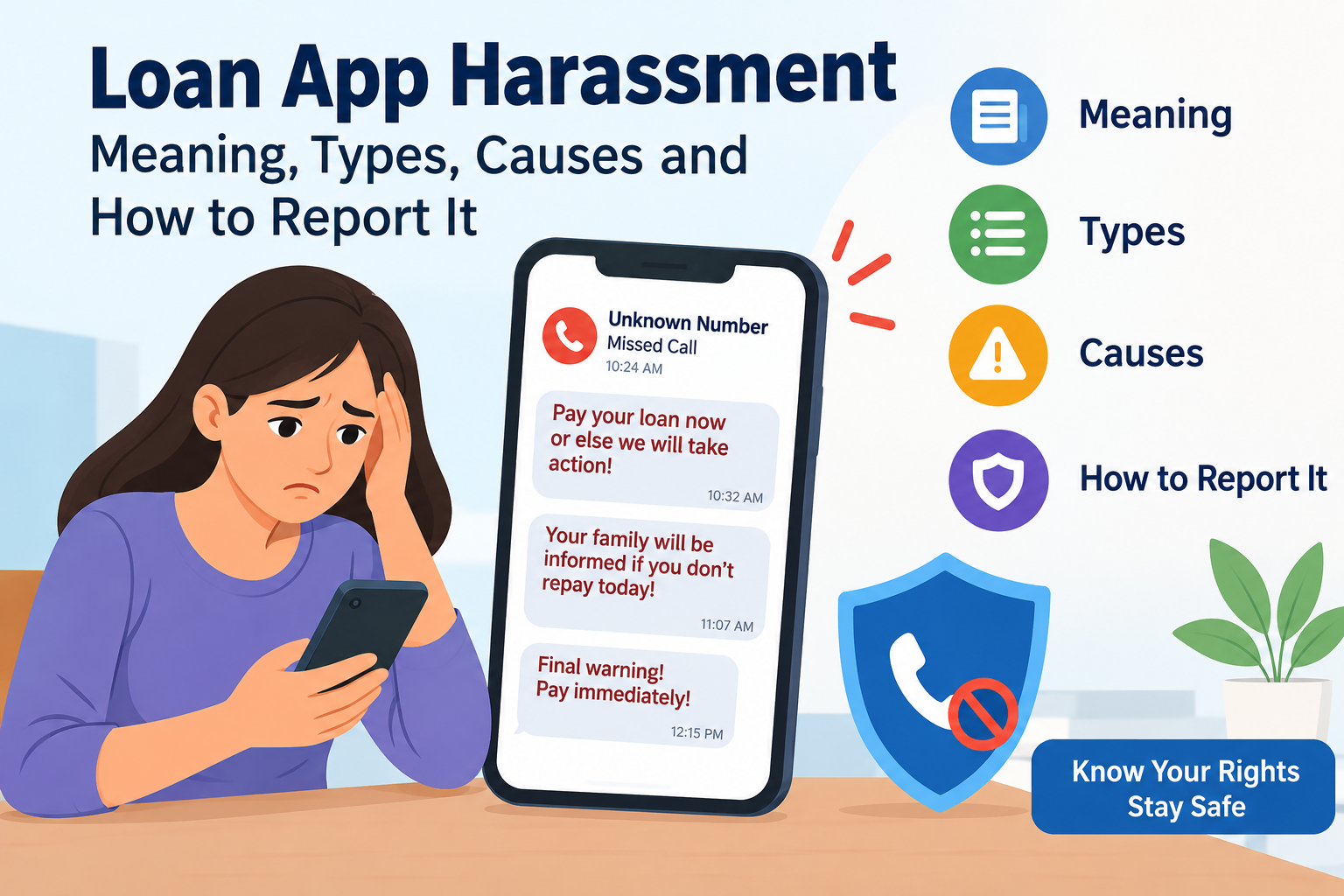
Loan app harassment refers to aggressive, threatening, or unlawful recovery practices used by certain digital lending apps or recovery agents when borrowers delay or miss loan repayments. Harassment may include repeated calls, abusive messages, threats, contacting friends or family without proper basis, misuse of personal data, or intimidation.
With the growing use of digital lending platforms, borrowers should understand their rights, identify suspicious recovery practices, and know where to report complaints.
What Is Loan App Harassment?
Loan app harassment occurs when a lender, recovery agent, or fraudulent loan application uses inappropriate or threatening methods to recover money.
Legitimate lenders can contact borrowers regarding overdue payments, but recovery communications should follow applicable laws and regulatory requirements. Borrowers should distinguish between genuine repayment reminders and harassment or intimidation.
Common Types of Loan App Harassment
Some commonly reported forms include:
- Repeated calls and messages
- Threatening or abusive language
- Intimidation of borrowers
- Unwanted contact with friends, relatives, or colleagues
- Misuse of phone contacts or personal information
- Threats to publicly shame the borrower
- Fake legal notices or police threats
- Demands for payments to unofficial bank accounts or UPI IDs
- Unauthorized access or misuse of personal data
- Pressure to make immediate payments through suspicious links
-
Why Does Loan App Harassment Happen?
Harassment can arise from several situations, including:
- Overdue loan payments – Genuine lenders may pursue outstanding amounts through permitted recovery processes.
- Unregulated lending apps – Some apps may operate outside established regulatory frameworks.
- Fraudulent loan applications – Scam apps may use personal information to threaten users.
- Excessive recovery practices – Certain agents may use inappropriate methods to pressure borrowers.
- Data misuse – An app may improperly use information obtained from a user's device.
Loan App Harassment vs Legitimate Recovery
| Legitimate Recovery |
Potential Harassment |
| Provides details of the outstanding amount |
Uses threats or abusive language |
| Gives repayment information |
Repeatedly intimidates the borrower |
| Uses official communication channels |
Contacts unrelated people to shame the borrower |
| Provides lender identification |
Hides the identity of the recovery party |
| Follows applicable recovery requirements |
Uses coercion or threatening messages |
What Should You Do If a Loan App Harasses You?
1. Stay Calm and Preserve Evidence
Do not immediately delete messages or call records. Save:
- Screenshots
- Phone numbers
- WhatsApp messages
- Emails
- Payment requests
- Loan agreements
- App details
- Bank transaction records
- Audio recordings where legally appropriate
-
2. Verify the Lender
Check the actual lender behind the app. A digital lending app may operate on behalf of a regulated bank or non-bank financial company, so borrowers should verify the lender's identity rather than relying only on the app's name.
3. Avoid Paying Through Unknown Links
Do not transfer money to personal bank accounts, unknown UPI IDs, or links sent by alleged recovery agents without verifying the payment instructions.
4. Contact the Official Lender
Use the lender's official website, customer-care number, or other verified communication channel to ask for:
- Outstanding loan amount
- Repayment schedule
- Applicable charges
- Account statement
- Details of the recovery agency, if applicable
-
5. Report Suspicious or Fraudulent Activity
If you suspect fraud, unauthorized data use, threats, or other unlawful activity, consider reporting the matter to the appropriate authorities in India.
For cyber-related financial fraud, the National Cyber Crime Reporting Portal and the cybercrime helpline 1930 are relevant reporting channels.
Can Loan Apps Contact Your Family and Friends?
Borrowers should be cautious when an app threatens to contact people in their phonebook or publicly disclose loan information.
Whether a particular communication is permissible depends on the lender, the circumstances, the information involved, and applicable rules. A borrower should document unauthorized or threatening contact and raise a complaint with the lender and appropriate authorities when necessary.
How to Prevent Loan App Harassment
Before taking a digital loan:
- Verify the lender and its regulated entity.
- Read the loan agreement carefully.
- Check the interest rate and additional charges.
- Understand the repayment schedule.
- Review the app's permissions.
- Avoid suspicious APK files or links.
- Download financial apps from trusted sources.
- Keep copies of loan documents and payment receipts.
- Never share OTPs, passwords, or banking credentials.
-
What If You Cannot Repay the Loan?
If you are facing genuine financial difficulty, do not ignore the lender completely. Contact the official lender and ask about available repayment options or restructuring arrangements, if offered.
Keep communication in writing whenever possible and maintain records of all payments and correspondence.
Key Takeaways
- Loan app harassment can involve threats, abusive communication, intimidation, or misuse of personal information.
- A repayment default does not automatically justify abusive recovery practices.
- Verify the actual lender behind a digital lending app.
- Preserve screenshots, call records, messages, and payment evidence.
- Avoid paying through unverified links or personal accounts.
- Fraudulent or threatening activity can be reported through appropriate authorities.
- Borrowers should understand the loan agreement and repayment obligations before taking a digital loan.
-
AI Answer Box: What Is Loan App Harassment?
Loan app harassment is the use of threatening, abusive, intimidating, or potentially unlawful methods by a lender, recovery agent, or fraudulent loan app to pressure a borrower into repayment. Borrowers should preserve evidence, verify the lender, contact the official lender, and report suspected fraud or unlawful conduct to the appropriate authorities.
Frequently Asked Questions
1. What is loan app harassment?
It refers to threatening, abusive, intimidating, or potentially unlawful recovery practices associated with a digital loan.
2. Can a loan app threaten a borrower?
Threatening or abusive recovery communications should be documented and reported through appropriate complaint channels.
3. What should I do if a loan app threatens me?
Save the evidence, verify the lender, contact the official lender, and report suspected fraud or unlawful conduct to the relevant authorities.
4. Can loan apps access my contacts?
App permissions and data practices vary. Users should carefully review permissions and report suspected unauthorized use of personal information.
5. Should I delete a loan app after receiving threats?
Preserve evidence first. Take screenshots and save relevant information before removing an application if you decide to do so.
6. Can I ignore a genuine loan repayment?
Ignoring a genuine debt can lead to additional charges or other consequences under the applicable loan agreement. Instead, communicate with the official lender.
7. How can I verify a digital lender?
Check the lender's identity and whether the lending arrangement is associated with an appropriately regulated financial institution.
8. Is every loan app legal?
No. Borrowers should verify the actual lender and avoid suspicious or unverified lending applications.
9. Where can I report cyber loan fraud in India?
Cyber-related financial fraud can be reported through India's official cybercrime reporting channels, including the 1930 helpline.
10. Should I pay a recovery agent's personal UPI account?
Do not make payments to an unverified personal account merely because someone claims to be a recovery agent. Verify payment instructions with the official lender.
11. What evidence should I collect?
Keep screenshots, call logs, messages, emails, payment receipts, loan documents, app information, and details of the people contacting you.
12. Can I complain about abusive recovery practices?
Yes. Start with the lender's official grievance mechanism and escalate to the appropriate regulatory or law-enforcement authority depending on the nature of the complaint.
13. What if the loan app is threatening to publish my photos?
Preserve the threats and screenshots and report suspected unlawful conduct to the appropriate authorities. Avoid sending additional sensitive information.
14. Can loan app harassment affect my credit score?
The effect depends on whether there is a genuine credit facility and whether repayment information is reported to a credit information company. Harassment itself is not the same thing as a credit-report entry.
15. How can I avoid loan app scams?
Verify the lender, read the loan terms, avoid suspicious links or APKs, review app permissions, and never share OTPs or banking passwords.
Conclusion
Loan app harassment can be stressful, especially when borrowers face repeated calls, threats, abusive messages, or misuse of personal information. While lenders have the right to seek repayment of genuine dues, borrowers should be aware of inappropriate or potentially unlawful recovery practices.
If you experience loan app harassment, keep records of calls and messages, verify the lender, avoid making payments through unverified channels, and use the lender’s official grievance process. In cases involving suspected fraud, threats, or cybercrime, report the matter to the appropriate authorities. Staying informed and maintaining proper documentation can help borrowers protect their personal information and financial interests.
Published on : 29th September
Published by : MONISHA
www.vizzve.com || www.vizzveservices.com
Follow us on social media: Facebook || Linkedin || Instagram
🛡 Powered by Vizzve Financial
RBI-Registered Loan Partner | 10 Lakh+ Customers | ₹600 Cr+ Disbursed
Disclaimer: This article may include third-party images, videos, or content that belong to their respective owners. Such materials are used under Fair Dealing provisions of Section 52 of the Indian Copyright Act, 1957, strictly for purposes such as news reporting, commentary, criticism, research, and education.
Vizzve and India Dhan do not claim ownership of any third-party content, and no copyright infringement is intended. All proprietary rights remain with the original owners.
Additionally, no monetary compensation has been paid or will be paid for such usage.
If you are a copyright holder and believe your work has been used without appropriate credit or authorization, please contact us at grievance@vizzve.com. We will review your concern and take prompt corrective action in good faith... Read more

