

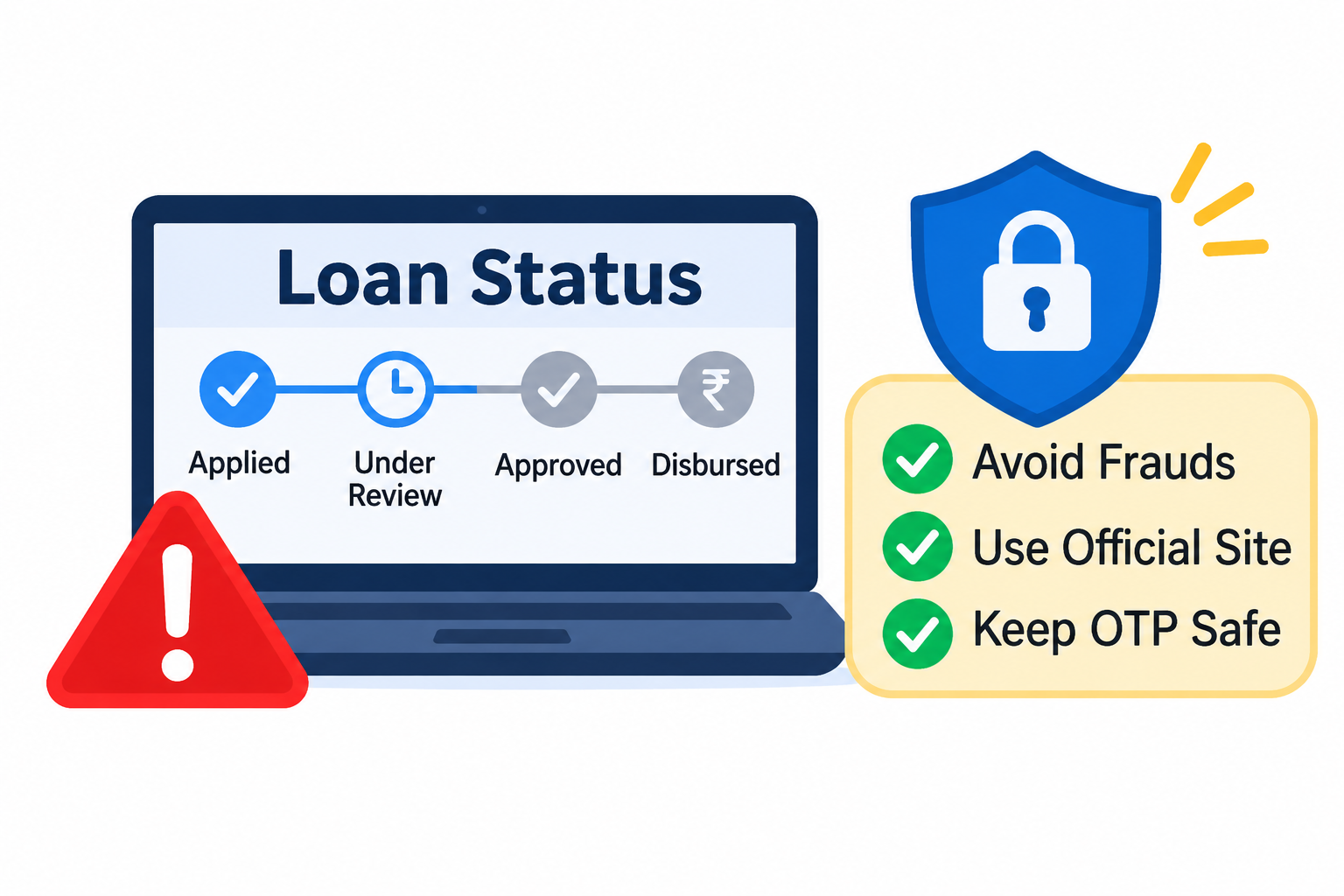
Introduction
Checking a loan application status is an important part of the borrowing process. It helps applicants understand whether their loan is pending, approved, rejected, or awaiting additional documents. However, many borrowers make simple mistakes while checking their loan status, which can lead to confusion, financial risks, or unnecessary delays.
With digital lending becoming more popular in India, borrowers should understand how to check their loan application status safely and avoid misleading information. This guide explains common mistakes, potential risks, and safer decisions borrowers should follow.
1. What Is a Loan Application Status Check?
A loan application status check allows borrowers to track the progress of their loan request after submitting an application.
Common loan application statuses include:
|
Status |
Meaning |
|---|---|
|
Submitted |
Application successfully received |
|
Under Review |
Lender is reviewing the details |
|
Pending |
Additional verification or action is required |
|
Documents Required |
More documents need to be submitted |
|
Approved |
Loan application has been approved |
|
Rejected |
Loan application was not accepted |
|
Disbursed |
Approved loan amount has been transferred |
Important: Loan approval does not always mean the money has been disbursed. Borrowers should check the final loan agreement and disbursement confirmation.
2. Common Mistakes While Checking Loan Application Status
2.1 Using Unofficial Websites
Some borrowers enter their personal details on unknown websites claiming to provide instant loan status updates.
Why it is risky:
-
Personal information may be misused.
-
Banking details could be exposed.
-
Fraudulent websites may collect sensitive information.
Safer decision: Always use the official lender website or verified mobile application.
2.2 Sharing OTPs With Unknown People
Fraudsters may pretend to be bank representatives and ask for OTPs to verify loan applications.
Why it is risky: Sharing OTPs can expose accounts and personal information to unauthorised access.
Safer decision: Never share OTPs, passwords, PINs, or banking credentials with anyone.
2.3 Assuming Pending Means Rejected
A pending application does not automatically mean the lender has rejected the loan.
Why it happens:
-
Document verification may be incomplete.
-
Employment details may require confirmation.
-
Credit assessment may still be in progress.
Safer decision: Contact the official lender support team and ask whether any additional action is required.
2.4 Applying for Multiple Loans Immediately
Some borrowers submit applications to several lenders because their first application is taking time.
Possible risks:
-
Multiple credit enquiries may affect the credit score.
-
Managing several loan offers can become confusing.
-
Borrowers may accept unsuitable loan terms.
Safer decision: Check the existing application status before submitting another application.
2.5 Ignoring Messages From the Lender
Borrowers sometimes overlook SMS messages, emails, or notifications requesting additional documents.
Why it matters: Missing important verification requests may delay the application.
Safer decision: Regularly check registered email addresses, SMS messages, and official lender notifications.
3. Risks of Checking Loan Application Status Through Unsafe Methods
|
Risk |
Possible Impact |
Safer Action |
|---|---|---|
|
Fake websites |
Personal data theft |
Use official platforms |
|
OTP sharing |
Unauthorised access |
Keep OTPs private |
|
Fake customer care |
Financial fraud |
Verify contact details |
|
Unknown application links |
Phishing attacks |
Avoid suspicious links |
|
Repeated applications |
Multiple credit enquiries |
Compare before applying |
|
Fake approval messages |
Advance-fee fraud |
Confirm directly with lender |
4. Safer Decisions Borrowers Should Follow
4.1 Verify the Lender
Before checking an application, confirm that the lender is a legitimate bank or RBI-registered NBFC.
For digital lending, verify the actual regulated lender behind the loan application.
4.2 Keep Application Details Ready
Keep the following information available:
-
Loan application or reference number
-
Registered mobile number
-
Registered email address
-
Application submission date
Do not share sensitive information with unverified individuals.
4.3 Check Status Through Official Channels
Use trusted channels such as:
-
Official lender website
-
Verified mobile application
-
Official customer support number
-
Registered email communication
4.4 Read Loan Approval Conditions
Before accepting an approved loan, review:
-
Interest rate
-
Annual Percentage Rate (APR)
-
Processing fees
-
Repayment tenure
-
Monthly EMI
-
Late payment charges
-
Prepayment and foreclosure conditions
4.5 Avoid Paying Fees to Unlock Approval
Be cautious if someone demands money to release an approved loan or change a pending status.
Verify any legitimate charges directly with the lender through official channels before making a payment.
5. What to Do If Your Loan Application Status Looks Suspicious?
If you receive an unexpected approval message, payment request, or suspicious status update, follow these steps:
-
Do not click unknown links.
-
Do not share OTPs or banking details.
-
Contact the lender using its official contact information.
-
Verify the application reference number.
-
Report suspicious activity to the lender.
-
If financial fraud occurs in India, contact the cybercrime helpline at 1930 or report it through the National Cyber Crime Reporting Portal.
6. Loan Application Status Check: Wrong vs Safer Decisions
|
Common Wrong Decision |
Safer Decision |
|---|---|
|
Clicking unknown links |
Visiting official websites |
|
Sharing OTPs |
Keeping OTPs confidential |
|
Assuming pending means rejected |
Waiting for verification |
|
Applying repeatedly |
Checking the existing application |
|
Ignoring lender messages |
Responding to genuine requests |
|
Accepting offers immediately |
Comparing loan costs |
|
Trusting instant approval claims |
Verifying directly with the lender |
7. Important Checklist Before Checking Loan Status
Borrowers can follow this simple checklist:
8. Frequently Asked Questions (FAQs)
1. Is it safe to check loan application status online?
Yes. It is generally safe when borrowers use the lender's official website or verified mobile application.
2. Can someone check my loan status using my mobile number?
Some lenders allow status checks using a registered mobile number and additional verification. Requirements vary by lender.
3. What should I do if my loan status shows pending?
Check for document requests and contact the lender's official customer support team.
4. Does checking loan application status affect my CIBIL score?
No. Simply checking your application status does not normally affect your CIBIL score.
5. Can I check loan status without an application number?
Some lenders allow applicants to check using their registered mobile number or other verification details.
6. Is it safe to share my loan reference number?
Share it only through verified lender channels. Avoid posting it publicly.
7. Why do I receive fake loan approval messages?
Fraudsters may use fake messages to collect personal information or demand fraudulent payments.
8. Should I apply for another loan if my status is pending?
First understand why the existing application is pending and review your financial requirements.
9. Can a loan be approved but not disbursed?
Yes. Disbursement may require completion of documentation, agreement acceptance, or other formalities.
10. What happens if I ignore document verification requests?
Your application may remain pending or eventually be rejected, depending on the lender's process.
11. Can I check my loan status through customer care?
Yes. Contact the lender through its officially published customer support details.
12. What should I do if someone asks for money to approve my loan?
Do not make an unverified payment. Contact the lender directly to confirm whether the requested charge is legitimate.
13. How often should I check my loan application status?
Check periodically and follow the lender's suggested processing timeline rather than repeatedly submitting requests.
14. Can fake loan applications affect my financial information?
Yes. Fraudulent applications may expose personal and financial information to misuse.
15. Where can I report loan-related cyber fraud in India?
You can call 1930 or visit the National Cyber Crime Reporting Portal
9. Key Takeaways
-
Always check loan status through official channels.
-
Never share OTPs, passwords, or banking PINs.
-
Do not assume pending applications are rejected.
-
Avoid submitting multiple applications without checking existing ones.
-
Verify loan approval and disbursement separately.
-
Review interest rates, APR, fees, and repayment conditions.
-
Report suspicious loan-related financial activity immediately.
10. Conclusion
Checking loan application status is a simple process, but borrowers should be careful about where and how they access their information. Unofficial websites, fake approval messages, OTP requests, and repeated loan applications can create unnecessary financial and security risks.
By using verified lender platforms, protecting personal information, and understanding each application status, borrowers can make safer financial decisions. Responsible borrowing begins with staying informed and checking every loan-related update carefully.
Published on : 26th November
Published by : monisha
www.vizzve.com || www.vizzveservices.com
Follow us on social media: Facebook || Linkedin || Instagram
🛡 Powered by Vizzve Financial
RBI-Registered Loan Partner | 10 Lakh+ Customers | ₹600 Cr+ Disbursed