

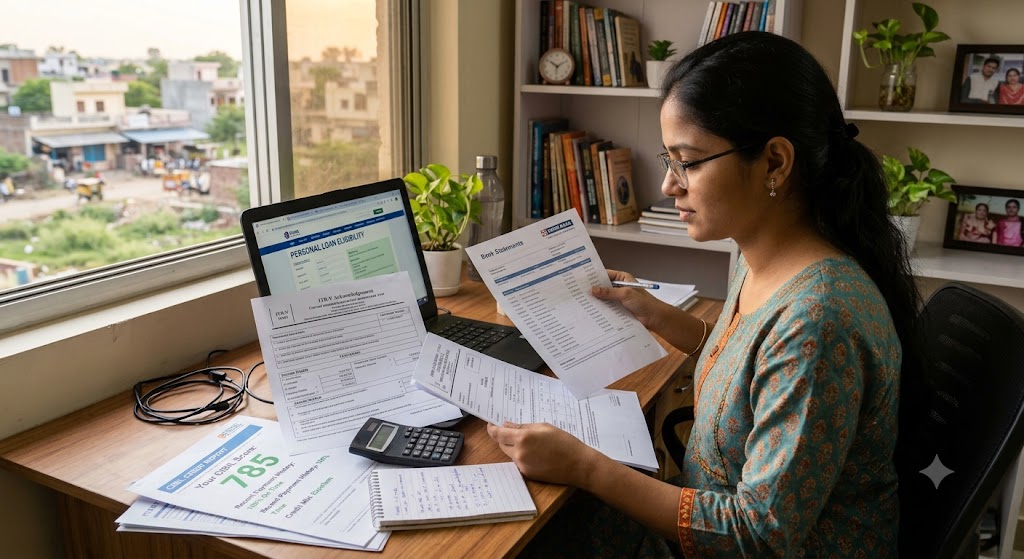
Freelancing allows people to earn money through independent work instead of a traditional full-time job. Content writers, graphic designers, web developers, digital marketers, tutors and other professionals can work with multiple clients and earn from different projects.
However, getting a personal loan as a freelancer can sometimes be challenging. Income may change from month to month, and freelancers may not have salary slips or an employer-issued income certificate.
For freelancers living in Tier-3 cities in India, understanding loan eligibility can make the application process easier to navigate. This guide explains the basic requirements, documents, credit score considerations and practical steps in simple language.
AI Answer Box: How Does Freelancer Loan Eligibility Work in Tier-3 Cities?
Freelancers in Tier-3 cities may qualify for a personal loan if they meet the lender’s eligibility criteria. Lenders may check income, bank statements, credit history, existing EMIs, identity documents and repayment capacity. Depending on the lender, invoices, client payment records and income-tax returns may also be requested.
Living in a Tier-3 city does not automatically guarantee or prevent loan approval. Eligibility depends on the lender, the loan product and the applicant’s financial profile.
1. What Is Loan Eligibility for Freelancers?
Loan eligibility means the conditions a lender uses to decide whether an applicant qualifies for a loan.
For freelancers, lenders may need to understand how regularly the applicant earns and whether the income is sufficient to support repayments.
Common factors include:
-
Age and identity verification.
-
Type of freelance work.
-
Monthly or annual income.
-
Bank statements and income records.
-
Credit score and repayment history.
-
Existing loans and EMIs.
-
Requested loan amount and tenure.
-
Lender-specific requirements.
Every lender has its own eligibility criteria. Meeting the basic requirements does not guarantee final approval.
2. Can Freelancers in Tier-3 Cities Apply for Personal Loans?
Yes, freelancers may apply for personal loans through eligible banks, NBFCs and authorized digital lending channels, depending on the product and location served.
Freelancers may include:
-
Content writers and copywriters.
-
Graphic designers and illustrators.
-
Website and software developers.
-
Digital marketing professionals.
-
Video editors and photographers.
-
Online tutors and consultants.
-
Independent accountants and other professionals.
Applicants should check whether the lender accepts freelance or self-employed income. Some products may require a minimum income, work experience or specific financial documents.
3. What Documents May Be Required?
Since freelancers may not receive monthly salary slips, lenders can request other documents to assess income and identity.
| Document | Purpose |
|---|---|
| PAN | Financial and identity verification |
| Aadhaar or another accepted KYC document | Identity and address verification, as applicable |
| Bank statements | Review of deposits and financial activity |
| ITRs, where required | Supporting evidence of declared income |
| Client invoices | Evidence of billed freelance work |
| Payment receipts | Evidence of payments received |
| Client contracts or work orders | Supporting evidence of professional engagements |
Not every lender requires all these documents. Check the official checklist before applying and submit information only through a legitimate, authorized process.
4. How Do Lenders Check Freelance Income?
Freelancers may earn different amounts in different months. A lender may therefore review financial records to understand the applicant’s earning pattern.
For example, a freelancer might earn ₹25,000 in one month, ₹40,000 in the next and ₹35,000 in another. These figures are illustrative and do not represent a lender’s minimum income requirement.
To prepare, freelancers can:
-
Keep bank statements organized.
-
Save invoices and payment receipts.
-
Maintain accurate income and expense records.
-
Keep tax documents where applicable.
-
Ensure that the income reported in the application is accurate.
Clear financial records can help explain where the income comes from and support the lender’s assessment.
5. Does CIBIL Score Matter?
Yes, a lender may review your CIBIL score or other credit information as part of its assessment.
A credit report may show previous loans, repayment history, credit-card balances and outstanding obligations. Late payments, defaults or other negative information may affect the assessment.
However, a high credit score does not guarantee approval. The lender may also consider income, existing EMIs, documentation and the requested loan amount.
Simple Ways to Maintain Your Credit Profile
-
Pay EMIs and credit-card bills on time.
-
Check your credit report for errors.
-
Raise disputes for incorrect information.
-
Avoid unnecessary loan applications.
-
Borrow only when repayment is affordable.
6. Do Existing EMIs Affect Eligibility?
Yes. Existing EMIs can reduce the money available for a new repayment.
For example, suppose a freelancer earns an average of ₹40,000 per month and already pays ₹8,000 toward existing loans. If a new loan adds another EMI of ₹7,000, total monthly EMIs would become ₹15,000.
| Monthly financial detail | Illustrative amount |
|---|---|
| Average income | ₹40,000 |
| Existing EMIs | ₹8,000 |
| Proposed new EMI | ₹7,000 |
| Total EMIs after new loan | ₹15,000 |
| Income remaining after EMIs | ₹25,000 |
This is only an example. It excludes living expenses, taxes, business costs and income fluctuations. It is not an approval formula or a recommended debt limit.
Before applying, check whether you can manage the new EMI even during months when freelance income is lower.
7. How to Apply for a Freelancer Loan: Simple Steps
Step 1: Check eligibility. Read the lender’s requirements for income, occupation, age and location.
Step 2: Prepare your documents. Keep KYC documents, bank statements and accepted income records ready.
Step 3: Review your credit report. Check for errors and understand your existing credit obligations.
Step 4: Estimate the EMI. Make sure the repayment fits your budget.
Step 5: Compare lenders. Check interest rates, APR, fees, tenure and total repayment.
Step 6: Apply through an official channel. Provide accurate information and consent only to legitimate data requests.
Step 7: Read the loan offer. Before accepting, review the Key Facts Statement (KFS), loan agreement and repayment schedule.
8. Common Reasons a Freelancer Loan May Be Rejected
| Possible reason | What you can do |
|---|---|
| Income is difficult to verify | Organize bank statements, invoices and accepted income records |
| Existing EMIs are high | Review your debt and borrowing needs |
| Credit history has issues | Check your credit report and address errors |
| KYC information does not match | Correct discrepancies in your documents |
| Required documents are missing | Follow the lender’s official checklist |
| Requested loan is not affordable | Reassess the amount and expected EMI |
| Eligibility rules are not met | Compare legitimate products with suitable criteria |
A rejection from one lender does not automatically mean that every lender will reject the application. Understand the reason before applying elsewhere rather than submitting many applications at once.
9. How to Improve Your Chances of Approval
Keep Income Records Clear
Save invoices, client payments and bank statements so your income can be reviewed more easily.
Manage Existing Debt
Avoid unnecessary loans and review your current repayment commitments before borrowing more.
Keep Documents Updated
Check that your personal details are accurate and consistent across relevant documents.
Choose an Affordable Loan Amount
Do not borrow more than you need or can repay comfortably.
Apply Selectively
Compare lender requirements first to reduce unnecessary applications and credit enquiries.
Be Careful With Digital Loan Apps
Verify the actual lender, read the privacy terms and never share OTPs, UPI PINs or banking passwords with agents or suspicious apps.
10. What Should You Check Before Accepting a Loan?
Loan approval is only one part of the borrowing process. Before accepting an offer, review:
-
Interest rate: Understand how interest is charged.
-
APR: Check the disclosed annualized cost of borrowing.
-
Processing fee: Review the fee and applicable taxes.
-
EMI: Confirm the monthly payment.
-
Loan tenure: Understand the repayment period.
-
Total repayment: Check how much you will repay overall.
-
Penal charges: Understand the consequences of delayed payments.
-
Prepayment terms: Check any applicable conditions or charges.
-
KFS and agreement: Ensure the documents match the offer.
Under applicable RBI digital-lending requirements, regulated lenders must follow relevant creditworthiness, disclosure and data-handling rules. Review the latest official guidance and lender documents before accepting a digital loan.
Key Takeaways
-
Freelancers in Tier-3 cities may qualify for personal loans if they meet the lender’s criteria.
-
Bank statements, invoices and other accepted income records can help demonstrate earnings.
-
CIBIL score is important but does not guarantee approval.
-
Existing EMIs and irregular income can affect repayment capacity.
-
Requirements differ by lender and loan product.
-
Compare APR, fees, EMI and total repayment before accepting an offer.
-
Verify the actual lender and read the KFS and loan agreement carefully.
FAQs
1. Can freelancers in Tier-3 cities get personal loans?
Yes, they may qualify if the lender offers a suitable product and they meet its eligibility requirements.
2. Do freelancers need salary slips to apply?
Not always. Some lenders may accept alternative income evidence, such as bank statements, invoices or tax documents.
3. Is an ITR compulsory for every freelancer loan?
Requirements vary. Some lenders may require ITRs, while others may accept different income documents.
4. Does CIBIL score affect freelancer loan eligibility?
Yes, it may form part of the assessment. Income, existing debt, documents and lender-specific rules can also influence approval.
5. Can I apply if my freelance income changes every month?
You may apply if the lender accepts your profile. The lender may review your financial records to assess income and repayment capacity.
6. How much personal loan can a freelancer get?
There is no universal amount. The eligible amount depends on the lender’s product limits, income assessment, existing obligations and other criteria.
7. Does living in a Tier-3 city reduce my eligibility?
Not necessarily. Location requirements vary by lender, and living in a Tier-3 city alone does not determine approval.
8. What should I do if my loan application is rejected?
Review the reason, check your documents and credit report, assess existing EMIs and address any issues before applying again.
9. How can I identify a genuine digital loan app?
Verify the actual lender through official sources, read the loan disclosures and privacy terms, and avoid apps or agents promising guaranteed approval in exchange for suspicious upfront payments.
10. What is a KFS?
KFS stands for Key Facts Statement. It presents important loan terms and costs to help borrowers understand an offer before entering into the loan agreement.
Conclusion
Understanding loan eligibility does not have to be complicated. For freelancers in Tier-3 cities, the most important steps are to maintain clear income records, manage existing debt, check credit history and choose a loan with affordable repayments.
Before applying, compare legitimate lenders and review the complete cost of borrowing. Accurate information and careful planning can help you make a more informed financial decision.
Published on : 28th October 2026
Published by : Shibam nath
www.vizzve.com || www.vizzveservices.com
Follow us on social media: Facebook || Linkedin || Instagram
🛡 Powered by Vizzve Financial
RBI-Registered Loan Partner | 10 Lakh+ Customers | ₹600 Cr+ Disbursed