

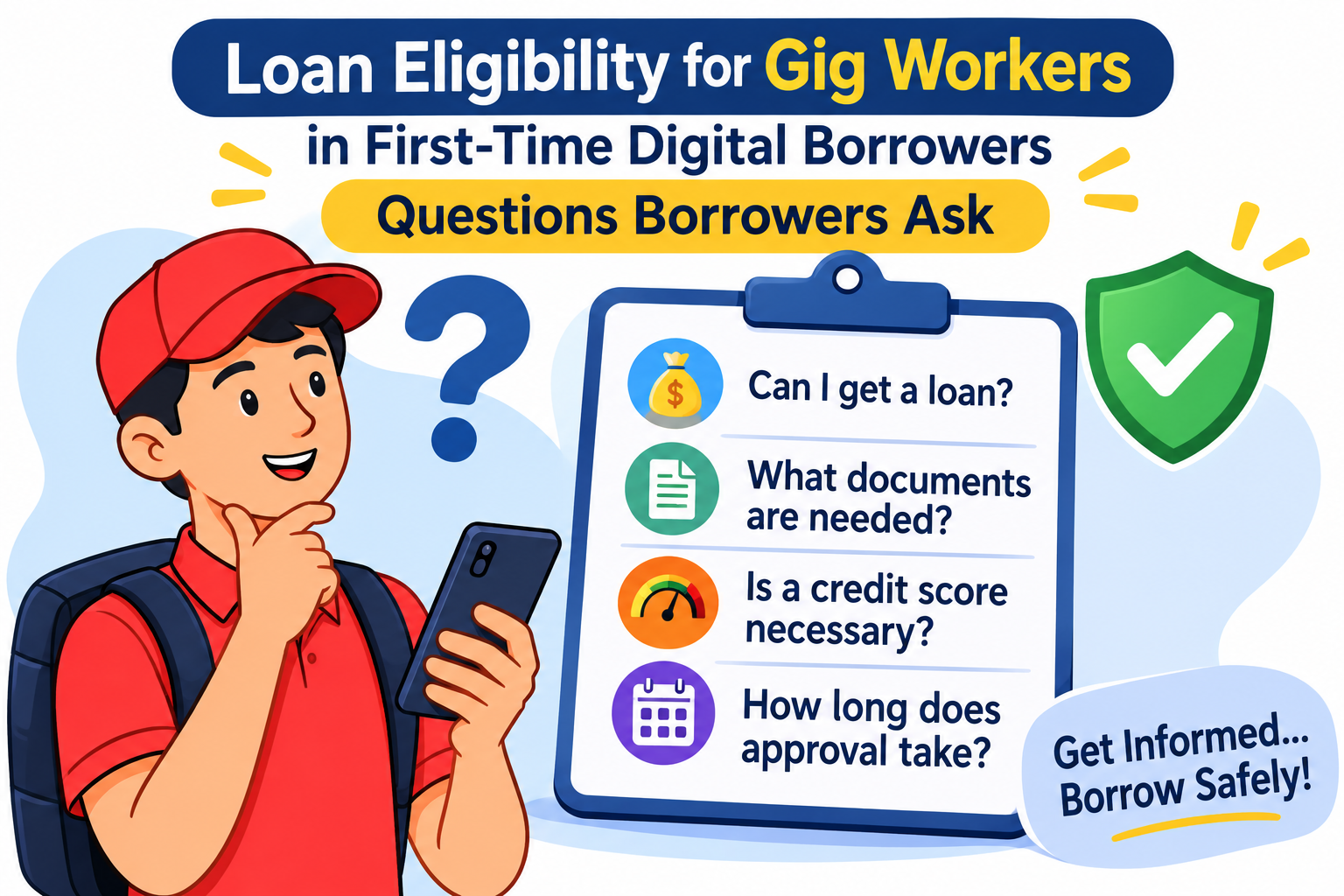
The gig economy is growing rapidly in India, creating opportunities for delivery partners, cab drivers, freelancers, online service providers and independent workers. Many people depend on digital platforms and flexible work arrangements to earn their income.
However, when gig workers need financial assistance, understanding loan eligibility can sometimes be challenging. This is especially true for first-time digital borrowers who may not have previous borrowing experience or traditional salary documents.
Questions about minimum income, credit scores, bank statements, loan documents and repayment options are common among new borrowers.
Understanding these topics before applying can help individuals make informed financial decisions.
In this guide, we answer the most common questions borrowers ask about loan eligibility for gig workers and explain the important things to consider before applying.
What Is Loan Eligibility for Gig Workers?
Loan eligibility refers to the conditions a lender evaluates before deciding whether an applicant qualifies for a loan.
For gig workers, lenders may consider several factors, including:
-
Average monthly income.
-
Consistency of earnings.
-
Bank account transactions.
-
Credit score and repayment history.
-
Existing financial commitments.
-
Identity and address verification.
-
Repayment capacity.
Unlike salaried employees, gig workers may receive income daily, weekly or monthly depending on their work arrangements.
Lenders may consider alternative income records, such as platform payment statements, bank statements and freelance invoices.
Eligibility requirements differ between lenders and loan products.
Why Do First-Time Digital Borrowers Need to Understand Loan Eligibility?
First-time borrowers may not be familiar with digital lending procedures. They may also have questions about documentation, interest rates and repayment conditions.
Understanding eligibility beforehand can help borrowers:
-
Prepare the necessary documents.
-
Understand their financial position.
-
Avoid unnecessary loan applications.
-
Compare available loan options.
-
Understand borrowing costs.
-
Plan repayments responsibly.
-
Identify genuine lending platforms.
Being informed before applying can make the borrowing process easier to understand.
Common Questions Borrowers Ask About Gig Worker Loan Eligibility
1. Can Gig Workers Apply for Personal Loans?
Yes. Gig workers can explore personal loan options if they meet the lender's eligibility requirements.
Delivery partners, cab drivers, freelancers and independent service providers may apply through lenders that consider their income and financial records.
Approval depends on the lender's assessment.
2. Can First-Time Digital Borrowers Get Loans?
Yes. First-time digital borrowers can apply for loans even if they have never borrowed before.
However, lenders may evaluate their income, banking activity, credit information and repayment capacity.
Having no previous loan history does not automatically mean an application will be rejected.
3. Is a Salary Slip Mandatory for Gig Workers?
Not necessarily.
Gig workers may not receive traditional salary slips because their earnings depend on assignments, orders or completed projects.
Depending on the lender's requirements, alternative income documents may include:
-
Platform earnings statements.
-
Bank statements.
-
Freelance invoices.
-
Payment receipts.
-
Business transaction records.
4. What Is the Minimum Income Required for Gig Worker Loans?
There is no universal minimum income requirement for all gig worker loans.
Each bank or NBFC may establish its own eligibility conditions.
Lenders may consider average monthly income, existing financial commitments and repayment capacity.
5. Is a Credit Score Necessary for First-Time Borrowers?
A credit score can be an important part of loan assessment.
However, first-time borrowers may have limited or no credit history.
Some lenders may consider other financial information, including income records and bank transactions, when evaluating such applicants.
6. What Documents Are Required to Apply for a Gig Worker Loan?
Commonly requested documents include:
-
PAN card.
-
Aadhaar or another accepted identity document.
-
Address proof.
-
Bank statements.
-
Income statements.
-
Platform payment records, where applicable.
Requirements depend on the lender and loan product.
7. Can Delivery Partners Apply for Loans?
Yes. Delivery partners may explore loan products if they meet the lender's eligibility criteria.
They may use platform earnings records and bank statements to demonstrate their income.
8. Can Freelancers Qualify for Personal Loans?
Freelancers may qualify depending on their income, financial history and the lender's assessment.
Maintaining invoices, payment receipts and bank transaction records can help demonstrate their earning patterns.
9. Does Irregular Income Affect Loan Eligibility?
Yes. Irregular income may influence how lenders evaluate repayment capacity.
Gig workers can maintain organised income records to demonstrate their average earnings over time.
10. Can Gig Workers Apply for Loans Online?
Yes. Eligible gig workers can explore online loan applications through digital lending platforms associated with regulated lenders.
Before applying, borrowers should verify the actual lending institution and review the loan terms.
11. How Can I Check My Loan Eligibility Before Applying?
You can begin by reviewing:
-
Your average monthly income.
-
Existing loan commitments.
-
Credit history.
-
Bank statements.
-
Required documents.
-
Repayment capacity.
You can also review the eligibility criteria published by the lender.
12. Does Existing Debt Affect Loan Eligibility?
Yes. Existing EMIs and outstanding financial obligations may affect how lenders assess an applicant's repayment capacity.
Borrowers should calculate their available income before taking additional credit.
13. What Is the Interest Rate for Gig Worker Loans?
Interest rates vary depending on the lender, loan product, applicant profile and applicable terms.
Borrowers should compare the Annual Percentage Rate (APR), processing fees and other charges rather than considering only the advertised interest rate.
14. How Long Does Loan Approval Take?
The processing time depends on the lender, application completeness, verification requirements and loan product.
Some digital applications may offer quicker processing, but approval and disbursement are not guaranteed within a particular timeframe.
15. How Can Gig Workers Improve Their Loan Eligibility?
Gig workers can take several practical steps:
-
Maintain consistent financial records.
-
Keep bank statements organised.
-
Review their credit reports.
-
Pay existing EMIs on time.
-
Reduce unnecessary debt.
-
Submit accurate documents.
-
Apply for a suitable loan amount.
-
Compare available loan offers.
Important Factors That Affect Gig Worker Loan Eligibility
Understanding these factors can help first-time borrowers prepare before applying.
1. Monthly Income
Lenders may review average earnings to understand an applicant's financial capacity.
2. Credit History
Credit history provides information about previous borrowing and repayment behaviour.
3. Bank Transactions
Bank statements can help demonstrate income deposits and financial activity.
4. Existing Financial Commitments
Existing loans and EMIs may influence repayment capacity.
5. Employment or Gig-Work Details
Information about the applicant's occupation and income source may form part of the lender's assessment.
6. Repayment Capacity
Borrowers should ensure that the proposed EMI is manageable alongside essential expenses and savings.
Example: Understanding Loan Eligibility Through a Real-World Situation
Consider a delivery partner who earns an average of ₹27,000 per month.
The worker wants to apply for a personal loan to manage an unexpected expense.
Before applying, the borrower reviews the following financial details:
| Financial Details | Amount |
|---|---|
| Average Monthly Income | ₹27,000 |
| Household Expenses | ₹12,000 |
| Existing EMI | ₹3,000 |
| Remaining Amount | ₹12,000 |
The remaining ₹12,000 should also cover savings and unexpected expenses.
The borrower should therefore evaluate a new EMI carefully rather than assuming the entire remaining amount is available for repayment.
This example illustrates why income and expenses should be reviewed before borrowing.
Safety Tips for First-Time Digital Borrowers
Before applying for a digital loan, follow these precautions:
-
Verify the actual bank or NBFC providing the loan.
-
Check the lender's official website.
-
Review the application's privacy policy.
-
Submit only genuine documents.
-
Never share OTPs or UPI PINs.
-
Read the Key Facts Statement.
-
Understand interest rates and processing charges.
-
Review repayment conditions.
-
Avoid suspicious advance payment requests.
-
Keep a copy of the loan agreement.
The Reserve Bank of India's Digital Lending Directions, 2025 provide requirements relating to borrower creditworthiness, disclosures, data protection and grievance redressal for regulated entities.
How Vizzve Helps First-Time Digital Borrowers
Vizzve aims to make financial information easier to understand for gig workers and first-time digital borrowers.
Understanding loan eligibility, income documentation and repayment responsibilities can help individuals make informed borrowing decisions.
By learning about common eligibility questions and digital lending practices, borrowers can better prepare before exploring financial products.
Before proceeding with any loan application, borrowers should verify the actual lending partner and review all applicable loan conditions.
Key Takeaways
-
Gig workers can explore loan options based on lender eligibility requirements.
-
First-time digital borrowers may apply even without previous borrowing history.
-
Salary slips are not the only possible form of income evidence.
-
Bank statements and platform earnings records can help demonstrate income.
-
Credit history and repayment capacity may influence eligibility.
-
Interest rates and additional charges should be reviewed carefully.
-
Borrowers should verify lending platforms before submitting personal information.
-
Responsible borrowing begins with understanding financial obligations.
Conclusion
Loan eligibility can raise several questions for gig workers, particularly those applying for their first digital loan. Understanding income requirements, credit history, documentation and repayment conditions can make the process easier to navigate.
Whether you are a delivery partner, cab driver, freelancer or independent service provider, reviewing your financial records before applying is an important step.
Always compare loan terms, verify the lending institution and borrow according to your repayment capacity.
Vizzve encourages gig workers and first-time digital borrowers to stay informed, understand their financial options and make responsible borrowing decisions.
Published on : 7th November
Published by : Siva Nagaiah K
www.vizzve.com || www.vizzveservices.com
Follow us on social media: Facebook || Linkedin || Instagram
🛡 Powered by Vizzve Financial
RBI-Registered Loan Partner | 10 Lakh+ Customers | ₹600 Cr+ Disbursed