

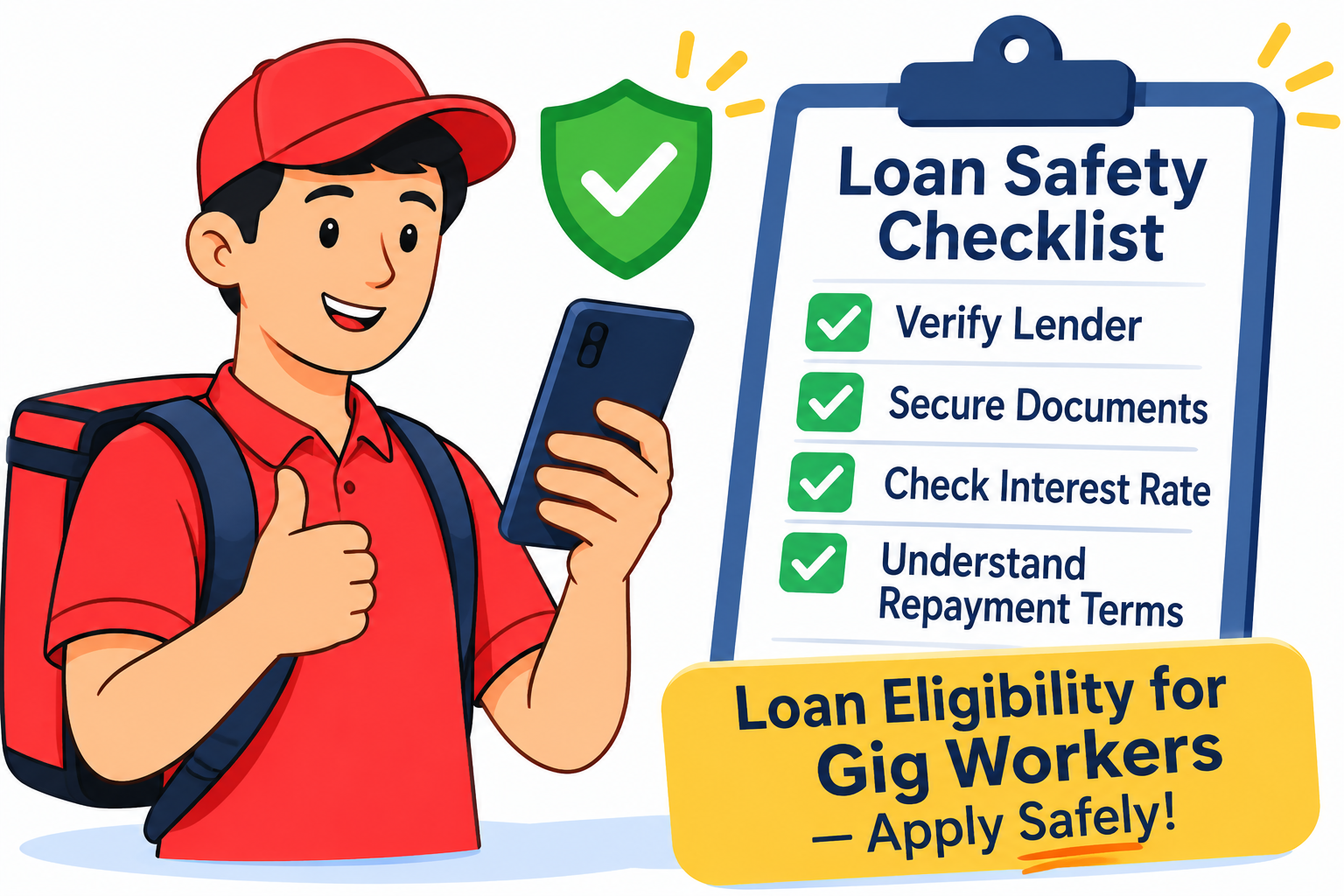
The gig economy is creating new earning opportunities for delivery partners, cab drivers, freelancers, online service providers and independent workers across India. Many of these individuals depend on digital platforms for their daily or monthly income.
When unexpected financial needs arise, gig workers may explore personal loans or other credit options. However, applying for a loan online for the first time can be challenging, particularly when borrowers are unfamiliar with digital lending procedures.
Understanding loan eligibility is important, but checking the safety of the lending platform is equally essential.
A proper safety checklist helps first-time digital borrowers verify lenders, protect personal information, understand loan charges and avoid fraudulent applications.
In this guide, we explain the important safety measures gig workers should follow before applying for a loan.
What Is a Loan Safety Checklist?
A loan safety checklist is a collection of important steps borrowers should follow before submitting a loan application or accepting a loan offer.
It helps applicants evaluate whether the lending platform is genuine, the loan terms are transparent and the repayment conditions are manageable.
For gig workers, a safety checklist may include:
-
Verifying the actual lending institution.
-
Checking loan eligibility requirements.
-
Preparing valid documents.
-
Protecting personal and banking information.
-
Reviewing interest rates and charges.
-
Understanding repayment conditions.
-
Avoiding suspicious loan offers.
Following these steps can help first-time digital borrowers make informed financial decisions.
Why Is Loan Safety Important for First-Time Digital Borrowers?
First-time borrowers may not have enough experience with online lending platforms. They may also be unfamiliar with loan agreements, digital verification and repayment procedures.
Loan safety is important for several reasons.
1. Protection Against Loan Fraud
Fake lending applications may use misleading advertisements, false approval promises or suspicious payment requests.
Verifying the lender before applying helps reduce fraud risks.
2. Protection of Personal Information
Loan applications may request sensitive information, including identity documents, bank details and contact information.
Borrowers should understand why the information is being collected and how it will be used.
3. Better Understanding of Loan Costs
Some borrowers focus only on the advertised interest rate and overlook processing fees, taxes and other charges.
Reviewing the complete loan cost helps avoid unexpected financial obligations.
4. Responsible Borrowing
Checking repayment capacity before accepting a loan can help gig workers avoid unnecessary financial pressure.
Loan Safety Checklist for Gig Workers
Before applying for a loan, first-time digital borrowers should review the following checklist.
1. Verify the Lending Institution
Always identify the actual bank or Non-Banking Financial Company (NBFC) providing the loan.
Before proceeding:
-
Check the lender's official website.
-
Verify its RBI regulatory status where applicable.
-
Confirm the lending app's association with the lender.
-
Review official customer support details.
-
Check grievance redressal information.
Do not assume that an application is genuine simply because it appears in an advertisement or mobile app store.
2. Check Loan Eligibility Requirements
Understand the eligibility conditions before submitting an application.
Lenders may consider:
-
Age.
-
Monthly or average income.
-
Employment or gig-work details.
-
Credit history.
-
Existing financial obligations.
-
Bank transaction history.
-
Repayment capacity.
Requirements vary depending on the lender and loan product.
3. Prepare Genuine Income Documents
Gig workers may not receive traditional salary slips.
Depending on the lender's requirements, they may provide:
-
Delivery platform earnings statements.
-
Cab driving payment records.
-
Freelance invoices.
-
Bank statements.
-
Business or service payment records.
Always provide accurate information and genuine documents.
4. Protect Your PAN and Aadhaar Information
Identity documents are commonly requested during digital loan applications.
Follow these precautions:
-
Submit documents only through verified channels.
-
Avoid sharing identity documents with unknown individuals.
-
Use authorised document verification methods.
-
Never provide incorrect identity information.
-
Be careful when sharing document copies through messaging applications.
5. Never Share OTPs or Banking Passwords
An OTP is a confidential security code used for verification.
Remember:
-
Never share OTPs with callers.
-
Never disclose your UPI PIN.
-
Never share your ATM PIN.
-
Do not reveal internet banking passwords.
-
Avoid clicking suspicious verification links.
A genuine lender should not ask you to disclose confidential banking credentials.
6. Review Interest Rates and Processing Fees
Before accepting a loan, carefully examine its borrowing costs.
Check the following:
| Loan Detail | What to Verify |
|---|---|
| Interest Rate | Applicable rate of interest |
| APR | Overall annualised borrowing cost |
| Processing Fee | Charges for processing the application |
| Taxes | Applicable taxes on charges |
| Late Payment Fee | Penalties for delayed payments |
| Prepayment | Conditions for early repayment |
Do not make decisions based only on attractive advertisements or low starting interest rates.
7. Read the Key Facts Statement (KFS)
The Key Facts Statement provides important information about a loan.
Before accepting the offer, review:
-
Loan amount.
-
Interest rate.
-
Annual Percentage Rate.
-
Repayment schedule.
-
Applicable fees.
-
Other important loan conditions.
For applicable regulated lending products, the RBI requires lenders to provide a KFS before execution of the loan contract.
8. Check the Loan Agreement
Never accept a loan without reading the agreement.
Make sure you understand:
-
Total loan amount.
-
Disbursement details.
-
Repayment tenure.
-
EMI amount.
-
Interest calculation.
-
Late payment charges.
-
Prepayment conditions.
-
Cooling-off period, where applicable.
Keep a digital or printed copy for future reference.
9. Review App Permissions
Some suspicious applications may request unnecessary access to personal information.
Before installing a lending application:
-
Review the requested permissions.
-
Read the privacy policy.
-
Understand how personal information is collected.
-
Avoid applications requesting unnecessary access to contacts or call logs.
-
Download applications from trusted sources.
10. Check Customer Support and Complaint Facilities
A reliable lending arrangement should provide clear communication and grievance redressal information.
Check whether you can find:
-
Official customer support details.
-
Email contact information.
-
Complaint submission procedures.
-
Grievance redressal officer details.
-
Information about escalation procedures.
Avoid dealing with lenders that provide no clear support information.
11. Calculate Your Repayment Capacity
Gig workers may experience changes in income due to seasonal demand, working hours or assignment availability.
Before accepting a loan, calculate your available income after essential expenses.
For example:
| Financial Details | Amount |
|---|---|
| Average Monthly Income | ₹28,000 |
| Essential Expenses | ₹13,000 |
| Existing EMI | ₹3,000 |
| Remaining Amount | ₹12,000 |
The remaining amount should also cover savings and unexpected expenses. It should not automatically be treated as the amount available for a new EMI.
12. Avoid Guaranteed Loan Approval Claims
Be cautious of advertisements claiming:
-
Guaranteed approval without verification.
-
Loans without any eligibility checks.
-
Instant approval for every applicant.
-
Guaranteed credit score improvement.
-
Loans after paying an unofficial advance fee.
Loan approval depends on the lender's assessment and applicable eligibility requirements.
Common Digital Loan Scams Gig Workers Should Avoid
First-time borrowers should understand common warning signs.
Fake Loan Applications
Fraudulent applications may imitate genuine financial institutions to collect personal information.
Safety tip: Verify the actual lending partner before submitting documents.
Advance Fee Scams
Fraudsters may demand suspicious payments before processing or approving a loan.
Safety tip: Verify every charge against the official loan documents and lender communication.
Fake Customer Support Calls
Scammers may pretend to be bank or loan representatives.
Safety tip: Contact the lender using its official website or verified contact details.
Misleading Loan Advertisements
Some advertisements may promise unrealistic interest rates or guaranteed approval.
Safety tip: Compare the actual loan offer and KFS before accepting.
Unauthorised Data Collection
Untrustworthy applications may seek unnecessary access to private information.
Safety tip: Review app permissions and privacy policies before installation.
Special Safety Tips for Delivery Partners and Freelancers
Gig workers should follow a few additional precautions.
For delivery partners:
-
Maintain accurate platform earning records.
-
Use verified financial applications.
-
Avoid borrowing beyond vehicle maintenance and household requirements.
-
Review income fluctuations before selecting an EMI.
For cab drivers:
-
Maintain bank transaction records.
-
Consider vehicle-related expenses before borrowing.
-
Keep existing EMI obligations in mind.
For freelancers:
-
Maintain invoices and payment receipts.
-
Organise client payment records.
-
Separate business and personal expenses where practical.
-
Avoid taking loans based on uncertain future projects.
How Vizzve Encourages Safe Borrowing
Vizzve focuses on making financial information easier to understand for gig workers and first-time digital borrowers.
Understanding loan eligibility, lender verification, documentation and repayment responsibilities can help borrowers make better financial decisions.
Before proceeding with any loan application, borrowers should verify the actual lending partner, check the applicable eligibility requirements and understand the complete borrowing cost.
Responsible borrowing begins with awareness, preparation and careful evaluation.
Key Takeaways
-
Verify the actual bank or NBFC before applying.
-
Check loan eligibility requirements.
-
Submit only genuine documents.
-
Protect PAN, Aadhaar and banking information.
-
Never share OTPs, UPI PINs or passwords.
-
Review interest rates, APR and processing charges.
-
Read the KFS and loan agreement.
-
Check app permissions and privacy policies.
-
Avoid suspicious advance payment requests.
-
Borrow only according to your repayment capacity.
Conclusion
Digital lending can make financial services more accessible to gig workers and first-time borrowers. However, convenience should never replace caution.
Before applying for a loan, gig workers should verify the lender, protect their personal information, review loan charges and understand repayment obligations.
Following a proper loan safety checklist can help prevent common mistakes and support responsible borrowing.
Vizzve encourages gig workers and first-time digital borrowers to stay informed, verify financial platforms and make safe borrowing decisions.
Published on : 7th November
Published by : Siva Nagaiah K
www.vizzve.com || www.vizzveservices.com
Follow us on social media: Facebook || Linkedin || Instagram
🛡 Powered by Vizzve Financial
RBI-Registered Loan Partner | 10 Lakh+ Customers | ₹600 Cr+ Disbursed