

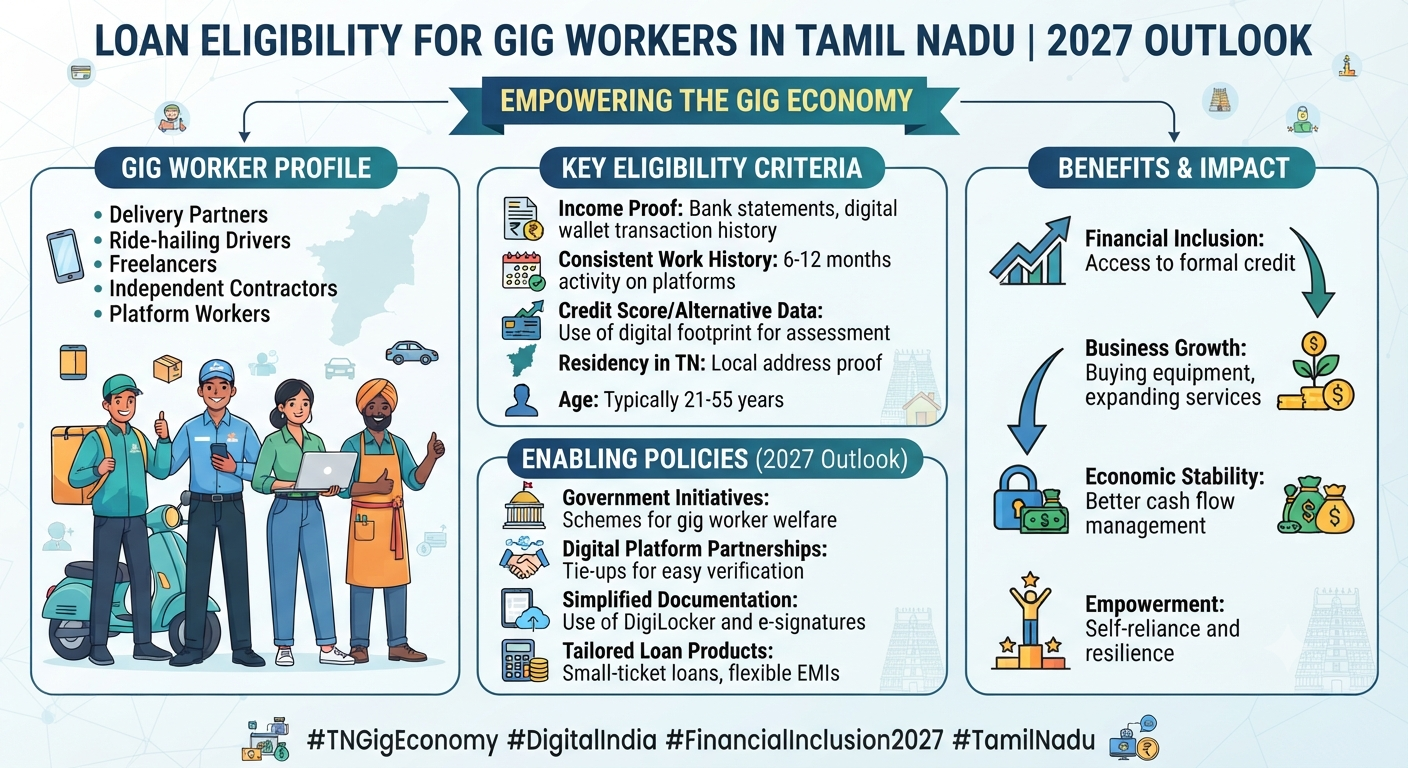
The gig economy is creating new earning opportunities for delivery partners, app-based drivers, freelancers and independent service providers across Tamil Nadu. From Chennai and Coimbatore to Madurai, Salem and Tiruchirappalli, many workers earn through flexible, task-based jobs rather than traditional salaried employment.
However, access to credit can remain a challenge. Gig workers may receive payments at different intervals, experience seasonal fluctuations in income or lack conventional salary slips. These circumstances can make it more difficult to demonstrate repayment capacity to a lender.
The 2027 outlook for gig worker loan eligibility is likely to depend on how lenders assess alternative income records, digital financial information, credit history and repayment capacity. This is a forward-looking assessment, not a guarantee that every lender will introduce new products or relax eligibility requirements in 2027.
This guide explains the trends to watch, documents to prepare, possible opportunities and risks gig workers should consider when exploring personal loans in Tamil Nadu.
3. AI Answer Box: Quick Summary
What is the 2027 outlook for gig worker loan eligibility in Tamil Nadu?
Gig workers may continue to explore personal loans from lenders that accept self-employed or variable-income applicants. Their eligibility will depend on lender-specific rules and the ability to demonstrate stable, verifiable earnings.
Key points for 2027:
-
Digital income records may help applicants document their earnings.
-
Bank statements and platform payout histories can support income verification when accepted by the lender.
-
Credit history and existing debts may influence eligibility and pricing.
-
Digital applications may simplify the application process, but identity and financial checks remain important.
-
Interest rates, fees and approval criteria can vary by lender.
-
Borrowers should compare total loan costs and ensure EMIs remain affordable during low-income months.
Bottom line: Gig workers can prepare for future borrowing by maintaining accurate income records, building responsible credit habits and choosing loans based on repayment capacity.
4. Understanding Gig Worker Loan Eligibility in Tamil Nadu
Who is a gig worker?
A gig worker performs flexible, temporary or task-based work, often through a digital platform or independent client arrangement.
Examples include:
-
Food and grocery delivery partners.
-
App-based cab and auto drivers.
-
Freelance designers, writers and developers.
-
Independent tutors and consultants.
-
Home-service professionals.
-
Online sellers and independent service providers.
Unlike traditional salaried employees, gig workers may not receive a fixed monthly salary or standard payslip. Their earnings can depend on completed jobs, customer demand, incentives, working hours and seasonal factors.
Why does this matter for loans?
Lenders need to understand whether an applicant can repay the amount borrowed. For gig workers, this assessment may require looking beyond salary slips to other evidence of income.
Depending on the lender, relevant information may include bank statements, platform payouts, invoices, tax records, credit history and existing financial commitments.
Not every lender accepts every type of document, so applicants should confirm the requirements before applying.
5. Gig Worker Loan Eligibility: What Could Change in 2027?
The following trends are possibilities to monitor, rather than confirmed predictions about every lender.
5.1 Greater Use of Digital Income Records
Digital platforms generate records of completed work, payments and earnings. These records may help gig workers explain how they earn and demonstrate their financial activity.
In 2027, borrowers should be prepared to provide accurate and consistent documentation wherever a lender accepts digital income evidence.
What workers can do now:
-
Download monthly payout statements.
-
Maintain bank statements showing incoming payments.
-
Keep invoices and receipts for freelance assignments.
-
Track income from multiple platforms separately.
-
Retain relevant tax documents.
5.2 More Attention to Alternative Income Evidence
A conventional salary slip may not reflect the financial circumstances of an independent worker.
Some lenders may accept alternative documents, although their policies differ. Better-organised records can help an applicant explain income that varies from month to month.
For example, a delivery partner in Chennai may receive different payments each week. A record covering several months can give a clearer picture than a single high-earning week.
5.3 Digital Loan Applications May Remain Important
Digital application channels can help applicants submit information and track application progress remotely.
However, a digital process does not necessarily mean instant approval, guaranteed eligibility or lower interest rates.
Applicants should check the identity of the actual lender, understand the consent requested for accessing financial data and review the loan agreement before accepting an offer.
5.4 Credit History Will Continue to Matter
Credit information can help lenders assess an applicant's repayment behaviour.
Workers planning to apply for loans in 2027 should:
-
Pay existing EMIs on time.
-
Avoid unnecessary borrowing.
-
Review credit reports for errors.
-
Keep credit card balances manageable.
-
Avoid submitting numerous applications without checking eligibility.
A positive credit history may strengthen an application, but it cannot guarantee approval.
5.5 Financial Awareness May Become More Important
As digital financial products evolve, borrowers will need to understand the complete cost of credit, including interest, processing fees and penalties.
A loan that appears convenient at first may become difficult to manage if income falls or work-related expenses rise.&