

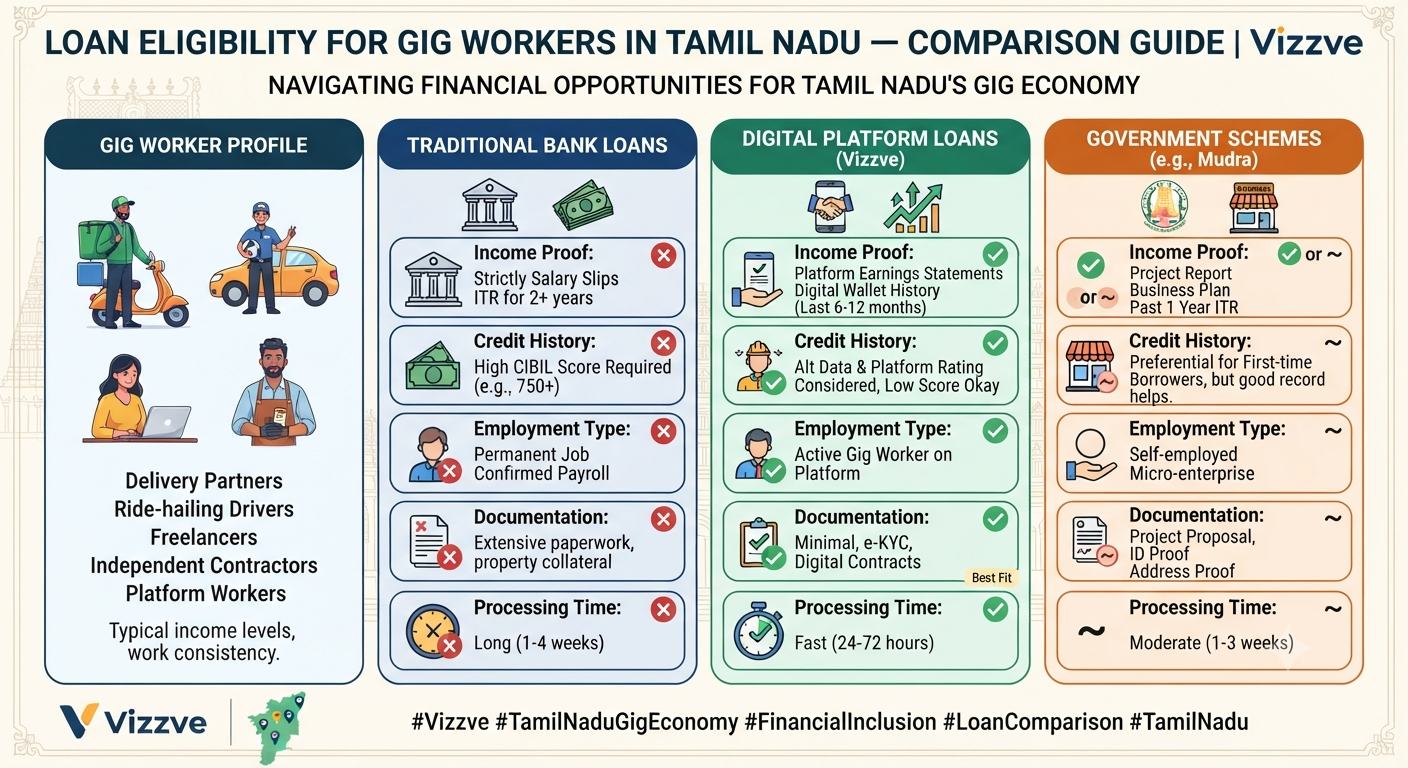
Gig work has become an important source of income for delivery partners, app-based cab drivers, freelance professionals, home-service workers, and other platform-based workers across Tamil Nadu. Cities such as Chennai, Coimbatore, Madurai, Tiruchirappalli, and Salem offer different opportunities for people working through digital platforms and independent service arrangements.
However, applying for a personal loan can be challenging when earnings change from week to week. Unlike salaried employees who receive a fixed monthly salary, gig workers may receive payments from multiple platforms, customers, or projects.
Loan eligibility for gig workers in Tamil Nadu depends on the lender's policies, documented income, repayment capacity, credit history, existing debts, and other applicable requirements. There is no single eligibility rule followed by every bank or lending institution.
This comparison guide explains the main factors gig workers should evaluate before applying for a loan.
3. AI Answer Box: Quick Comparison
How can gig workers compare loan eligibility in Tamil Nadu?
Gig workers should compare lenders based on acceptable income proof, minimum income requirements, credit history criteria, documentation, interest rates, fees, repayment terms, and eligibility conditions. Bank statements, platform earnings reports, tax records, and other documents may help demonstrate income, depending on the lender. Workers should compare the total repayment cost rather than choosing a loan based only on fast approval or a low advertised interest rate.
4. What Determines Loan Eligibility for Gig Workers?

1. Income and earning consistency
Lenders may review monthly credits, transaction history, platform earnings reports, invoices, and other available evidence. Regular, documented income can help demonstrate repayment capacity, but acceptance requirements differ.

2. Credit history
Lenders may check credit reports, previous repayments, overdue accounts, and existing loans. A stronger credit history can improve the application profile, although it does not guarantee approval.

3. Documents and identity verification
Applicants may need PAN, accepted identity and address documents, bank statements, and proof of earnings. Exact requirements depend on the lender and application process.

4. Repayment capacity
Lenders may assess existing EMIs, essential expenses, income fluctuations, and the proposed loan repayment. Applicants should also check whether the EMI remains manageable during low-income months.
5. Loan Eligibility Comparison by Gig Worker Category
Different types of gig workers may have different ways to demonstrate earnings. The table below compares common situations; it does not represent guaranteed lender eligibility.
|
Gig worker category |
Potential income evidence |
Important consideration |
|---|---|---|
|
Food delivery partner |
Platform earnings statements and bank credits |
Earnings may vary by demand and working hours |
|
E-commerce delivery worker |
Payout records and bank statements |
Contract type and payment regularity may matter |
|
App-based cab driver |
Platform payouts and bank statements |
Fuel, maintenance, insurance, and vehicle costs affect take-home income |
|
Freelancer |
Client invoices, bank credits, contracts, tax records |
Income may fluctuate between projects |
|
Home-service professional |
Customer payments, invoices, bank records |
Consistent records can help document earnings |
|
Independent service provider |
Invoices, transaction records, tax documents where applicable |
The lender must accept the evidence provided |