

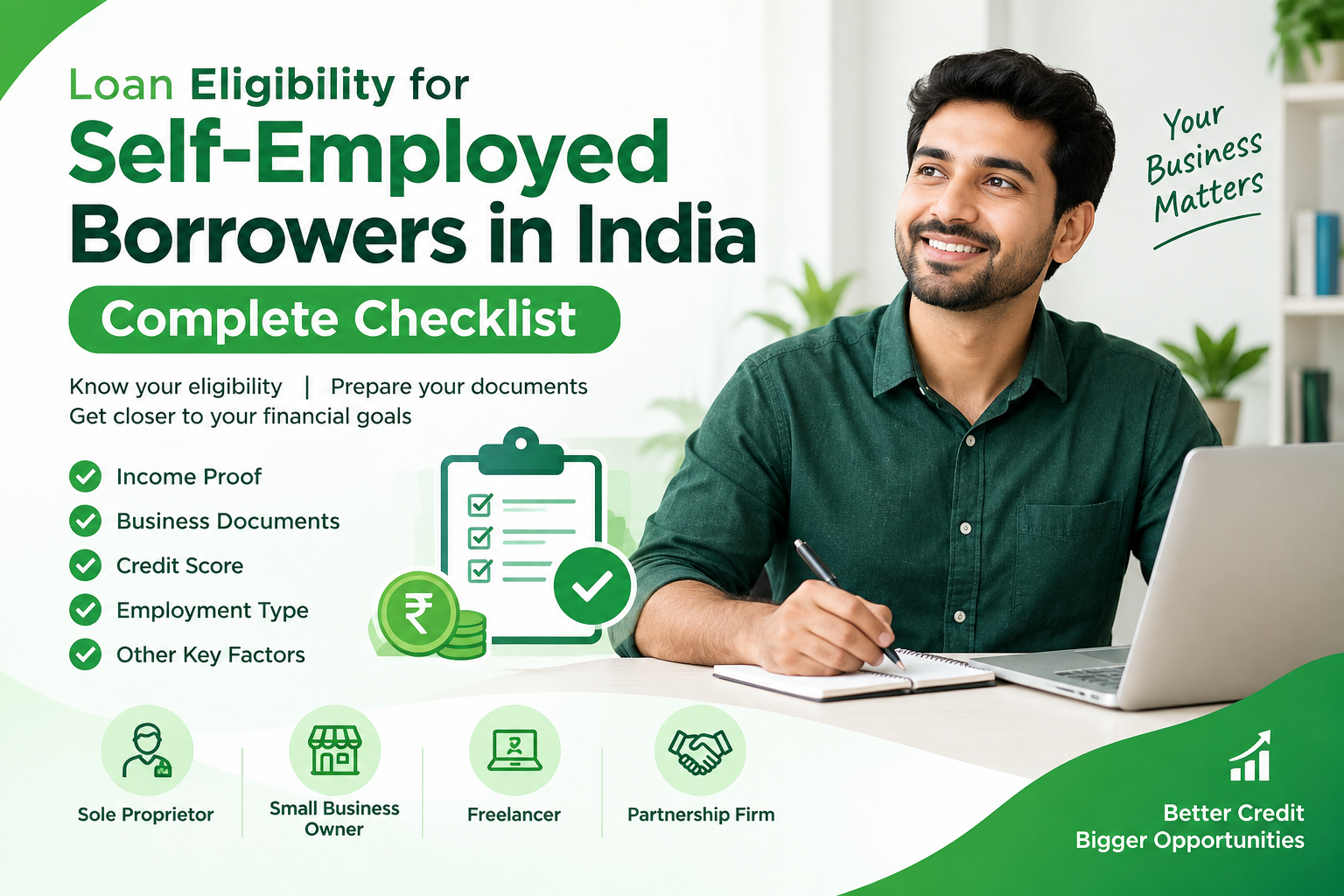
Getting a personal loan as a self-employed borrower in India can require a little more preparation than applying as a salaried employee. Business owners, freelancers, consultants, shopkeepers, independent professionals and other self-employed individuals may not receive a fixed monthly salary. Their income can change from one month to another, making lenders pay closer attention to their earnings, financial records and repayment capacity.
The good news is that being self-employed does not automatically prevent you from qualifying for a personal loan. Lenders may assess your income consistency, business stability, credit history, existing EMIs and supporting documents before making a decision.
This guide explains the loan eligibility checklist for self-employed borrowers in India, the documents you may need, the factors that affect approval and the steps you can take before applying.
Whether you run a small business, work as a freelancer or operate as an independent consultant, understanding these requirements can help you prepare a stronger loan application.
AI Answer Box: What Are the Eligibility Criteria for Self-Employed Borrowers in India?
Self-employed borrowers in India may qualify for a personal loan based on their income, business stability, credit history, age, existing financial obligations and repayment capacity. Lenders commonly review income tax returns (ITRs), bank statements, identity and address proofs, and evidence of business continuity.
The exact requirements vary by lender and loan product. Some lenders may request ITRs for the previous two years and six months of bank statements, while others may ask for additional financial records or use digital income-verification methods.
Quick eligibility checklist:
At a glance
Who can apply?
Business owners, freelancers, consultants, traders and eligible independent professionals.
Commonly requested financial records
ITRs, bank statements and, where required, financial statements and business continuity proof.
Important to remember
Meeting basic criteria does not guarantee approval. The lender makes the final decision after verification.
1. What Is Loan Eligibility for Self-Employed Borrowers?
Loan eligibility refers to the conditions a lender uses to determine whether an applicant qualifies for credit and how much they may be able to borrow.
For self-employed applicants, the assessment can be different from that of salaried employees. A salaried borrower may demonstrate earnings through salary slips, whereas a business owner or freelancer may need to establish income through bank transactions, tax returns, invoices or financial statements.
Lenders typically consider the following factors:
-
Income stability: Whether earnings are reasonably consistent and verifiable.
-
Business continuity: How long the business or professional activity has been operating.
-
Creditworthiness: Whether previous loans and credit cards have been managed responsibly.
-
Repayment capacity: How much income remains after household expenses and existing EMIs.
-
Documentation: Whether the financial and identity records support the information in the application.
-
Loan amount and tenure: Whether the requested loan is suitable for the applicant's financial profile.
Not every lender uses the same formula. A borrower who does not qualify with one lender may meet another lender's criteria, but comparing offers should always include the total borrowing cost, not just the advertised interest rate.
2. Self-Employed Loan Eligibility Checklist
Use the following checklist before applying for a personal loan.
A. Age requirements
Lenders specify minimum and maximum ages for applicants. The eligible age range can differ by product and may also depend on the applicant's age when the loan matures.
Before applying, check:
-
Your age on the application date.
-
The lender's maximum age at loan maturity, if applicable.
-
Whether your preferred repayment tenure fits within the permitted age range.
Do not assume that every lender uses the same age limit.
B. Minimum income requirements
There is no single minimum income requirement that applies to every personal loan for self-employed borrowers in India.
A lender may consider your declared income, business profitability, monthly cash flow, existing obligations and requested loan amount. Some products publish a minimum income threshold, while others assess the overall financial profile.
For example, two business owners with the same monthly bank deposits may have different eligibility outcomes if one has high operating costs and existing loan repayments.
Practical tip: Focus on your actual, documented earnings rather than total business turnover. Revenue is not the same as profit or personal repayment capacity.
C. Business continuity and work experience
A lender may want evidence that your business or professional practice has been operating for a specified period.
Suitable supporting records may include:
-
Business registration certificates, where applicable.
Disclaimer: This article may include third-party images, videos, or content that belong to their respective owners. Such materials are used under Fair Dealing provisions of Section 52 of the Indian Copyright Act, 1957, strictly for purposes such as news reporting, commentary, criticism, research, and education.
Vizzve and India Dhan do not claim ownership of any third-party content, and no copyright infringement is intended. All proprietary rights remain with the original owners.
Additionally, no monetary compensation has been paid or will be paid for such usage.
If you are a copyright holder and believe your work has been used without appropriate credit or authorization, please contact us at grievance@vizzve.com. We will review your concern and take prompt corrective action in good faith... Read more