

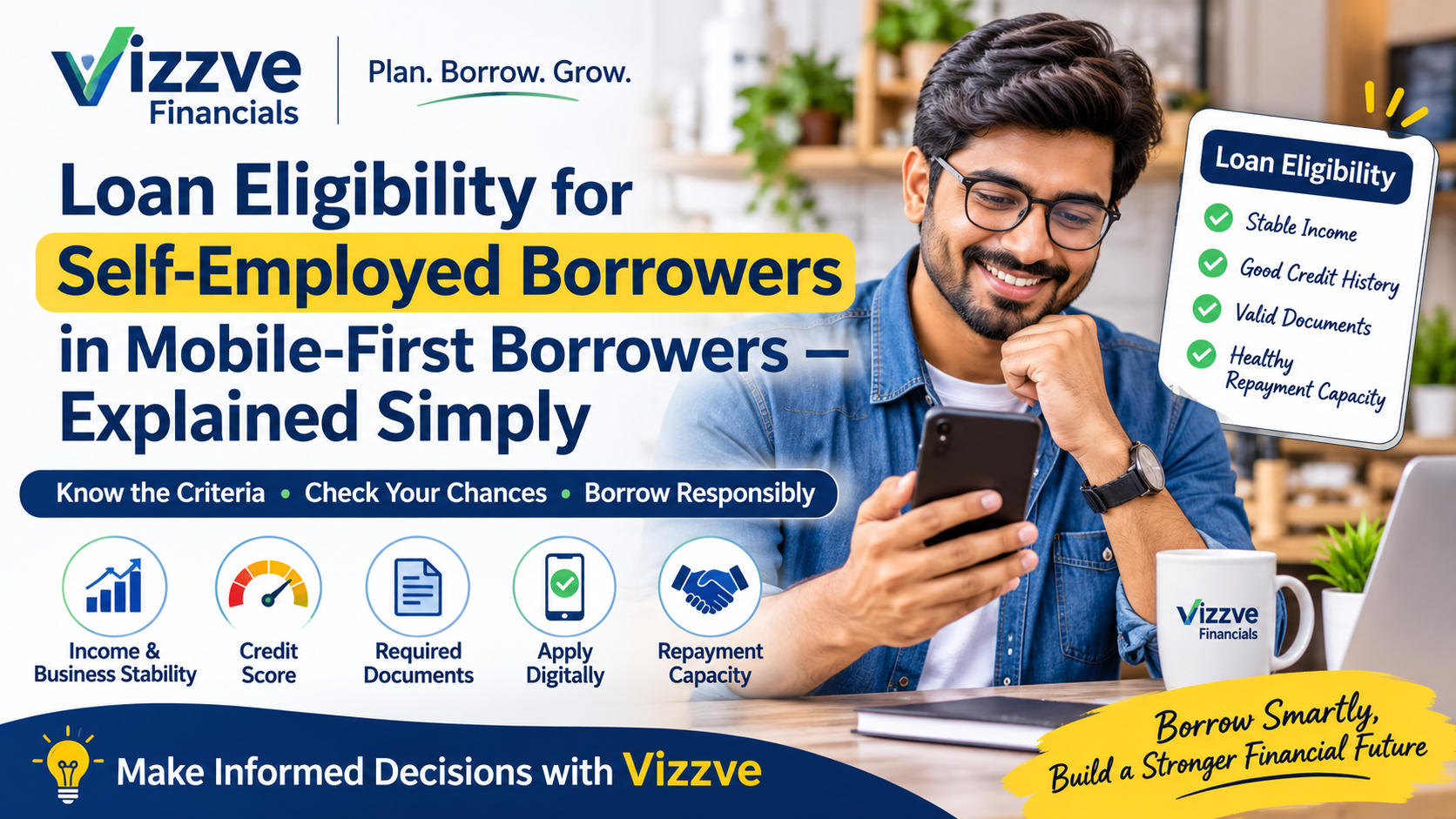
Getting a loan as a self-employed individual can sometimes feel complicated. Unlike salaried employees, business owners, freelancers, shopkeepers, consultants, and independent professionals may not receive a fixed monthly salary slip. Their income can change depending on business performance, customer payments, seasonal demand, and market conditions.
However, being self-employed does not mean you cannot qualify for a loan.
With the growth of mobile-first financial services, borrowers can now explore loan information, understand eligibility requirements, and complete many application steps through their smartphones.
If you are a self-employed borrower who prefers digital financial services, understanding loan eligibility before applying can help you make better borrowing decisions.
In this guide, we explain loan eligibility for self-employed borrowers in simple language, including income requirements, credit scores, documentation, repayment capacity, and common mistakes to avoid.
What Is Loan Eligibility for Self-Employed Borrowers?
Loan eligibility refers to the financial and personal conditions a lender evaluates before deciding whether an applicant qualifies for a loan.
For self-employed individuals, lenders generally examine:
-
Monthly or annual business income.
-
Business stability and continuity.
-
Credit history and repayment behaviour.
-
Existing loans and financial commitments.
-
Bank account transactions.
-
Repayment capacity.
-
Required identity and address documents.
Unlike salaried applicants, self-employed borrowers may need to demonstrate their earnings through business records, bank statements, income tax returns, or other acceptable financial documents.
The exact requirements depend on the lender, loan type, loan amount, and applicable lending policies.
Why Mobile-First Borrowers Should Understand Loan Eligibility
Mobile-first borrowers prefer managing financial activities through smartphones rather than visiting physical branches for every step.
Digital lending services can make certain activities more convenient, such as:
-
Exploring available loan information.
-
Understanding eligibility criteria.
-
Submitting application details.
-
Uploading supporting documents.
-
Tracking application progress.
-
Reviewing loan terms and repayment schedules.
However, applying through a mobile application does not automatically guarantee loan approval.
Borrowers should understand the eligibility requirements and verify the lender's identity before sharing personal or financial information.
A convenient application process should always be supported by transparent terms and responsible lending practices.
7 Important Factors That Affect Self-Employed Loan Eligibility
1. Regular Business Income
Income is one of the most important factors lenders consider.
Self-employed individuals may earn money through business operations, professional services, freelancing, consulting, or independent work.
Lenders may review income records to understand whether earnings are sufficient to support the proposed EMI.
Example: A small business owner earning an average of ₹45,000 per month may need to demonstrate consistent business receipts through bank statements and other acceptable records.
Higher income alone does not guarantee approval. Income stability and existing financial obligations also matter.
2. Business Stability
The duration and stability of your business can influence the lender's assessment.
Depending on the loan product, lenders may consider:
-
How long the business has been operating.
-
Whether business activity is consistent.
-
Availability of financial records.
-
Business registration, where applicable.
-
Continuity of professional or commercial income.
A well-maintained business record can make it easier to demonstrate financial stability.
3. Credit Score and Credit History
Your credit history provides information about previous borrowing and repayment behaviour.
Lenders may examine:
-
Previous loan repayment records.
-
Credit card payment history.
-
Outstanding loan balances.
-
Late payment records.
-
Credit utilisation.
-
Recent credit applications.
A healthy credit history may improve your chances of qualifying for suitable credit products.
There is no single universal credit score that guarantees approval across all lenders.
4. Existing Loans and Monthly EMIs
Your existing financial commitments affect how much additional repayment you can reasonably manage.
For example, if you already pay multiple EMIs, taking another loan may put pressure on your monthly cash flow.
Lenders may evaluate your debt obligations against your income before determining eligibility.
Always calculate your available monthly income after essential business and household expenses.
5. Bank Statements and Cash Flow
For self-employed borrowers, bank statements can help demonstrate business income and financial activity.
Lenders may examine:
-
Regular customer payments.
-
Business-related deposits.
-
Account balances.
-
Existing EMI deductions.
-
Returned payments.
-
Overall transaction patterns.
Keeping business and personal transactions organised can make financial records easier to understand.
6. Identity and Address Verification
Applicants generally need to provide acceptable identity and address verification documents.
Depending on the lender and applicable requirements, these may include:
-
PAN.
-
Aadhaar or another officially accepted identity document.
-
Address proof.
-
Bank account details.
-
Business-related documents, where required.
Only share documents through verified and secure application channels.
7. Repayment Capacity
Repayment capacity means your ability to pay the loan amount and interest within the agreed schedule.
A lender may assess whether your income can support the proposed EMI without creating excessive financial pressure.
Self-employed borrowers should consider seasonal income variations and unexpected business expenses before choosing a loan.
Documents Required for Self-Employed Borrowers
The documentation requirements vary across lenders and loan products.
| Document | Why It May Be Required |
|---|---|
| PAN card | Identity and financial verification |
| Aadhaar or accepted ID | Identity verification |
| Address proof | Residential verification |
| Bank statements | Income and transaction assessment |
| Income tax returns | Income assessment, where required |
| Business registration | Business verification, where applicable |
| Business financial records | Understanding business performance |
Not every lender requires every document. Check the official documentation list before applying.
How to Check Loan Eligibility Through a Mobile-First Process
Digital borrowing can simplify the application journey when the lender provides a secure and transparent platform.
Step 1: Research the Lender
Before applying, check the lender's official website, legal identity, lending arrangements, and customer support details.
Step 2: Understand the Eligibility Criteria
Review the minimum requirements relating to income, credit history, business activity, documentation, and repayment capacity.
Step 3: Calculate Your Monthly Income
Consider your average business earnings rather than relying on your highest-earning month.
Step 4: Review Existing Financial Commitments
Calculate your current EMIs and essential expenses to understand how much additional repayment you can manage.
Step 5: Keep Documents Ready
Prepare the required identity, address, banking, and income-related documents.
Step 6: Complete the Application Carefully
Enter accurate information and upload documents only through the lender's verified application or website.
Step 7: Review the Loan Terms
Before accepting an offer, check the interest rate, APR where disclosed, processing charges, repayment schedule, applicable penalties, and total repayment amount.
Never accept a loan without understanding its financial obligations.
Practical Example: Loan Eligibility for a Self-Employed Borrower
Consider Rahul, who operates a small retail business.
His approximate monthly financial position is:
| Financial Details | Amount |
|---|---|
| Average monthly income | ₹50,000 |
| Business and household expenses | ₹25,000 |
| Existing monthly EMI | ₹5,000 |
| Remaining amount | ₹20,000 |
Rahul has approximately ₹20,000 remaining after the listed expenses and existing EMI.
However, this does not mean he should commit the entire amount towards a new loan.
He should retain sufficient funds for emergencies, business fluctuations, and unexpected expenses before deciding on an affordable EMI.
The lender will independently assess his application based on its eligibility criteria.
Key lesson: Loan eligibility is not just about earning money. It is also about demonstrating stable income and managing repayments responsibly.
Common Mistakes Self-Employed Mobile-First Borrowers Should Avoid
1. Applying Without Checking Eligibility
Submitting applications without understanding the basic requirements can lead to unnecessary credit enquiries and rejected applications.
2. Providing Incorrect Income Details
Always provide accurate and verifiable income information.
3. Ignoring Existing EMIs
Additional borrowing without calculating existing obligations can create repayment difficulties.
4. Using Unverified Loan Applications
Do not share sensitive information with unknown applications or unauthorised representatives.
5. Ignoring Interest Rates and Charges
A convenient digital application does not necessarily mean an affordable loan.
6. Borrowing More Than Necessary
Choose a loan amount based on your actual financial requirement and repayment capacity.
Benefits and Limitations of Mobile-First Borrowing
| Benefits | Limitations |
|---|---|
| Convenient application access | Internet access is required |
| Easier document submission | Technical issues may occur |
| Less dependence on branch visits | Digital fraud risks must be considered |
| Application tracking where available | Approval is not guaranteed |
| Access to loan information | Eligibility policies differ by lender |
Digital convenience should never replace careful financial evaluation.
How Self-Employed Borrowers Can Improve Loan Eligibility
Consider these practical steps before applying:
-
Maintain a consistent record of business income.
-
Pay existing EMIs and credit card bills on time.
-
Avoid unnecessary loan applications.
-
Keep bank statements organised.
-
File applicable income tax returns accurately.
-
Reduce excessive existing debt.
-
Maintain sufficient financial reserves.
-
Borrow only an amount you can comfortably repay.
These practices can help strengthen your financial profile, although they cannot guarantee approval.
Important Safety Tips Before Applying for a Digital Loan
Mobile-first borrowers should pay particular attention to digital lending safety.
-
Verify the identity of the regulated lender.
-
Check whether the lending bank or NBFC is authorised by the RBI.
-
Review the Key Fact Statement (KFS), where applicable.
-
Understand the Annual Percentage Rate (APR).
-
Read the privacy policy and data permissions.
-
Never share OTPs, passwords, or PINs.
-
Avoid making payments to personal accounts claiming to represent a lender.
-
Save the loan agreement and repayment receipts.
For additional information, refer to official RBI resources and digital lending guidelines.
How Vizzve Can Help Borrowers Explore Digital Financial Services
Vizzve aims to make financial information and digital financial services easier to understand and access.
Self-employed individuals exploring borrowing options should first understand their financial position, review applicable eligibility requirements, and carefully evaluate repayment obligations.
Before proceeding with any financial product, visit the official Vizzve website and verify the relevant product details, eligibility conditions, charges, and lending partner information.
Borrow responsibly and select financial products that match your actual requirements.
Frequently Asked Questions
1. Can self-employed individuals apply for a loan?
Yes. Self-employed individuals such as business owners, freelancers, consultants, and independent professionals may apply for loans, subject to the lender's eligibility criteria.
2. Is a salary slip mandatory for self-employed borrowers?
No. Self-employed applicants generally demonstrate income through acceptable alternatives such as bank statements, income tax returns, or business financial records.
3. What credit score is required for a self-employed loan?
There is no universal minimum credit score applicable to every lender. Requirements vary according to the loan product and lending policy.
4. Can freelancers qualify for digital loans?
Freelancers may qualify if they satisfy the lender's income, credit, documentation, and repayment requirements.
5. Are bank statements important for self-employed borrowers?
Yes. Bank statements can help demonstrate income patterns, financial activity, and repayment capacity.
6. Can I apply for a loan using my mobile phone?
Yes. Some lenders offer digital application facilities through mobile applications or websites. Always verify the official platform before submitting information.
7. Does irregular business income affect loan eligibility?
It can. Income fluctuations may influence how a lender evaluates financial stability and repayment capacity.
8. Can I get a loan without business registration?
Some loan products may accept applicants without formal business registration, while others may require specific business documents. Check the lender's conditions.
9. Do existing loans affect new loan eligibility?
Yes. Existing EMIs and outstanding debt may affect your available repayment capacity.
10. How can I improve my loan eligibility?
Maintain a healthy credit history, organise income records, repay existing obligations on time, and avoid unnecessary borrowing.
11. Is digital borrowing safe for self-employed individuals?
It can be safe when using verified lending channels and regulated lenders. Always review the loan agreement, charges, privacy permissions, and repayment terms.
12. Does completing an online loan application guarantee approval?
No. A completed application does not guarantee approval. The lender must assess the applicant according to its eligibility and underwriting policies.
Final Thoughts
Loan eligibility for self-employed borrowers does not need to be confusing.
Whether you are a freelancer, shop owner, independent consultant, or small business operator, understanding your income, credit history, financial commitments, and repayment capacity can help you prepare for a loan application.
For mobile-first borrowers, digital platforms can make accessing financial information more convenient. However, responsible borrowing should always remain the priority.
Before applying, compare available options, verify the lender, understand every charge, and choose an EMI that fits your financial situation.
Make informed financial decisions with Vizzve. Borrow smartly, plan carefully, and build a stronger financial future.
Published on : 5th November 2026
Published by : Avinash S
www.vizzve.com || www.vizzveservices.com
Follow us on social media: Facebook || Linkedin || Instagram
🛡 Powered by Vizzve Financial
RBI-Registered Loan Partner | 10 Lakh+ Customers | ₹600 Cr+ Disbursed