

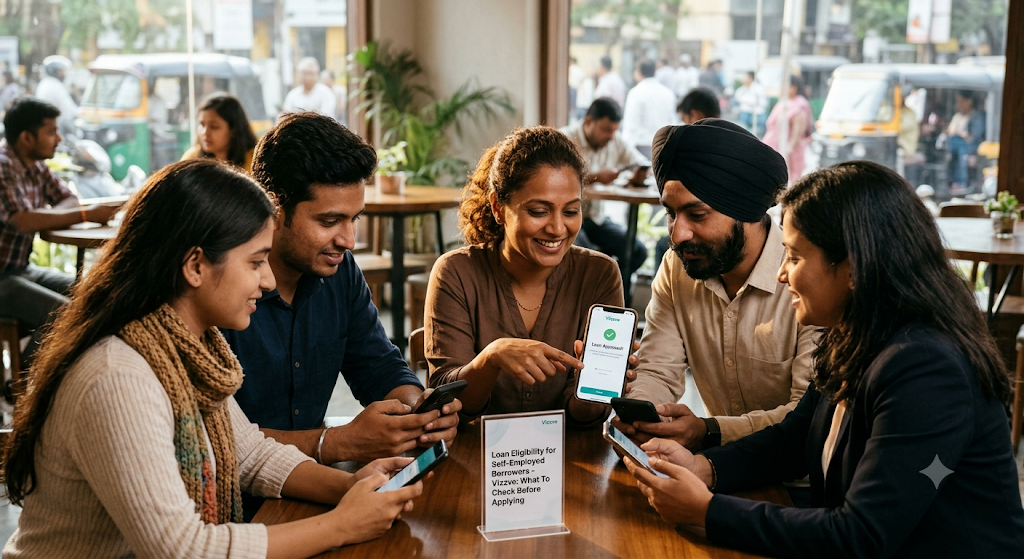
Applying for a loan has become more convenient with smartphones and digital financial services. Today, self-employed individuals can explore loan options, check eligibility, upload documents and manage financial information using their mobile devices.
From small shop owners and freelancers to online sellers, independent consultants and service providers, mobile-first borrowers increasingly depend on digital platforms for financial activities.
However, before applying for a loan, it is important to understand whether your financial profile is ready. A quick online application does not guarantee approval. Lenders generally evaluate income, business stability, credit history, existing financial commitments and repayment capacity.
Understanding what to check before applying for a self-employed loan can help borrowers avoid unnecessary mistakes, prepare documents and make better financial decisions.
This guide covers 12 important checks that every self-employed mobile-first borrower should consider before submitting a loan application in India.
1. Check Your Loan Eligibility Criteria
The first step is understanding the eligibility requirements of the lender.
Different financial institutions may follow different eligibility conditions depending on the loan product and applicant profile.
Before applying, check:
-
Minimum and maximum age requirements.
-
Self-employment or business experience.
-
Minimum income requirements, if specified.
-
Credit history requirements.
-
Residential and business address requirements.
-
Existing financial obligations.
-
Required supporting documents.
Do not assume that eligibility conditions are identical across all lenders.
Practical Tip: Visit the lender's official website and review the eligibility conditions before starting an application.
2. Review Your Monthly Income and Business Stability
Income consistency is an important consideration for self-employed borrowers.
Unlike salaried employees, business owners and freelancers may experience changes in their monthly earnings.
Before applying, review:
-
Average monthly business income.
-
Monthly business expenses.
-
Net earnings.
-
Seasonal income variations.
-
Business operating history.
-
Existing business commitments.
For example, an online seller may receive ₹90,000 in monthly business revenue but spend ₹55,000 on inventory, delivery and other business expenses.
The remaining amount should not automatically be treated as disposable income. Other financial obligations must also be considered.
Practical Tip: Maintain accurate business records and review your average income over several months.
3. Check Your Credit Score and Credit Report
Your credit profile can influence the lender's assessment of your loan application.
Before applying, review your credit report for:
-
Previous loan repayment history.
-
Outstanding loan balances.
-
Credit card dues.
-
Missed EMI payments.
-
Existing credit enquiries.
-
Incorrect account information.
If you find errors, contact the relevant credit information company or lender to raise a dispute.
A healthy repayment history may strengthen your credit profile, although no particular score guarantees approval.
Practical Tip: Avoid unnecessary credit applications and pay existing financial obligations on time.
4. Keep Your Financial Documents Ready
Mobile-first borrowers often complete loan applications through smartphone applications or websites.
Having documents ready in digital format can make the process easier.
| Document | Purpose |
|---|---|
| PAN Card | Identity and financial verification |
| Aadhaar or accepted identity proof | Identity verification |
| Address proof | Residential verification |
| Bank statements | Financial transaction assessment |
| Income Tax Returns | Income verification, where applicable |
| Business registration proof | Business verification, where applicable |
| GST returns | Business activity verification, where applicable |
| Profit and loss statement | Business financial assessment |
| Recent photographs | Where requested |
Document requirements vary between lenders and loan products.
Practical Tip: Keep clear PDF copies of your documents and ensure the information is accurate and consistent.
5. Evaluate Your Existing Financial Obligations
Before taking another loan, understand how much of your income is already committed.
Review:
-
Existing personal loan EMIs.
-
Business loan repayments.
-
Credit card outstanding amounts.
-
Household expenses.
-
Business operating costs.
-
Other monthly financial commitments.
Taking another loan without checking existing obligations may create repayment pressure.
Practical Tip: Prepare a monthly budget that includes both business and personal expenses.
6. Calculate Your EMI Affordability
A loan may appear attractive because of its approved amount, but the monthly EMI should fit your actual financial situation.
Consider the following illustrative example:
| Monthly Financial Details | Amount |
|---|---|
| Business revenue | ₹1,00,000 |
| Business expenses | ₹55,000 |
| Approximate business surplus | ₹45,000 |
| Existing EMI | ₹7,000 |
| Remaining amount | ₹38,000 |
The remaining ₹38,000 is not entirely available for another EMI. Household expenses, savings and emergency requirements must also be considered.
Before applying, use an EMI calculator to compare different loan amounts and repayment periods.
Practical Tip: Choose an EMI that remains manageable even during months when your business income is lower.
7. Understand Interest Rates and Additional Charges
Never evaluate a loan based only on the amount being offered.
Check all the costs associated with borrowing.
These may include:
-
Interest rate.
-
Processing fee.
-
Applicable GST.
-
Documentation charges, if applicable.
-
Late payment charges.
-
Foreclosure or prepayment conditions, where applicable.
Also compare the Annual Percentage Rate (APR), which helps you understand the overall annualised cost of credit.
For applicable loans, review the Key Facts Statement (KFS) before accepting the offer.
Practical Tip: Compare the total repayment obligation rather than choosing a loan simply because it advertises a low interest rate.
8. Verify the Digital Lending Platform
Mobile-first borrowers should be especially careful about the applications and websites they use.
Before sharing personal or financial information:
-
Verify the regulated lender.
-
Check whether the digital lending platform is associated with the disclosed lender.
-
Visit official websites.
-
Read the privacy policy.
-
Check customer support details.
-
Review grievance redressal information.
-
Avoid suspicious application links.
Never share your OTP, banking PIN or password with anyone.
The Reserve Bank of India has issued digital lending requirements covering borrower protection, disclosures, data collection and lending arrangements.
Practical Tip: Do not trust a loan application merely because it appears in an advertisement or message.
9. Review Your Business and Income Records
Self-employed individuals should maintain proper records to demonstrate business activity and income.
Depending on your profession, useful records may include:
-
Customer invoices.
-
Bank transaction statements.
-
Business receipts.
-
Income tax returns.
-
GST returns, where applicable.
-
Business financial statements.
-
Digital payment records.
For mobile-first borrowers, keeping these documents organised in secure digital storage can make financial management easier.
Practical Tip: Make sure your financial records accurately reflect your business activity.
10. Check the Loan Tenure and Repayment Schedule
Loan tenure affects both monthly EMI and total interest.
A shorter tenure generally means higher monthly payments but lower total interest, assuming the same loan amount and interest rate.
A longer tenure generally reduces monthly EMI but can increase the overall interest cost.
Before applying, check:
-
Total repayment period.
-
EMI due date.
-
Number of instalments.
-
Total interest payable.
-
Prepayment conditions.
-
Late payment conditions.
Practical Tip: Select a repayment period that balances affordability with the total borrowing cost.
11. Read the Key Facts Statement and Loan Agreement
Before accepting a digital loan offer, carefully review the documents provided by the lender.
The Key Facts Statement helps borrowers understand important loan information in a standardised format.
Check:
-
Loan amount.
-
Interest rate.
-
APR.
-
Repayment schedule.
-
Processing fees and applicable charges.
-
Penal charges.
-
Grievance redressal details.
-
Cooling-off or look-up period, where applicable.
Do not accept an offer without understanding its conditions.
Practical Tip: Save a copy of the KFS, sanction letter and loan agreement for future reference.
12. Confirm Whether You Actually Need the Loan
One of the most important checks is understanding why you need additional funds.
Self-employed individuals may consider borrowing for:
-
Business expansion.
-
Inventory purchases.
-
Equipment requirements.
-
Working capital.
-
Personal financial requirements.
-
Emergency expenses.
Before applying, compare the expected benefit of borrowing with the total repayment cost.
Avoid borrowing simply because a digital platform displays a pre-approved or eligible amount.
Practical Tip: Borrow only the amount you genuinely need and can comfortably repay.
13. Common Mistakes to Avoid Before Applying
Even experienced digital borrowers can make mistakes.
| Common Mistake | Better Approach |
|---|---|
| Reporting business turnover as personal income | Calculate genuine earnings |
| Ignoring credit history | Review your credit report |
| Uploading incomplete documents | Prepare clear digital copies |
| Ignoring existing EMIs | Calculate total obligations |
| Choosing the lowest EMI without comparison | Review total interest |
| Ignoring processing charges | Compare APR and KFS |
| Applying through unknown apps | Verify the lender |
| Borrowing more than required | Calculate actual financial needs |
Avoiding these mistakes can make the application process more organised and help borrowers make informed decisions.
14. Complete Pre-Application Checklist for Mobile-First Borrowers
Use this checklist before submitting your loan application.
Personal and Business Information
-
Confirm that your personal details are accurate.
-
Review your age and occupation requirements.
-
Check your business information.
-
Calculate your average monthly earnings.
Financial Preparation
-
Review your credit report.
-
Calculate business expenses.
-
Check existing EMI commitments.
-
Estimate your affordable monthly EMI.
-
Decide the required loan amount.
Document Preparation
-
Keep your PAN and accepted identity documents ready.
-
Download recent bank statements.
-
Organise applicable income records.
-
Prepare business documents.
-
Check that uploaded documents are readable.
Digital Application Safety
-
Verify the lender's identity.
-
Use official digital platforms.
-
Read the privacy policy.
-
Review the KFS.
-
Understand all applicable charges.
-
Save the loan agreement.
15. Frequently Asked Questions (FAQs)
1. What should self-employed borrowers check before applying for a loan?
They should review eligibility criteria, income stability, credit history, business documents, existing financial obligations, EMI affordability and applicable loan charges.
2. Can mobile-first borrowers apply for loans online?
Yes. Many lenders offer digital application facilities through official websites and applications, subject to their eligibility and verification requirements.
3. What is the minimum income required for self-employed borrowers?
There is no universal minimum income requirement. It depends on the lender, loan product, requested amount and applicant's financial profile.
4. Are bank statements necessary for self-employed loan applications?
Many lenders request bank statements to evaluate income and financial transactions. Exact requirements vary.
5. Can freelancers apply for personal loans?
Yes. Freelancers may qualify if they satisfy the lender's income, credit history, documentation and other eligibility conditions.
6. Does UPI transaction history help in loan applications?
UPI records may help demonstrate financial activity, but lenders may require additional documents to establish actual income and repayment capacity.
7. Why should I check my credit score before applying?
Your credit report provides information about existing loans, repayment history and credit enquiries, which may influence the lender's assessment.
8. Can self-employed individuals apply without GST registration?
GST registration is not compulsory for every self-employed individual. Documentation requirements depend on the nature of the business and lender policy.
9. How can I calculate my affordable EMI?
Review your average income, business expenses, household commitments and existing EMIs. Use an EMI calculator to compare different repayment options.
10. What is APR in a loan?
APR represents the annualised cost of credit, including interest and applicable charges according to the relevant disclosure framework.
11. What is a Key Facts Statement?
A KFS is a standardised statement that explains important loan terms, including APR, charges and repayment information.
12. How do I verify whether a digital loan application is genuine?
Check the regulated lender's identity, official website, disclosed digital lending partners and grievance redressal details.
13. Does a pre-approved loan offer guarantee disbursement?
Not necessarily. The lender may still conduct verification and apply its final eligibility and underwriting requirements.
14. Can existing loans affect my new loan eligibility?
Yes. Existing EMIs and outstanding financial commitments can affect the lender's assessment of repayment capacity.
15. What should I do if I am not eligible for a loan?
Review the reason, check your credit report, organise income documents and improve financial readiness before considering another application.
16. Key Takeaways
-
Check the lender's eligibility criteria before applying.
-
Maintain accurate business and income records.
-
Review your credit report and repayment history.
-
Prepare all required documents in advance.
-
Evaluate existing EMIs and monthly expenses.
-
Compare interest rates, APR and applicable charges.
-
Verify the digital lending platform.
-
Read the KFS and loan agreement.
-
Borrow according to your actual financial requirements.
Conclusion
For self-employed mobile-first borrowers, preparing before applying for a loan can make a significant difference to the overall borrowing experience.
Whether you are a freelancer, small business owner, independent consultant or online seller, understanding your income, credit history, documentation and repayment capacity is essential.
A smartphone can make loan applications easier, but responsible borrowing still requires careful financial planning.
By following these 12 important checks, you can prepare your financial records, understand loan conditions and make more informed decisions before approaching a lender.
Check your eligibility, understand the complete cost and borrow responsibly with Vizzve Financials.
Published on : 06th November 2026
Published by : Avinash S
www.vizzve.com || www.vizzveservices.com
Follow us on social media: Facebook || Linkedin || Instagram
🛡 Powered by Vizzve Financial
RBI-Registered Loan Partner | 10 Lakh+ Customers | ₹600 Cr+ Disbursed