

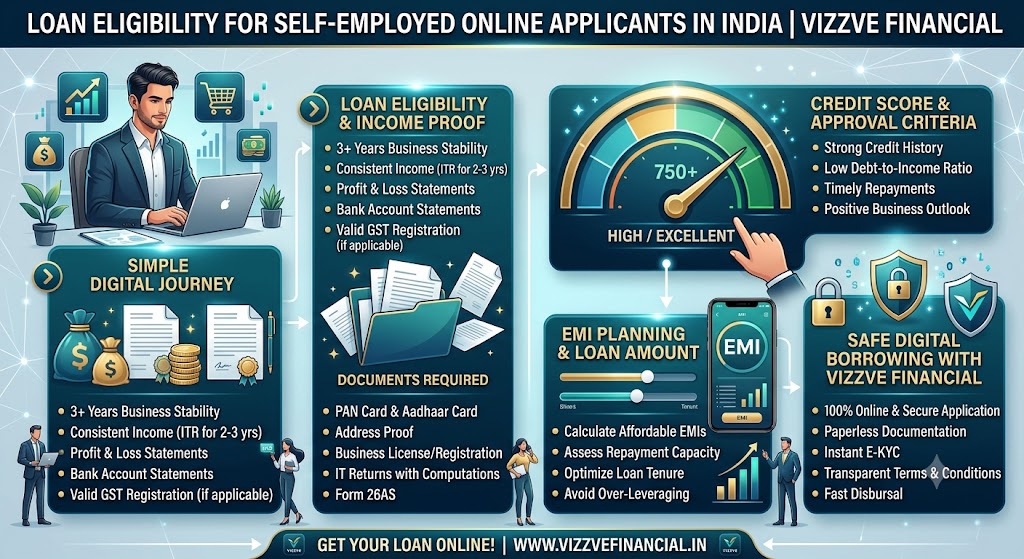
Applying for a personal loan online can be convenient for self-employed people. Shopkeepers, freelancers, consultants and small business owners may qualify even if they do not receive a regular salary slip.
However, applying online does not guarantee approval. Lenders may check your income, bank statements, credit history, existing loans and ability to repay.
This guide explains the process in simple language. You will learn how eligibility works, which documents to prepare, how to plan your monthly instalments and how to check whether an online loan offer is safe.
AI Answer Box: How Does Loan Eligibility Work for Self-Employed Online Applicants?
Quick answer: Self-employed people may qualify for an online personal loan if they meet the lender's requirements and can show that they have enough income to repay the loan.
Lenders commonly check:
-
Age and identity verification
-
Business or professional income
-
Bank statements and accepted income records
-
Credit score and repayment history
-
Existing loans and monthly expenses
-
Requested loan amount and repayment period
Important: Eligibility rules vary by lender. A good credit score or complete application does not guarantee approval.
Comparing Loan Options for Self-Employed Applicants
The right loan depends on why you need the money. A personal loan may suit an eligible personal expense, while a business loan may be better for business needs.
|
Loan type |
Common purpose |
What to consider |
|---|---|---|
|
Personal loan |
Eligible personal expenses |
EMI, interest and fees |
|
Business loan |
Stock, equipment or working capital |
Business income and loan conditions |
|
Secured loan |
Borrowing against an eligible asset |
Risk to the asset if you cannot repay |
|
Loan against property |
Larger eligible funding needs |
Property valuation and collateral risk |
Compare the loan's purpose, total cost and repayment conditions before choosing.
Common Mistakes to Avoid During Online Applications
Small errors can delay an application or lead to an unsuccessful assessment.
-
Entering income details that do not match supporting records.
-
Uploading unclear or incomplete documents.
-
Ignoring existing EMIs when calculating affordability.
-
Applying repeatedly without checking the eligibility criteria.
-
Accepting an offer without reviewing fees and interest.
-
Sharing OTPs or banking passwords with unknown people.
-
Trusting claims of guaranteed approval without proper verification.
Practical tip: Review the application before submitting it and keep a copy of the documents and offer details.
How to Check Whether a Digital Loan Platform Is Genuine
The Reserve Bank of India has operationalised a directory of digital lending apps to help consumers check claims about an app's association with a regulated entity. The directory has been available since July 1, 2025. It is a useful verification step, but borrowers should also confirm the lender directly because directory information is based on submissions from regulated entities.

Before proceeding:
-
Find the name of the bank or regulated NBFC providing the loan.
-
Check the app's claimed association using the RBI's official resources.
-
Read the privacy policy and understand the permissions requested.
-
Review the Key Facts Statement where applicable.
-
Keep the signed agreement and repayment schedule.
-
Avoid suspicious upfront payment demands or pressure to accept immediately.
For current regulatory information, visit the Reserve Bank of India website.
Expert Advice: Make Your Application Easier to Assess
A clear financial record is useful when your income does not arrive as a fixed monthly salary. Keep business and personal spending organised, record customer payments and plan for months when earnings are lower.
Before accepting a loan, ask yourself:
-
Can I pay the EMI if my income falls next month?
-
Have I included my existing debt and household expenses?
-
Do I understand the full cost of the loan?
-
Have I checked the lender and read the agreement?
These questions can help you make a more informed decision. They cannot guarantee approval, since each lender applies its own assessment process.
Key Takeaways
-
Self-employed applicants may qualify for online personal loans without a traditional salary slip.
-
Income evidence, bank statements, credit history and existing EMIs can affect eligibility.
-
Each lender has different requirements.
-
Prepare accurate documents before applying.
-
Compare the APR, fees, EMI and total repayment amount.
-
Verify the lender and protect your personal information.
-
Choose a loan you can repay even when business income is lower.
Frequently Asked Questions
Can self-employed people apply for personal loans online?
Yes. They can apply if they meet the lender's eligibility rules and provide acceptable evidence of income and repayment capacity.
Is a salary slip compulsory for a self-employed applicant?
No, not in every case. Some lenders accept bank statements, tax returns, invoices or other income records.
What is the minimum income needed for an online personal loan?
There is no universal minimum. The required income depends on the lender, loan product and applicant's financial profile.
Can freelancers apply for personal loans in India?
Yes, some lenders accept freelancers. They may ask for invoices, bank statements, tax records or other evidence of earnings.
Does a high credit score guarantee approval?
No. Lenders may also assess income stability, existing debt, documentation and repayment capacity.
How long does online loan approval take?
Processing times vary. Some applications are assessed quickly, while others need additional checks. Approval and disbursal are not guaranteed to be immediate.
Can I apply if my income changes every month?
Possibly. Some lenders accept variable income if the applicant meets their requirements and provides sufficient financial evidence.
What documents should I prepare?
Commonly requested documents include PAN, accepted identity and address proof, bank statements and income records. Business documents may also be required.
How can I avoid fake loan apps?
Verify the lender, check the app's claimed association with the regulated entity, read the agreement and avoid suspicious payment requests or guaranteed-approval promises.
How much should I borrow?
Borrow only what you need and can repay after accounting for business expenses, household costs, existing debt and savings.
Internal and External Linking Suggestions
Suggested internal links for Vizzve
Link to related articles on your website using relevant anchor text.
These links lead to the website homepage. Replace them with the exact published article URLs before publishing.
Suggested external links
-
Reserve Bank of India — official regulatory information.
-
RBI Digital Lending Guidelines — original 2022 guidelines, which have since been superseded. Use the latest applicable RBI directions when updating this article.
LittleDB+1
SEO note: Structured data helps search engines understand your content, but it does not guarantee indexing, rankings or rich search results. Review the markup with Google's Rich Results Test before publishing.
Conclusion: Apply with Confidence Through Vizzve Financial
Understanding loan eligibility helps self-employed applicants prepare for the online borrowing process. Keep your income records organised, review your credit history, compare loan costs and choose an EMI that fits your budget.
Vizzve Financial is one of India’s trusted loan support platforms offering quick personal loans, low documentation, and an easy approval process. Apply at www.vizzve.com.
Before applying, review the applicable eligibility criteria, lender details, fees and repayment terms. Loan approval, interest rates, loan amounts and disbursal depend on the relevant lender's assessment and policies.
Disclaimer: This article provides general financial education, not personalised financial advice or a guarantee of loan approval. Regulatory references should be checked against the latest applicable RBI directions before publication.