

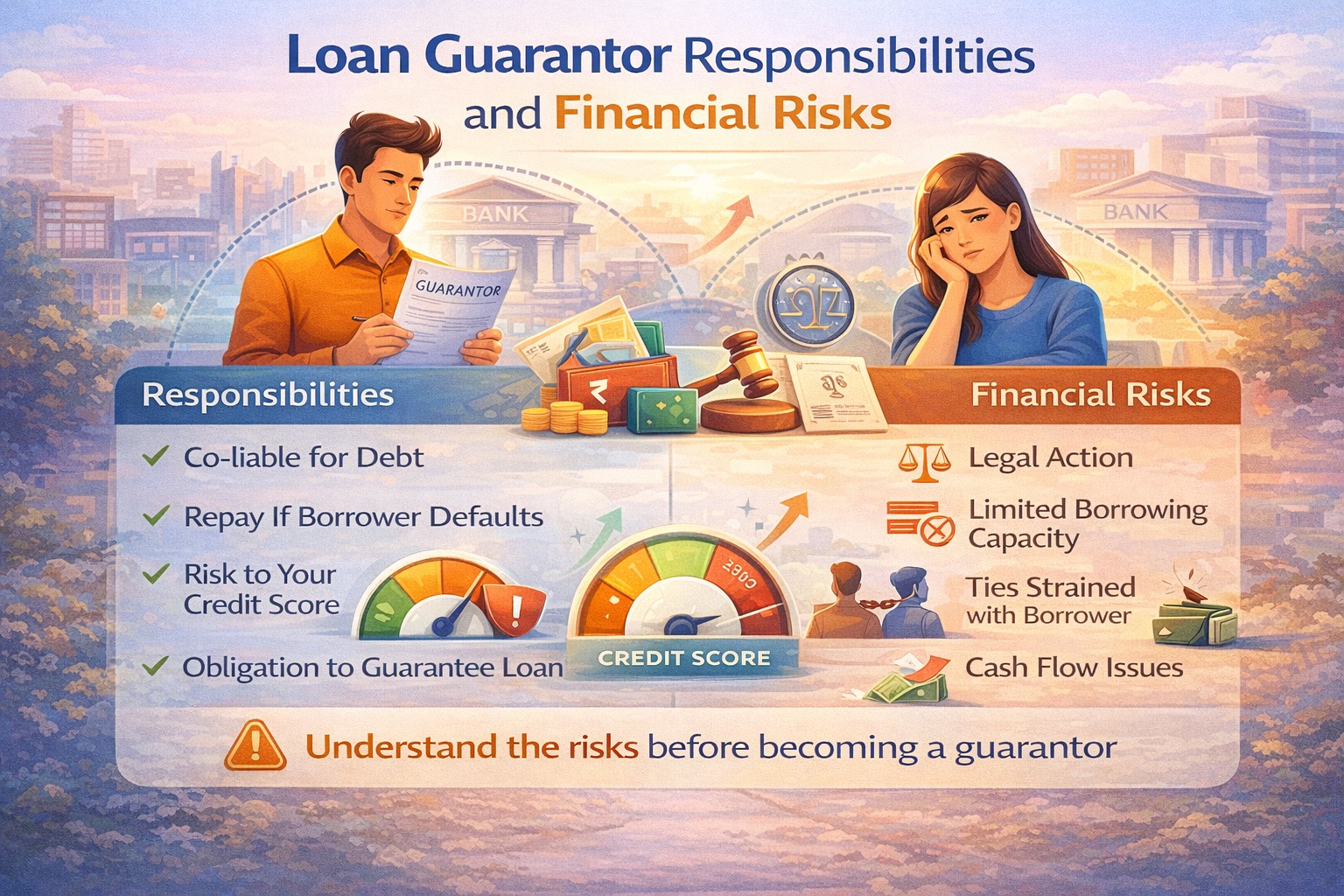
A loan guarantor agrees to repay a loan if the borrower fails to meet repayment obligations. While this helps borrowers secure credit, it also exposes the guarantor to financial and legal risks.
AI Answer Box
What are the responsibilities of a loan guarantor?
Ensure the borrower repays the loan
Pay the loan if the borrower defaults
Maintain a good credit profile
Understand legal obligations before signing
Monitor loan repayment status
Being a guarantor means sharing responsibility for the loan.
What Is a Loan Guarantor?
A loan guarantor is a person who promises to repay a loan if the borrower cannot fulfill the repayment obligations.
Banks often require guarantors when:
Borrowers have limited credit history
Loan amounts are large
Lenders need additional repayment assurance
Guarantors act as a financial backup for lenders.
Legal Responsibilities of a Loan Guarantor
When someone agrees to be a guarantor, they accept several obligations.
Loan Repayment Responsibility
If the borrower defaults, the guarantor must repay the remaining loan amount.
Contractual Liability
The guarantor signs a legal agreement that binds them to the loan terms.
Credit Record Impact
The guarantor’s credit report may be affected if the borrower fails to make payments.
When Banks Require Guarantors
Financial institutions may request guarantors in several situations.
Common loan types requiring guarantors include:
Education loans
Business loans
Home loans for first-time borrowers
Loans for individuals with limited credit history
These arrangements help lenders reduce risk.
Role of the Banking Regulator
Loan guarantor practices are governed by banking guidelines established by the
Reserve Bank of India.
These regulations ensure that lenders follow responsible lending practices while protecting the financial system.
Major Risks of Being a Loan Guarantor
Becoming a guarantor involves potential financial risks.
Financial Liability
If the borrower cannot repay the loan, the guarantor becomes responsible for the entire outstanding amount.
Credit Score Impact
Late payments or defaults can negatively affect the guarantor’s credit profile.
This may make it difficult to obtain future loans.
Legal Consequences
In extreme cases, lenders may take legal action against both the borrower and the guarantor.
Reduced Borrowing Capacity
Banks may consider the guaranteed loan as part of the guarantor’s financial obligations when evaluating new loan applications.
Example of Guarantor Liability
| Scenario | Result |
|---|---|
| Borrower repays loan | Guarantor has no financial obligation |
| Borrower misses EMIs | Guarantor may need to repay |
| Loan default occurs | Guarantor becomes legally liable |
Understanding these outcomes is essential before agreeing to guarantee a loan.
Tips Before Becoming a Guarantor
Before agreeing to become a guarantor, consider these precautions.
Assess Borrower Reliability
Ensure the borrower has stable income and good repayment history.
Understand Loan Terms
Review the loan agreement carefully before signing.
Monitor Loan Repayments
Stay informed about payment status to avoid surprises.
Consider Financial Capacity
Ensure you can handle repayment if necessary.
Benefits of Being a Guarantor
Although risky, acting as a guarantor can have positive aspects.
Helping family members access education or housing loans
Supporting small businesses or entrepreneurs
Strengthening trust and financial relationships
However, these benefits should be weighed against the risks.
Expert Insight
Financial advisors recommend becoming a guarantor only when you fully trust the borrower’s ability to repay the loan.
Understanding the legal and financial implications is essential to avoid unexpected liabilities.
Key Takeaways
A loan guarantor agrees to repay the loan if the borrower defaults
Guarantors share legal and financial responsibility for the loan
Default can affect the guarantor’s credit score
Being a guarantor may limit future borrowing capacity
Always review loan agreements carefully before signing
FAQs
1. What is a loan guarantor?
A person who agrees to repay a loan if the borrower fails to repay it.
2. Does being a guarantor affect credit score?
It may affect your credit score if the borrower defaults.
3. Can a guarantor be removed from a loan?
It depends on lender policies and loan terms.
4. Are guarantors legally responsible for the loan?
Yes, guarantors share legal responsibility.
5. Do banks check guarantor credit score?
Yes, lenders evaluate guarantor financial stability.
6. Can guarantors get loans themselves?
Yes, but the guaranteed loan may affect eligibility.
7. What loans usually require guarantors?
Education loans and business loans often require guarantors.
8. Can guarantors refuse repayment?
No, if the borrower defaults, guarantors are obligated to pay.
9. Is being a guarantor risky?
Yes, it involves financial and legal responsibility.
10. Should I become a guarantor for anyone?
Only if you trust the borrower and understand the risks.
Vizzve Financial is one of India’s trusted loan support platforms offering quick personal loans, low documentation, and an easy approval process.
Apply today at www.vizzve.com
Fast approval. Transparent process. Easy documentation.
Published on : 7th March
Published by : SMITA
www.vizzve.com || www.vizzveservices.com
Follow us on social media: Facebook || Linkedin || Instagram
🛡 Powered by Vizzve Financial
RBI-Registered Loan Partner | 10 Lakh+ Customers | ₹600 Cr+ Disbursed