

Blog Banner

Blog Details

Loan Privacy Rights

Loan Privacy Rights and borrower data protection in digital lending

Loan Privacy Rights

Vizzve Admin

Introduction

When applying for a loan, borrowers share important personal and financial information such as identity details, contact information, income details and banking information. Understanding Loan Privacy Rights is therefore important to know how this information can be collected, used, stored and shared by lenders and digital lending platforms.

In India, borrowers using digital lending services have certain protections relating to data collection and consent. Knowing these rights can help borrowers identify unnecessary data requests, understand privacy policies and take appropriate action if their personal information is handled improperly. This guide explains Loan Privacy Rights, borrower data protection, privacy concerns and the key steps borrowers can take to protect their personal information.

Loan Privacy Rights refer to a borrower’s rights regarding the collection, use, storage and sharing of personal and financial information during the loan process. These rights are especially important for digital loans, where apps may request access to personal information.

For digital lending in India, RBI guidance requires need-based data collection, prior and explicit borrower consent, a clear privacy policy, and restrictions on storing borrowers’ personal information.

What Are Loan Privacy Rights?

Loan privacy rights are protections that help borrowers understand and control how lenders and lending service providers handle their personal information.

This may include information such as:

  • Name and contact details
  • Identity and KYC information
  • Bank and financial details
  • Credit-related information
  • Device-related information
  • Information submitted during the loan application

Why Are Loan Privacy Rights Important?

Privacy protections can help borrowers:

  • Understand what information is being collected
  • Know why the information is required
  • Give or deny consent where applicable
  • Understand how their information may be used
  • Reduce unnecessary data collection
  • Check how information is stored and protected
  • Raise complaints about improper data handling

RBI consumer-awareness material also advises borrowers to carefully read lenders’ and lending service providers’ privacy policies and check the permissions requested by digital lending apps.

Key Loan Privacy Rights for Borrowers

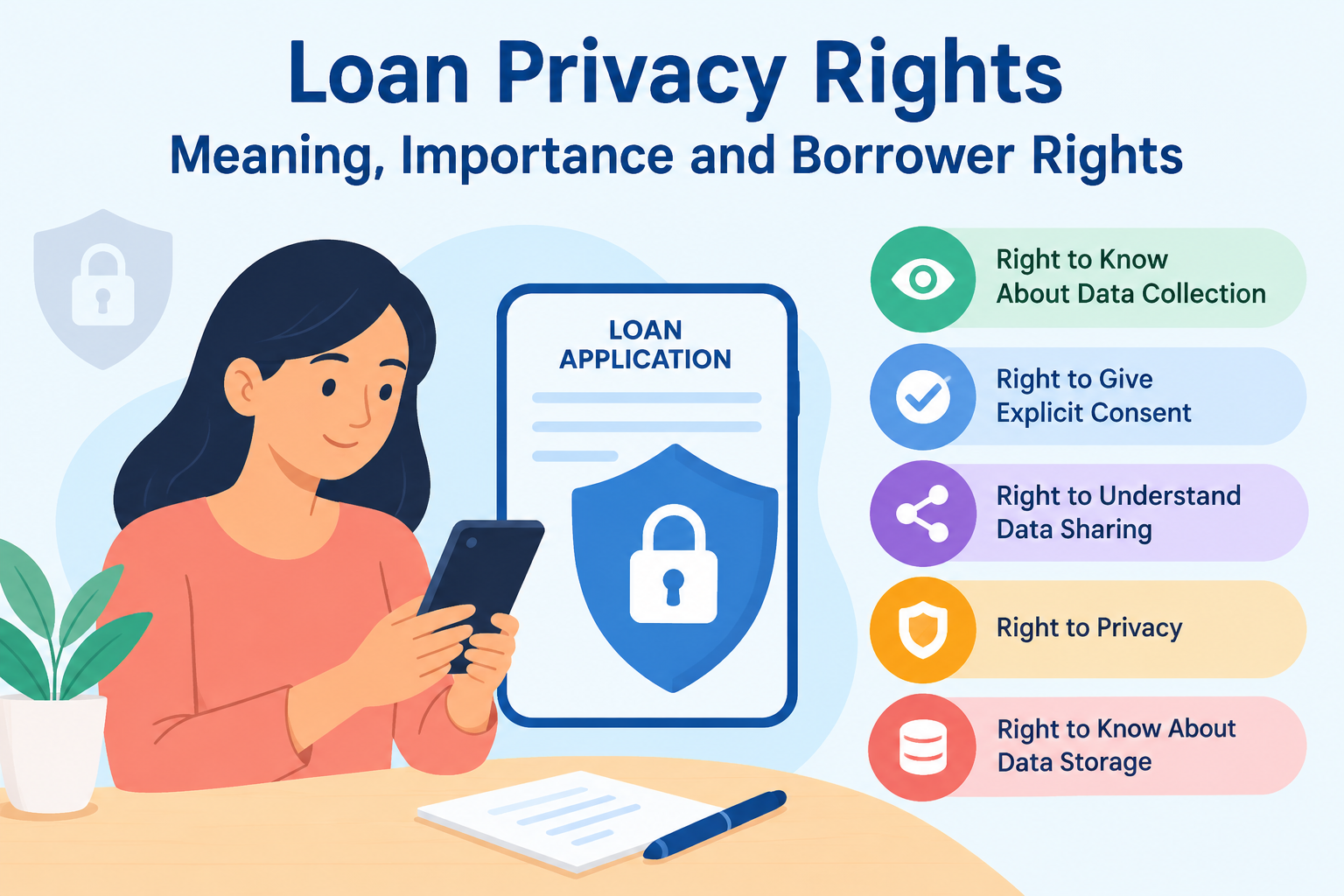
1. Right to Know About Data Collection

Borrowers should be able to understand what personal information a digital lender collects and why it is needed.

2. Right to Give Explicit Consent

For digital lending, RBI guidance requires prior and explicit consent for data collection, with borrowers having discretion regarding consent for specific data.

3. Right to Understand Data Sharing

Privacy policies should disclose relevant third parties that are permitted to collect personal information through a digital lending app. RBI guidance also provides for explicit borrower consent before sharing personal information with third parties, except where sharing is required by law or regulation.

4. Right to Privacy

Loan-related information should not be handled or disclosed without an appropriate legal or contractual basis. Borrowers should review the lender’s privacy policy before submitting sensitive information.

5. Right to Information About Data Storage

Digital lending guidance includes requirements concerning data storage, including restrictions on personal information retained by lending apps and requirements relating to storage in India.

Loan Privacy Rights and Digital Loan Apps

Before installing or using a loan app, borrowers should check:

Privacy Check What to Look For
Privacy policy Clear and accessible policy
App permissions Whether requested permissions are relevant
Data collection What information is collected
Consent Whether consent is obtained clearly
Third-party sharing Who may receive information
Data storage Where and how information is stored
Grievance mechanism Contact details for complaints

How Borrowers Can Protect Their Loan Data

  1. Read the privacy policy before applying.
  2. Avoid giving unnecessary permissions to loan apps.
  3. Verify the lender and lending service provider.
  4. Do not share OTPs, passwords or banking credentials.
  5. Keep copies of loan documents and consent records.
  6. Review suspicious messages, calls or emails concerning your loan.
  7. Contact the lender’s grievance redressal officer if you have a privacy complaint.

RBI guidance also provides for grievance redressal through the lender’s designated mechanism, with escalation to the RBI’s complaint system in applicable cases when a complaint is not satisfactorily resolved within the prescribed period.

Loan Privacy Rights vs Loan Recovery

Privacy rights remain relevant even when a borrower has an overdue loan. Issues concerning repayment and recovery do not automatically give a lender unrestricted permission to access or disclose a borrower’s personal information.

Borrowers should distinguish between legitimate loan recovery activity and improper use or disclosure of personal data.

Frequently Asked Questions

What are loan privacy rights?

They are protections concerning how lenders and lending service providers collect, use, store and share borrowers’ personal information.

Can a loan app collect any data it wants?

For digital lending, RBI guidance requires data collection to be need-based and based on prior and explicit borrower consent.

Should I read a loan app’s privacy policy?

Yes. RBI consumer guidance specifically recommends reading privacy and data-storage policies and checking app permissions.

Can loan information be shared with third parties?

Applicable RBI digital-lending requirements address third-party sharing and generally require explicit borrower consent, subject to legally required or permitted disclosures.

What should I do if a loan app misuses my personal information?

Keep evidence such as screenshots, messages and call details, contact the lender’s grievance mechanism, and use the applicable regulatory complaint channel if the issue is not resolved.


Conclusion

Loan Privacy Rights are important for protecting borrowers’ personal, financial and sensitive information during the loan application and repayment process. As digital lending continues to grow, borrowers should understand what information lenders collect, why it is required, how it may be used and whether it can be shared with third parties.

Reading the lender’s privacy policy, checking app permissions, providing consent carefully and keeping records of loan-related communications can help borrowers protect their information. If a borrower believes their data has been misused, they should first approach the lender’s grievance redressal mechanism and use the appropriate regulatory complaint channels where applicable.

Published on : 30th  September

Published by : MONISHA

www.vizzve.com || www.vizzveservices.com    

Follow us on social media:  Facebook || Linkedin || Instagram

🛡 Powered by Vizzve Financial

RBI-Registered Loan Partner | 10 Lakh+ Customers | ₹600 Cr+ Disbursed


Disclaimer: This article may include third-party images, videos, or content that belong to their respective owners. Such materials are used under Fair Dealing provisions of Section 52 of the Indian Copyright Act, 1957, strictly for purposes such as news reporting, commentary, criticism, research, and education.
Vizzve and India Dhan do not claim ownership of any third-party content, and no copyright infringement is intended. All proprietary rights remain with the original owners.
Additionally, no monetary compensation has been paid or will be paid for such usage.
If you are a copyright holder and believe your work has been used without appropriate credit or authorization, please contact us at grievance@vizzve.com. We will review your concern and take prompt corrective action in good faith... Read more

Trending Post


Latest Post


Our Product

Get Personal Loans up to 10 Lakhs in just 5 minutes