

⭐ AI Answer Box
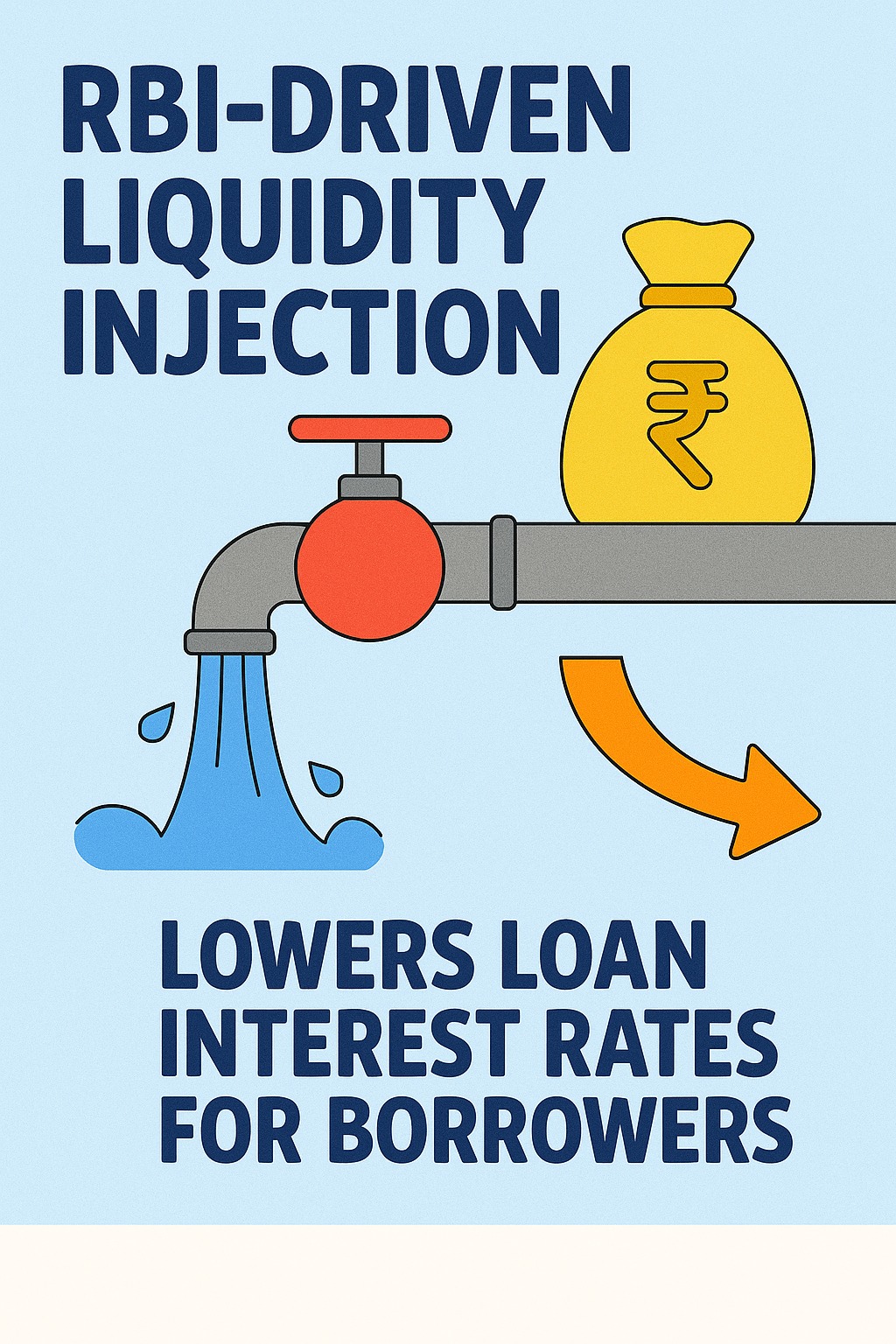
Analysts expect the RBI to inject more liquidity into the banking system soon to support credit growth, stabilize yields, and ease financial conditions. More liquidity means banks have cheaper funds — which can further reduce loan interest rates and lower EMIs for home, personal and business loans.
Introduction
India’s financial markets are buzzing with one major expectation:
👉 Another liquidity injection by the Reserve Bank of India (RBI).
Why?
Because liquidity has been tightening due to:
Higher credit demand
Government cash balances
Festive-season spending
Global rate movements
Elevated bond yields
To prevent a liquidity crunch and keep credit flowing, analysts believe RBI may soon step in with additional liquidity support.
But the important question is:
How will this affect your loan rates and EMIs?
Let’s break it down simply.
What Is a Liquidity Injection? (Simple Explanation)
A liquidity injection means RBI puts more money into the banking system.
This can be done through:
OMO Purchases (RBI buys government bonds)
CRR cut (Banks hold less money with RBI → more money to lend)
VRR reversal
Long-term repo operations (LTRO)
SDF adjustments
Bond yield management operations
More liquidity = cheaper money for banks.
Cheaper money for banks = lower interest rates for borrowers.
Why Analysts Expect Another Liquidity Injection Soon
✔ 1. Banking Liquidity Is Still Tight
Net LAF liquidity has been fluctuating due to:
Tax outflows
Government borrowings
Strong credit demand
Banks need support to keep lending growth smooth.
✔ 2. Bond Yields Need Stabilization
High bond yields increase banks’ cost of funds.
RBI may act to bring yields down.
✔ 3. Global Central Banks Are Easing
The US Fed and EU are moving toward softer monetary policy.
India may align gradually.
✔ 4. India’s Credit Growth Is Strong
Corporate, SME, and retail credit are rising faster than deposit growth.
Liquidity support helps maintain momentum.
✔ 5. Festive & Capex Cycles Increase Short-Term Funding Needs
RBI wants to avoid liquidity shocks in the system.
How Liquidity Injection Lowers Loan Interest Rates
When banks receive more liquidity, two things happen:
1. Borrowing Cost Falls
Banks borrow less from RBI at higher rates.
Their funding becomes cheaper.
2. MCLR & RLLR Begin to Decline
Home loans (RLLR)
Personal loans
Car loans
SME loans
…all become cheaper over time.
Real EMI Drop Example After Liquidity Injection
Assume loan interest drops by 0.25% due to improved liquidity:
₹20 lakh Home Loan (20 years)
| Status | EMI |
|---|---|
| Before liquidity injection | ₹17,212 |
| After liquidity inject & rate drop | ₹16,906 |
📉 EMI decrease: ₹306/month
₹50 lakh Home Loan (20 years)
| Status | EMI |
|---|---|
| Before | ₹43,030 |
| After | ₹42,265 |
📉 EMI decrease: ₹765/month
₹10 lakh Personal Loan (5 years)
EMI decrease: ₹120–₹170
Which Loans Benefit the Most?
| Loan Type | Impact | Reason |
|---|---|---|
| Home Loan (Floating) | ⭐⭐⭐⭐ High | RLLR adjusts quickly |
| Personal Loan | ⭐⭐ Medium | Lenders reduce rates slowly |
| Auto Loan | ⭐ Medium | Mostly fixed-rate |
| SME Loans | ⭐⭐⭐ High | Liquidity-sensitive |
| Credit Cards | ⭐ Low | APR rarely changes |
Expert Commentary
“RBI’s next liquidity injection would ease funding pressures on banks, soften bond yields, and provide room for lenders to cut rates further—especially for home loans.”
— Aditya Menon, Senior Economist
What Borrowers Should Do Now
✔ Check if your home loan is on floating rate
You’ll benefit quickly.
✔ Compare rates between lenders
NBFCs pass liquidity benefits faster.
✔ Consider balance transfer if your rate is high
This can save ₹50,000–₹2 lakh over tenure.
✔ Maintain a strong credit score
You’ll get the lowest rates in easing cycles.
✔ Avoid taking loans at peak rates
More rate cuts may be coming.
Fast Summary Box
Liquidity injection expected soon
Banks get cheaper funds
Loan rates may fall further
EMIs likely to reduce across home, SME & personal loans
Strong credit demand + tight liquidity are key triggers
Vizzve Financial — Smarter Loans at Lower Rates
Vizzve Financial helps borrowers get:
Lower interest rates
Quick approvals
Multiple lender comparisons
Easy balance transfer options
👉 Apply now at: www.vizzve.com
❓ FAQs
1. What is a liquidity injection?
It’s RBI adding money into the banking system.
2. Will loan rates fall again?
Yes, if liquidity improves + bond yields drop.
3. How soon will EMIs drop?
Within 1–3 months after liquidity action.
4. Which loan type benefits the most?
Floating-rate home loans.
5. Should I wait before taking a loan?
If possible, yes — rates may fall further.
Conclusion
A fresh liquidity injection could bring meaningful relief to borrowers across India.
Lower bond yields, cheaper funds for banks, and softer lending rates all point toward a favourable credit environment in the coming months.
Published on : 8th December
Published by : SMITA
www.vizzve.com || www.vizzveservices.com
Follow us on social media: Facebook || Linkedin || Instagram
🛡 Powered by Vizzve Financial
RBI-Registered Loan Partner | 10 Lakh+ Customers | ₹600 Cr+ Disbursed