

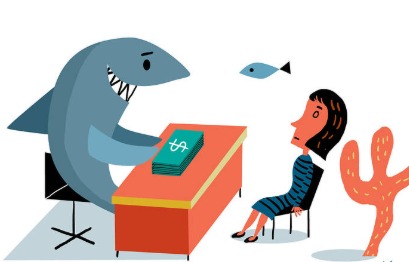
In times of financial stress, it’s easy to fall into the trap of loan sharks — unlicensed moneylenders who offer quick loans without paperwork but charge exorbitant interest rates. These lenders often target individuals who are unable to access formal banking channels due to poor credit or lack of documentation.
While their offers may seem convenient, borrowing from such sources can spiral into a cycle of debt, harassment, and financial ruin. Here’s everything you need to know about loan sharks, how they operate, and ways to protect yourself.
What Are Loan Sharks?
Loan sharks are illegal moneylenders who offer instant loans at extremely high interest rates, often without proper documentation. They operate outside the legal framework and are not registered under the Reserve Bank of India (RBI) or any financial authority.
These lenders usually approach borrowers through informal networks, social media, or local references, targeting those in urgent need of money — especially low-income earners or small business owners.
They promise:
Quick cash approvals
No credit checks
Flexible repayment terms
But the reality is the opposite — borrowers often end up paying multiple times the loan amount due to hidden fees and aggressive collection tactics.
How Loan Sharks Operate
Loan sharks rely on fear and dependency. Their strategy typically includes:
Unsecured lending – Loans are given without any written agreement.
High interest rates – Often 5%–10% per month instead of per year.
Harassment and intimidation – Use of threats or public humiliation for delayed payments.
Debt trapping – Forcing borrowers to take another loan to repay the first.
Digital exploitation – Some use fake lending apps that access personal contacts and photos to extort borrowers.
This predatory system keeps borrowers trapped in a never-ending debt cycle.
Risks of Borrowing from Loan Sharks
Borrowing from illegal moneylenders poses several financial and personal risks:
💸 Excessive repayment burden – You may end up paying several times the borrowed amount.
⚠️ No legal protection – Since there’s no valid agreement, you can’t seek formal redress in disputes.
😨 Threats and harassment – Physical intimidation or emotional blackmail is common.
🔒 Privacy invasion – Many digital loan sharks misuse access to your contacts and media files.
🚫 Debt trap – Failure to pay can push you into a vicious borrowing loop.
The emotional and psychological stress from such harassment can be devastating for individuals and families.
How to Protect Yourself from Loan Sharks
Here are a few practical prevention tips to avoid falling victim to illegal lenders:
✅ Borrow only from registered lenders — Check whether the lender or app is RBI-approved or NBFC-licensed.
📄 Read the fine print — Always demand a written loan agreement with clear terms.
📱 Avoid instant loan apps with poor ratings or no physical address.
🏦 Explore formal alternatives — Try microfinance institutions, cooperative banks, or government-backed small loan schemes like PMMY (Mudra Loans) or PM Svanidhi.
🗣️ Report suspicious lenders — If you’re threatened or harassed, report immediately to the local police, cybercrime cell, or RBI complaint portal.
💬 Seek credit counseling — Many NGOs and banks offer free guidance on safe borrowing and debt management.
Remember: if a loan offer sounds too easy or too quick, it’s probably unsafe.
Legal Actions Against Loan Sharks
The Reserve Bank of India has been cracking down on unauthorized digital lenders and has introduced strict guidelines for digital lending platforms. Borrowers can now check the list of verified lending apps and report fraudulent ones.
Under Indian law, anyone engaged in unauthorized money lending or harassment for recovery can face imprisonment and heavy fines under:
The Money-Lenders Act (varies by state)
Section 384 IPC (extortion)
Section 506 IPC (criminal intimidation)
Legal recourse is available — don’t hesitate to seek help.
Conclusion
Loan sharks thrive on desperation, lack of awareness, and financial exclusion. By staying informed, verifying lenders, and choosing legitimate financial institutions, you can avoid the trap of predatory lending.
If you ever find yourself in urgent need of funds, remember: a legal loan may take longer to process, but it keeps your finances — and peace of mind — safe.
FAQs
Q1. What is a loan shark?
A. A loan shark is an unlicensed lender who offers quick loans at high interest rates without following legal lending practices.
Q2. Are loan sharks illegal in India?
A. Yes. Lending without proper registration or RBI approval is illegal.
Q3. How do loan sharks trap borrowers?
A. By charging massive interest, demanding frequent repayments, and using threats to recover money.
Q4. What can I do if I’m harassed by a loan shark?
A. Report immediately to the police, RBI’s complaint portal, or the cybercrime helpline (1930).
Q5. What are safer alternatives to loan sharks?
A. Cooperative banks, microfinance institutions, Mudra loans, or regulated NBFCs.
Published on : 6th November
Published by : SMITA
www.vizzve.com || www.vizzveservices.com
Follow us on social media: Facebook || Linkedin || Instagram
🛡 Powered by Vizzve Financial
RBI-Registered Loan Partner | 10 Lakh+ Customers | ₹600 Cr+ Disbursed