

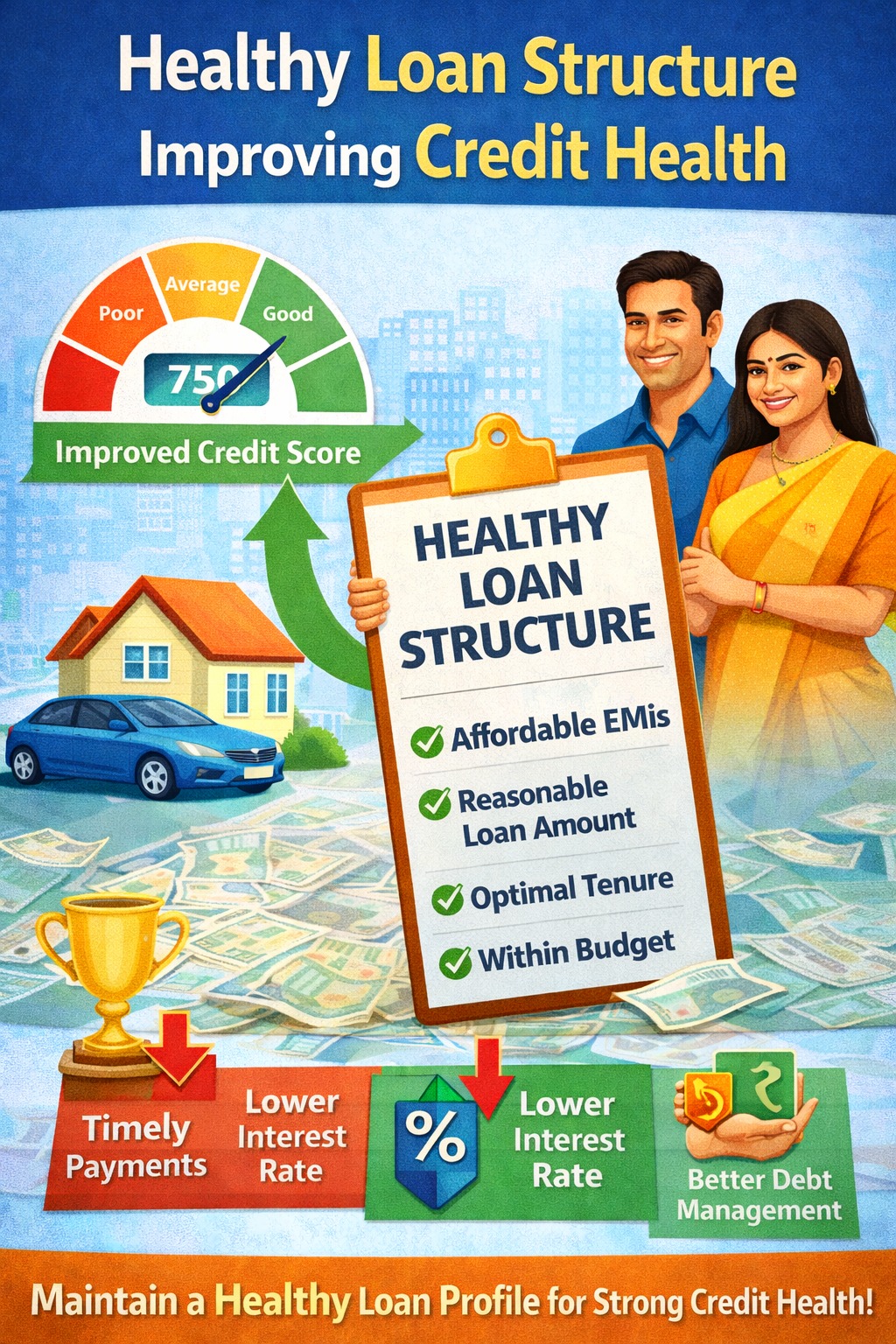
For years, financial success was often mistaken for easy access to credit.
More cards. Bigger limits. Faster loans.
But 2026 flips that thinking.
With higher interest rates, tighter credit checks, and visible credit behaviour, the focus is shifting from how much you can borrow to how well your debt is structured.
In today’s environment, debt quality matters more than debt quantity.
AI Answer Box
In 2026, borrowers should focus on debt quality rather than borrowing more. A healthy balance between loans and savings improves financial stability, reduces EMI stress, and protects long-term credit health.
Quick Summary Box
Borrowing more is not financial strength
Quality of debt matters more than volume
Savings protect EMI stability
Poor debt structure increases risk
2026 rewards disciplined borrowers
Why “Borrowing Capacity” Is No Longer the Goal
Earlier, borrowers aimed to:
Maximise loan eligibility
Use full credit limits
Stack multiple loans
In 2026, this approach backfires because:
EMIs face inflation pressure
Credit scores update faster
Lenders monitor repayment capacity closely
Borrowing capacity without savings is fragile.
What Is Debt Quality?
Debt quality refers to how healthy your borrowing is, not how much it is.
High-Quality Debt Looks Like:
Affordable EMIs
Clear purpose
Shorter or optimised tenure
Prepayment flexibility
Backed by savings buffer
Low-Quality Debt Looks Like:
Overlapping EMIs
Lifestyle-driven loans
Minimum-only payments
No emergency fund
Debt Quantity vs Debt Quality
| Aspect | Debt Quantity | Debt Quality |
|---|---|---|
| Focus | How much borrowed | How well structured |
| EMI stress | High | Controlled |
| Savings buffer | Weak | Strong |
| Credit health | Volatile | Stable |
| Financial resilience | Low | High |
Why Savings Matter More in 2026
With:
Sticky interest rates
Inflation pressure
Currency uncertainty
savings act as:
EMI shock absorbers
Credit profile stabilisers
Negotiation power with lenders
A borrower with moderate debt + strong savings is safer than one with high borrowing and no buffer.
The Hidden Risk of Borrowing “Just Because You Can”
Many borrowers fall into the trap of:
Pre-approved loan offers
High credit card limits
Easy digital approvals
This creates:
Artificial affordability
Long-term EMI stress
Reduced flexibility during emergencies
In 2026, easy credit is not cheap credit.
How to Balance Loans and Savings in 2026
Smart Financial Framework:
Maintain 6 months of expenses as emergency savings
Keep EMIs below 35–40% of income
Avoid overlapping personal loans
Prefer prepayable, flexible loans
Increase savings before increasing borrowing
Ideal Loan–Savings Balance Checklist
| Area | Healthy Range |
|---|---|
| EMI-to-income | < 40% |
| Emergency fund | 6 months |
| Loan purpose | Need-based |
| Credit utilisation | < 30% |
| Savings growth | Ongoing |
Expert Commentary: Strong Borrowers Are Liquid Borrowers
“In today’s economy, liquidity matters more than leverage. Borrowers with savings survive shocks better than borrowers with high limits.”
— Personal Finance & Credit Analyst
What Happens If You Ignore Debt Quality?
Rising EMI stress
Credit score volatility
Reduced loan flexibility
Forced borrowing during emergencies
Long-term financial fatigue
Poor debt quality doesn’t fail immediately—it erodes stability quietly.
Key Takeaways
2026 rewards disciplined borrowing
Debt quality matters more than loan size
Savings protect both EMIs and credit score
Borrowing should support life, not strain it
Financial strength = balance, not leverage
❓ Frequently Asked Questions (FAQs)
1. What does debt quality mean?
It means how affordable, planned, and flexible your loans are.
2. Is borrowing bad in 2026?
No—over-borrowing is bad, not borrowing itself.
3. How much EMI is safe?
Ideally below 35–40% of monthly income.
4. Should I save or repay loans first?
Maintain emergency savings, then balance repayment.
5. Are pre-approved loans safe?
Only if they fit your budget and purpose.
6. Does savings affect loan approval?
Indirectly, yes—liquidity improves risk profile.
7. Is having no debt better?
Not always—healthy debt can support goals.
8. What’s the biggest mistake borrowers make?
Borrowing without a savings buffer.
Conclusion: In 2026, Quality Beats Quantity
The financial lesson of 2026 is clear:
It’s not about how much debt you can carry—it’s about how well you carry it.
Borrowers who balance loans with savings, structure debt wisely, and leave room for uncertainty will stay ahead—financially and mentally.
📌 In the new borrowing era, stability is the new success metric.
Published on : 2nd January
Published by : SMITA
www.vizzve.com || www.vizzveservices.com
Follow us on social media: Facebook || Linkedin || Instagram
🛡 Powered by Vizzve Financial
RBI-Registered Loan Partner | 10 Lakh+ Customers | ₹600 Cr+ Disbursed