

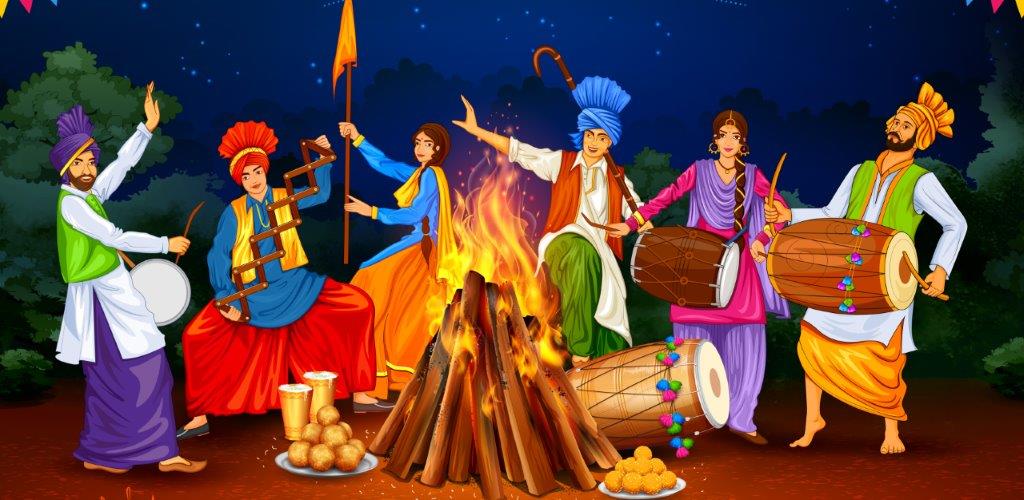
What Is Lohri?
Celebrated on January 13, Lohri marks the end of winter and the beginning of the harvest season in Punjab. It honors agricultural prosperity, especially sugarcane, wheat, and mustard crops.
Families gather around bonfires, offering sesame seeds (til), jaggery (gur), popcorn, and rewri, symbolizing abundance and gratitude.
Key elements include:
Traditional Bhangra & Gidda around the fire
Singing folk songs like “Sundar Mundriye”
First Lohri celebrations for newborns or newlyweds
Bonfire seen as purifying and protective
What Is Maghi?
Maghi follows Lohri on January 14, aligning with Makar Sankranti. It’s not just about seasonal transition—it’s a solemn day of Sikh remembrance.
It commemorates the martyrdom of the Forty Liberated Ones (Chali Mukte) who gave their lives for Guru Gobind Singh Ji in the Battle of Muktsar (1705).
Traditions include:
Holy dip in sacred rivers (especially at Muktsar Sahib)
Attending Gurudwara services and kirtans
Maghi Mela – a massive Sikh fair honoring bravery and devotion
From Harvest to Heroism: The Lohri–Maghi Continuum
Lohri and Maghi together represent two dimensions of Punjabi identity:
| Festival | Significance | Mood |
|---|---|---|
| Lohri | Harvest, fire, fertility, joy | Festive, communal |
| Maghi | Warrior spirit, sacrifice, spiritual reflection | Solemn, devotional |
Lohri’s Fire: More Than Warmth
Lohri’s bonfire is not just a celebration—it's a symbol of survival, especially for farmers and children born in winter months. Fire is offered respect and thanks for warmth and sustenance.
People throw:
Til (sesame): for purity
Gur (jaggery): for sweetness in life
Makke di roti & sarson da saag: traditional dishes served with love
Maghi’s Meaning: Remembering the Brave
On Maghi, Sikhs remember Chali Mukte, 40 warriors who initially abandoned Guru Gobind Singh Ji but returned and fought valiantly in Muktsar.
The Maghi Mela at Muktsar attracts thousands who:
Bathe in the holy sarovar
Pray for courage and righteousness
Reflect on loyalty, redemption, and valor
Cultural Significance in 2025
In a world grappling with climate change, agrarian crisis, and cultural loss, Lohri and Maghi remain anchors of:
Seasonal awareness
Community resilience
Historical continuity
Lohri reminds us to celebrate abundance and Maghi to honor sacrifice—a blend that is uniquely Punjabi.
FAQs: Lohri & Maghi
Q1: Are Lohri and Maghi religious festivals?
Lohri is more seasonal and cultural, while Maghi holds deep religious significance for Sikhs.
Q2: What is the story behind the Lohri song “Sundar Mundriye”?
It’s based on Dulla Bhatti, a Punjabi folk hero who saved girls from abduction. The song honors his courage and justice.
Q3: Is Lohri only celebrated in Punjab?
Primarily, but it's now celebrated across North India and globally by Punjabi communities.
Q4: Can non-Sikhs attend Maghi Mela?
Yes. The festival is open to all and promotes universal values of bravery, redemption, and community.
Final Thought
Lohri and Maghi are not just festivals—they are songs of the soil and sword. One dances in joy, the other stands in silence. One celebrates birth, the other remembers sacrifice.
In 2025, let’s honor both:
the warmth of fire and the fire within.
Published on : 2nd August
Published by : SMITA
www.vizzve.com || www.vizzveservices.com
Follow us on social media: Facebook || Linkedin || Instagram
🛡 Powered by Vizzve Financial
RBI-Registered Loan Partner | 10 Lakh+ Customers | ₹600 Cr+ Disbursed