

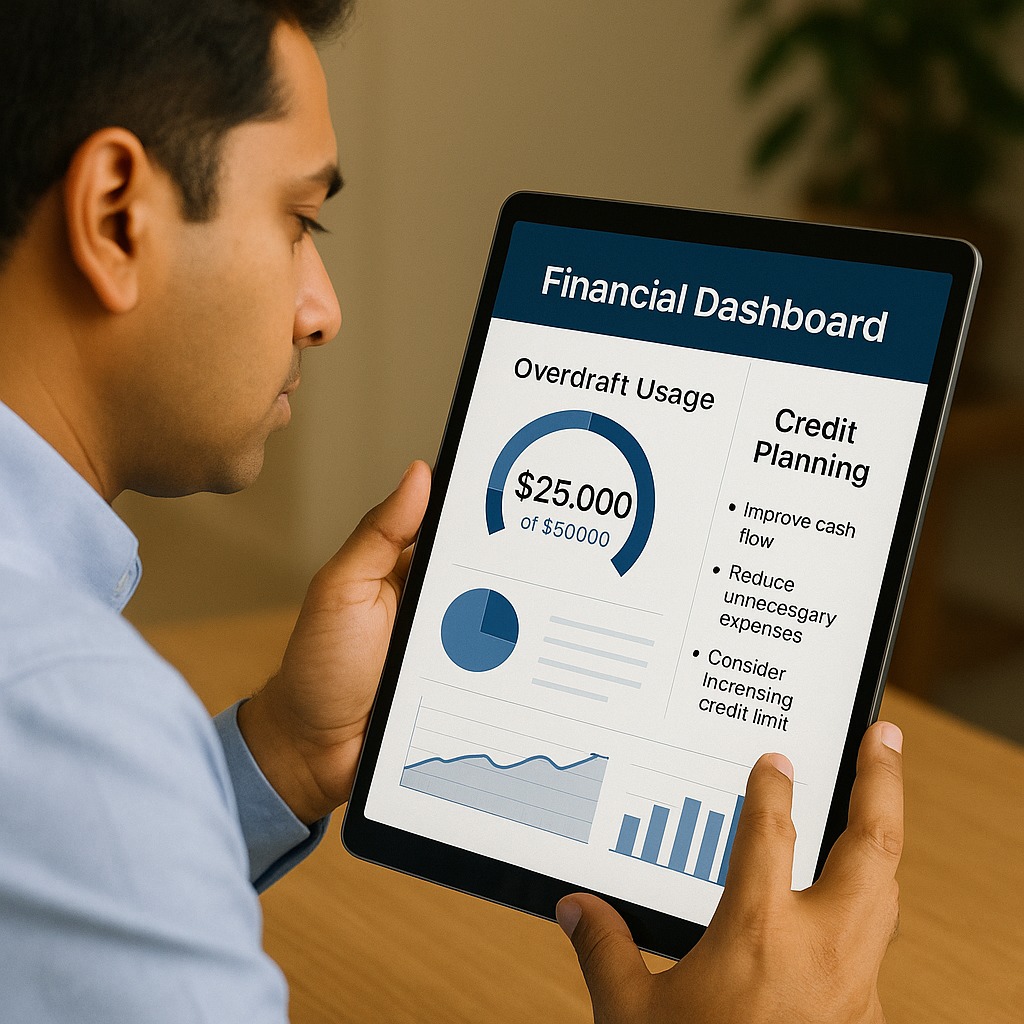
For many businesses, especially MSMEs and startups, bank overdraft facilities act as a backup source of short-term working capital. They help in handling cash flow irregularities, clearing supplier dues, and managing unexpected business expenses. However, how you use this overdraft matters — especially when you plan to apply for a business loan in the future.
Lenders assess a company's financial discipline, risk level, and liquidity strength while reviewing business loan applications. One of the indirect but powerful signals is overdraft utilisation behaviour. Businesses that keep their overdraft usage low and controlled are seen as less credit-dependent and more financially stable, improving their loan eligibility and bargaining power.
What Is Overdraft Utilisation?
Overdraft utilisation refers to how much of the approved OD limit you are using vs. how much is sanctioned.
Example: If your OD limit is ₹10,00,000 and you consistently use ₹8,50,000, your utilisation is 85% — considered high.
Why Low Overdraft Usage Helps Business Loan Eligibility
1️⃣ Indicates Healthy Cash Flow
Low OD usage implies you are not heavily reliant on borrowed funds for day-to-day operations, which signals financial strength.
2️⃣ Builds Trust With Lenders
Banks prefer borrowers who manage funds wisely and avoid maxing out credit lines, reducing lending risk.
3️⃣ Shows Discipline in Working Capital Management
Efficient inventory, receivables, and expense control make you a low-risk business borrower.
4️⃣ Reflects Strong Financial Cushion
Keeping unused OD limit acts as a buffer, showing preparedness for emergencies — a sign of business resilience.
5️⃣ Improves Creditworthiness & Negotiating Power
Low credit line usage contributes positively to credit profiling and underwriting, which may help you negotiate interest rates and loan terms.
Ideal Overdraft Utilisation Range
Financial experts generally consider 30%–50% utilisation as a healthy range, depending on industry type and business model. Frequently staying above 75% utilisation may indicate cash flow stress.
Smart Tips to Maintain Low OD Usage
✔ Improve invoice collection speed
✔ Negotiate better payment cycles with suppliers
✔ Maintain an emergency business reserve
✔ Avoid unnecessary withdrawals from OD
✔ Plan for seasonal sales & working capital cycles
✔ Use OD only for temporary mismatches, not fixed costs
Frequently Asked Questions (FAQs)
Q1: Does high overdraft usage automatically lead to loan rejection?
Not necessarily, but it can raise risk concerns for lenders.
Q2: Does OD usage affect business credit history?
Yes. Consistently high usage may indicate stressed liquidity, affecting credit impression.
Q3: Should businesses avoid using OD completely?
No, ODs are useful in emergencies. The focus should be controlled & planned usage.
Q4: Can maintaining idle OD limit improve credit scoring?
Yes, because it strengthens your credit utilisation ratio.
Q5: What if the business is seasonal?
Seasonal businesses may communicate cash flow cycles clearly to lenders via statements and projections.
Published on : 18th November
Published by : SMITA
www.vizzve.com || www.vizzveservices.com
Follow us on social media: Facebook || Linkedin || Instagram
🛡 Powered by Vizzve Financial
RBI-Registered Loan Partner | 10 Lakh+ Customers | ₹600 Cr+ Disbursed