

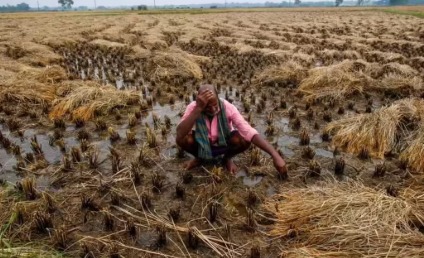
In a tragic incident underscoring the impact of extreme weather on India’s agrarian community, a farmer from Madhya Pradesh has reportedly died by suicide after his crops were devastated by unseasonal rain and hailstorms earlier this week.
According to local officials, the incident occurred in a village in Sehore district, where heavy rains over the past few days damaged wheat and soybean fields at the time of harvest. The farmer, identified as [Name withheld by authorities], was under financial stress due to crop loans and the sudden loss of yield.
Unseasonal Weather Wreaks Havoc
Madhya Pradesh has witnessed erratic rainfall and temperature swings in October, disrupting the harvest cycle in multiple districts including Sehore, Hoshangabad, and Vidisha. Agricultural experts attribute the pattern to climate irregularities and changing monsoon behavior.
Local reports indicate that several farmers have complained of total crop loss, with many awaiting compensation under state disaster relief schemes.
Government Response
Authorities have initiated a panchanama (damage assessment) in the affected region, and district officials have promised financial assistance to the victim’s family. The state agriculture department has also been instructed to expedite insurance claim settlements under the Pradhan Mantri Fasal Bima Yojana.
However, farmer organizations have demanded a comprehensive compensation package, citing widespread damage and delayed relief measures.
A Widening Crisis
Incidents like these reflect a broader issue faced by India’s farmers: rising climate uncertainty and inadequate risk coverage. Studies show that unseasonal rains, hail, and droughts have significantly increased in frequency over the past decade, leading to mounting debt and psychological distress among cultivators.
Experts emphasize the need for climate-resilient farming practices, better crop insurance accessibility, and timely intervention to prevent such tragedies.
FAQs
1. Where did the incident occur?
The suicide took place in a village in Sehore district, Madhya Pradesh.
2. What caused the crop damage?
Unseasonal rainfall and hailstorms destroyed the farmer’s standing crops.
3. Is the government offering compensation?
Yes, local officials have promised financial aid and initiated loss assessments.
4. Why are unseasonal rains increasing?
Climate change and shifting monsoon patterns are contributing to unpredictable rainfall.
Published on : 30th October
Published by : SMITA
www.vizzve.com || www.vizzveservices.com
Follow us on social media: Facebook || Linkedin || Instagram
🛡 Powered by Vizzve Financial
RBI-Registered Loan Partner | 10 Lakh+ Customers | ₹600 Cr+ Disbursed
https://play.google.com/store/apps/details?id=com.vizzve_micro_seva&pcampaignid=web_share