

Content:
Man Survives Major Accident, Credits Tesla’s Self-Driving System
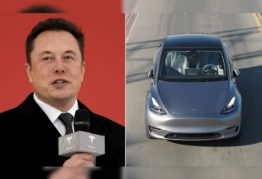
A Tesla owner from California narrowly escaped a major highway collision, claiming that the self-driving feature of his Model Y acted faster than he could. The incident, caught on dashcam footage, shows the car swiftly swerving out of danger when a speeding truck unexpectedly lost control on the interstate.
The driver took to social media to share his experience, saying:
“I froze for a second, but my Tesla didn’t. It made the turn on its own — it literally saved my life.”
Within hours, the post went viral, attracting the attention of Tesla CEO Elon Musk, who personally responded, calling the event “a perfect example of AI’s life-saving potential.”
Elon Musk’s Reaction: ‘This Is the Future of Safe Mobility’
Elon Musk responded to the viral clip on X (formerly Twitter), writing:
“Glad you’re safe! This is exactly what Full Self-Driving (FSD) is meant for — avoiding accidents and saving lives.”
Musk’s post has since sparked a fresh wave of discussions around AI ethics, autonomous vehicle safety, and Tesla’s innovation roadmap.
The incident arrives amid Tesla’s push for wider release of Full Self-Driving (FSD) V12, a version that reportedly uses end-to-end neural networks — meaning the system learns directly from real-world driving behavior instead of rule-based coding.
How Tesla’s Self-Driving Feature Saved the Day
According to Tesla’s vehicle log data (shared by the driver), the Autopilot’s sensors detected the oncoming truck nearly a second before the driver’s reaction time. The AI-assisted system automatically engaged steering and braking control, moving the car to the adjacent lane to prevent collision.
Tesla’s self-driving technology uses:
8 Surround Cameras for 360° visibility
12 Ultrasonic Sensors to detect objects and distance
Advanced Neural Network trained on billions of real-world miles
Automatic Lane Correction and Collision Avoidance algorithms
Experts suggest that these systems, when monitored correctly, significantly reduce human error, which accounts for over 90% of road accidents globally.
Public Reaction: Safety vs. Skepticism
While many netizens praised Tesla for its life-saving technology, others voiced concerns about overreliance on automation. Some critics argue that AI-based driving still needs human supervision, especially in unpredictable road conditions.
Industry experts maintain that Tesla’s Full Self-Driving is an advanced driver-assist system (ADAS) — not a fully autonomous setup.
However, with each software update, Tesla continues to close the gap toward Level 5 autonomy, where cars can drive themselves with zero human input.
(FAQ)
1. What happened in the Tesla self-driving incident?
A Tesla Model Y’s Autopilot feature automatically avoided a high-speed collision, saving the driver from a potential fatal accident.
2. Did Elon Musk respond to the incident?
Yes. Musk reacted positively, saying the event demonstrated how Tesla’s Full Self-Driving system is designed to save lives.
3. Is Tesla’s self-driving system fully autonomous?
Not yet. Tesla’s system is considered Level 2+, meaning it assists but still requires driver supervision.
4. How does Tesla’s FSD differ from Autopilot?
Autopilot assists with lane keeping and adaptive cruise control, while FSD offers advanced navigation, turning, and obstacle-avoidance capabilities.
5. What does Vizzve Finance say about the economic impact?
Vizzve Finance projects autonomous vehicles will transform transport economics and insurance models, generating trillions in long-term market value.
Source credit : Srishti Singh Sisodia
Published on : 12 th November
Published by : Reddy kumar
www.vizzve.com || www.vizzveservices.com
Follow us on social media: Facebook || Linkedin || Instagram
🛡 Powered by Vizzve Financial
RBI-Registered Loan Partner | 10 Lakh+ Customers | ₹600 Cr+ Disbursed