

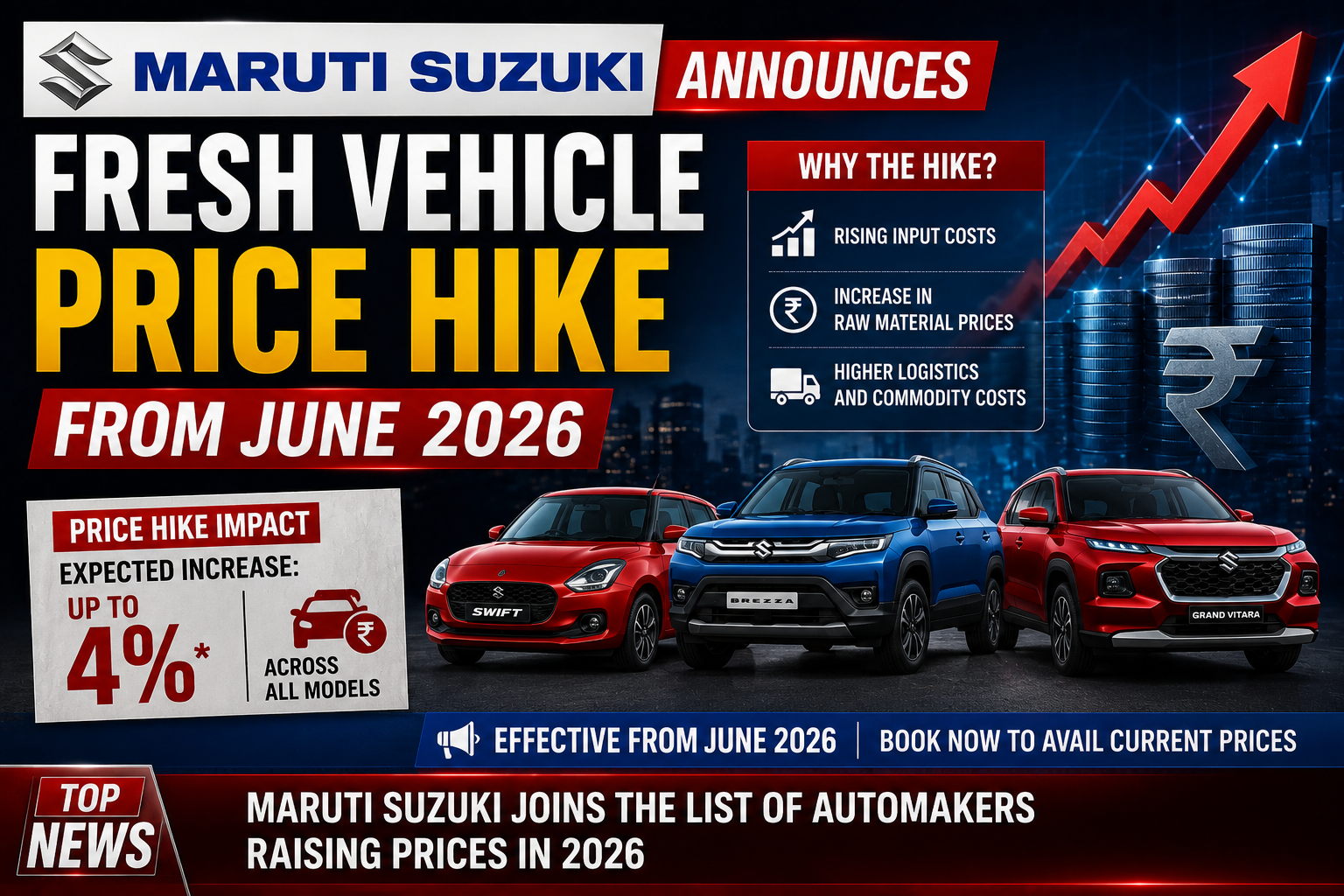
Maruti Suzuki has announced another round of vehicle price hikes across several car models effective from June, citing increasing raw-material and operational costs.
The price revision reflects growing pressure from:
- Higher steel and metal prices
- Supply chain expenses
- Logistics costs
- Manufacturing overheads
- Inflationary pressures
The development comes amid continued changes in India’s automobile market and rising production costs across the auto industry.
AI Answer Box
Why is Maruti Suzuki increasing vehicle prices?
Maruti Suzuki stated that rising raw-material costs and operational expenses are forcing the company to increase prices across multiple car models from June.
Which Maruti cars will become expensive?
The company indicated that several models across its lineup may see revised pricing, though the extent of increases may vary by model and variant.
Introduction
India’s automobile sector continues facing cost pressures due to rising commodity prices, logistics expenses, and inflationary trends.
In the latest development, Maruti Suzuki announced a fresh price increase for several vehicle models starting in June.
The company said the decision was necessary because of:
- Increasing raw-material costs
- Higher operational expenses
- Manufacturing cost pressures
The move may affect:
- Entry-level car buyers
- Mid-segment consumers
- Fleet operators
- Automobile financing demand
The announcement also reflects broader inflationary trends impacting India’s automotive industry.
Why Maruti Suzuki Is Increasing Prices
Several factors are contributing to higher vehicle manufacturing costs.
1. Rising Raw-Material Costs
Automobile manufacturers depend heavily on:
- Steel
- Aluminum
- Copper
- Plastics
- Electronic components
Price increases in these materials directly affect vehicle production costs.
2. Higher Operational Expenses
Companies are also facing:
- Rising energy costs
- Transportation expenses
- Employee costs
- Supply-chain overheads
3. Inflationary Pressure in Auto Industry
The Indian auto sector continues adjusting prices to manage inflation and protect profit margins.
Auto Industry Cost Pressure Summary
| Cost Factor | Impact on Car Prices |
|---|---|
| Steel & Metals | Higher manufacturing cost |
| Logistics Expenses | Increased transportation cost |
| Supply Chain Costs | Production pressure |
| Energy Prices | Higher operational expense |
| Inflation | Price revision pressure |
Which Vehicle Segments Could Be Affected?
The company indicated that multiple vehicle categories could see revised prices.
Possible Segments Include:
- Hatchbacks
- Sedans
- SUVs
- Compact vehicles
Price increases may vary depending on:
- Model
- Variant
- Features
- Production costs
Impact on Indian Car Buyers
Higher Vehicle Ownership Costs
Consumers may face:
- Increased showroom prices
- Higher insurance-linked costs
- Larger loan requirements
EMI Costs Could Increase
Higher vehicle prices may lead to:
- Bigger car loans
- Higher monthly EMIs
- Increased financing demand
Maruti Suzuki’s Position in India’s Auto Market
Maruti Suzuki remains one of India’s largest passenger vehicle manufacturers with strong market share across:
- Budget cars
- Compact SUVs
- Family vehicles
Price revisions by market leaders often influence broader industry pricing trends.
Car Price Hikes Across India’s Auto Industry
Several automobile companies have revised prices over recent years due to:
- Commodity inflation
- Semiconductor shortages
- Currency fluctuations
- Supply-chain disruptions
The industry continues balancing:
- Consumer demand
- Production costs
- Profitability pressures
Comparison: Before vs After Price Hike
| Earlier Pricing | Revised Pricing Trend |
|---|---|
| Lower showroom costs | Higher acquisition costs |
| Smaller EMIs | Larger financing requirements |
| Lower operational inflation impact | Inflation-adjusted pricing |
Expert Commentary on Auto Price Increases
Industry experts believe carmakers may continue adjusting prices if:
- Commodity costs remain elevated
- Global supply chains stay volatile
- Inflation persists
Analysts also note that strong consumer demand and rising preference for personal mobility continue supporting India’s passenger vehicle market despite periodic price hikes.
Could Vehicle Prices Rise Further?
Future automobile pricing may depend on:
- Global metal prices
- Fuel costs
- Currency fluctuations
- Supply-chain stability
- Consumer demand trends
Experts expect the industry to continue monitoring inflationary pressures closely.
Impact on India’s Automobile Industry
The price hike highlights broader trends within India’s automotive sector:
- Rising manufacturing costs
- Increased focus on operational efficiency
- Strong demand for personal vehicles
- Continued competition across segments
Automakers are also increasingly investing in:
- Electric vehicles
- Technology integration
- Premium features
- Fuel efficiency improvements
Key Takeaways
- Maruti Suzuki will increase vehicle prices from June.
- The company cited rising raw-material and operational costs.
- Multiple car segments may see revised pricing.
- Auto industry inflation continues affecting vehicle manufacturing.
- Higher prices may increase car financing and EMI requirements.
Pros & Cons of Vehicle Price Hikes
Pros
- Helps manufacturers manage rising costs
- Supports operational sustainability
- Maintains production stability
Cons
- Higher burden on consumers
- Increased financing costs
- Possible impact on entry-level buyers
Future Outlook for India’s Auto Market
Experts believe India’s passenger vehicle market may continue growing due to:
- Rising middle-class income
- Urban mobility demand
- Financing accessibility
- Infrastructure development
However, pricing pressures and inflation will remain important factors influencing consumer purchasing decisions.
Frequently Asked Questions (FAQs)
1. Why is Maruti Suzuki increasing car prices?
The company cited rising raw-material and operational costs.
2. When will the new prices become effective?
The revised prices will apply from June.
3. Which vehicles may become expensive?
Several models across different segments may see price hikes.
4. Why are automobile costs increasing?
Commodity prices, logistics costs, and inflation are major reasons.
5. Will car loan EMIs increase?
Higher vehicle prices may lead to larger financing requirements.
6. Is the entire auto industry facing cost pressure?
Yes, many automakers are dealing with inflationary pressures.
7. What raw materials affect car manufacturing?
Steel, aluminum, copper, and electronic components are key materials.
8. Could vehicle prices rise again later?
Future increases may depend on market conditions and costs.
9. Is demand for cars still strong in India?
India’s passenger vehicle market continues showing strong demand.
10. Why do automakers revise prices frequently?
To manage rising production and operational expenses.
11. Could entry-level buyers be affected most?
Budget-conscious consumers may face affordability pressure.
12. Does inflation impact automobile manufacturing?
Yes, inflation directly affects input and logistics costs.
13. Are SUVs also affected by price hikes?
SUV and premium segments may also see revised prices.
14. What role do supply chains play in pricing?
Supply-chain disruptions can increase manufacturing expenses.
15. Will electric vehicles also become expensive?
EV pricing depends on battery and technology costs as well.
Conclusion
Maruti Suzuki announcing another vehicle price hike highlights the continuing cost pressures facing India’s automobile sector.
Rising raw-material prices, inflation, and operational expenses continue impacting vehicle manufacturing costs across the industry.
While demand for passenger vehicles remains relatively strong, consumers may increasingly focus on affordability, financing options, and long-term ownership costs as prices continue rising.
For individuals seeking financial support for vehicle purchases or personal needs, Vizzve Financial offers quick personal loan assistance with low documentation and simplified approvals.
Published on : 22nd May
Published by : SMITA
www.vizzve.com || www.vizzveservices.com
Follow us on social media: Facebook || Linkedin || Instagram
🛡 Powered by Vizzve Financial
RBI-Registered Loan Partner | 10 Lakh+ Customers | ₹600 Cr+ Disbursed