

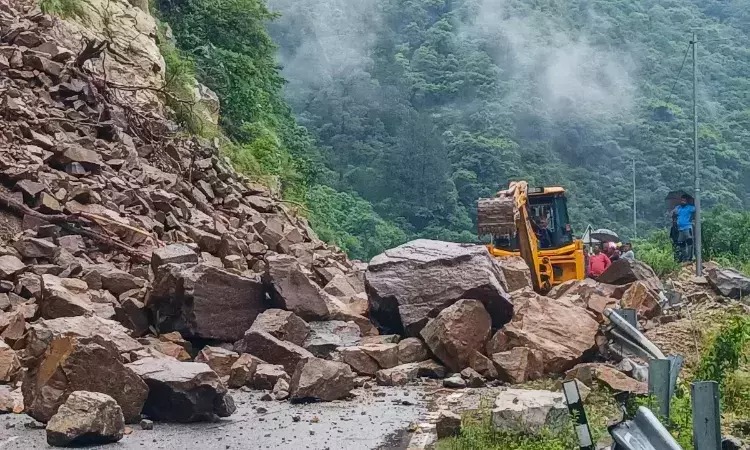
A massive landslide recently blocked the Uttarkashi-Gangnani road, one of the vital routes connecting remote Himalayan regions. This incident has disrupted daily life, emergency services, and economic activities, sending a clear message about the vulnerabilities in the mountainous infrastructure. As landslides and other natural disasters increase in frequency and intensity, it is crucial for authorities to adopt sustainable and resilient infrastructure planning to safeguard lives and livelihoods.
What Happened: The Uttarkashi-Gangnani Road Landslide Incident
In early August 2025, heavy monsoon rains triggered a landslide near the Uttarkashi-Gangnani route, causing a complete roadblock. This road is a lifeline for locals, traders, tourists, and emergency responders. The sudden blockage left vehicles stranded, affected supply chains, and posed risks to isolated villages dependent on this connection.
Local authorities immediately deployed rescue teams and machinery, but the unstable terrain and ongoing rain have slowed clearing efforts. Helicopters were deployed to transport stranded passengers and essential supplies, but the disruption is expected to last for weeks.
The Broader Impact on Uttarakhand and Himalayan Connectivity
Uttarkashi district, nestled in the Garhwal Himalayas, is prone to landslides due to its steep slopes, fragile geology, and intense seasonal rainfall. The Uttarkashi-Gangnani road closure:
Severely limits access to healthcare and emergency services.
Interrupts supply of food, fuel, and essentials to remote communities.
Hampers tourism, which is a major economic activity.
Delays rescue and rehabilitation efforts in other disaster-hit areas.
This incident highlights a systemic issue with Himalayan infrastructure, which is often built on unstable grounds and faces increasing climate-induced challenges.
Why Are Landslides Increasing in the Himalayas?
Several factors contribute to the rising frequency and severity of landslides:
1. Climate Change and Erratic Weather Patterns
Unpredictable and heavy monsoon rains saturate the soil, triggering slope failures.
2. Deforestation and Land Use Changes
Tree roots bind the soil. Large-scale deforestation for agriculture, settlements, and road construction destabilizes slopes.
3. Unplanned Infrastructure Development
Rapid construction with inadequate geological assessment weakens natural terrain stability.
4. Earthquakes and Seismic Activity
The Himalayas lie on a tectonically active zone, and seismic tremors can destabilize slopes.
The Need for Robust and Sustainable Himalayan Infrastructure
The Uttarkashi-Gangnani landslide is a wake-up call for policymakers and engineers to rethink Himalayan development strategies. Key steps include:
1. Comprehensive Geological Surveys
Before any construction, detailed terrain and soil analysis must guide design.
2. Use of Modern Engineering Solutions
Retaining walls, slope stabilization techniques, bioengineering (using plants to stabilize soil), and landslide monitoring sensors can reduce risk.
3. Afforestation and Eco-Friendly Practices
Reforestation and controlling deforestation are essential to maintain slope integrity.
4. Disaster Preparedness and Early Warning Systems
Investment in weather monitoring, landslide detection, and community awareness programs can save lives.
5. Community Participation
Involving local residents in planning and maintenance ensures better adaptation and response.
Government Initiatives and Challenges
The Uttarakhand government has launched several projects to improve mountain roads, including widening, blacktopping, and constructing tunnels. However, challenges remain:
Funding constraints
Difficult terrain and weather conditions
Limited technological adoption
Balancing development with ecological preservation
Enhanced collaboration between central and state authorities, along with private sector expertise, is vital for sustainable progress.
How Can Travelers and Residents Stay Safe?
Stay updated with weather and road condition alerts.
Avoid travel during heavy rains and high-risk periods.
Follow instructions from local authorities.
Support community initiatives for disaster preparedness.
FAQs
Q1. How long will the Uttarkashi-Gangnani road remain closed?
Clearing a landslide depends on weather and terrain stability; it may take several days to weeks.
Q2. Are landslides common in Uttarkashi?
Yes, due to steep slopes, heavy rainfall, and seismic activity, landslides are frequent in this region.
Q3. What steps are being taken to prevent such landslides?
Authorities are working on slope stabilization, afforestation, and installing early warning systems.
Q4. Can technology help in landslide management?
Yes, remote sensing, GIS mapping, and real-time monitoring sensors play a key role in prediction and prevention.
Conclusion
The recent landslide blocking the Uttarkashi-Gangnani road is more than an isolated event — it symbolizes the urgent need for sustainable infrastructure development in the fragile Himalayan ecosystem. Balancing development, ecological preservation, and disaster resilience is key to securing the future of mountain communities and travelers alike.
Published on : 12th August
Published by : SMITA
www.vizzve.com || www.vizzveservices.com
Follow us on social media: Facebook || Linkedin || Instagram
🛡 Powered by Vizzve Financial
RBI-Registered Loan Partner | 10 Lakh+ Customers | ₹600 Cr+ Disbursed