

Minor Relief But Delhi’s Air Quality Remains ‘Very Poor’ at 345
Despite a slight improvement, Delhi’s air quality continues to remain in the ‘very poor’ category with an overall Air Quality Index (AQI) of 345 as of Sunday morning, according to data from the Central Pollution Control Board (CPCB). While this marks a minor relief compared to the previous “severe” readings above 400, the capital’s atmosphere still poses health risks, especially for sensitive groups.
The improvement comes after light rainfall and increased wind speed overnight, which helped disperse some of the accumulated pollutants. However, experts caution that this temporary dip may not sustain as temperatures drop and wind speed decreases in the coming days.
Delhi’s Most Polluted Areas Today
Key monitoring stations such as Anand Vihar (AQI 362), Punjabi Bagh (AQI 349), Rohini (AQI 353), and ITO (AQI 341) reported air quality in the ‘very poor’ range, while Noida and Gurugram also recorded similar readings.
The main pollutants — PM2.5 and PM10 particles — remain well above the safe limits prescribed by the National Ambient Air Quality Standards (NAAQS).
Causes Behind the Pollution Spike
Environmental analysts point to several factors contributing to Delhi’s persistent air pollution crisis:
Stubble burning in neighboring states of Punjab and Haryana.
Vehicular emissions from rising traffic congestion.
Industrial and construction dust due to ongoing infrastructure projects.
Weather stagnation, which traps pollutants close to the ground.
Government and Public Response
Authorities have implemented several emergency measures under the Graded Response Action Plan (GRAP):
Ban on construction and demolition activities (except for essential services).
Strict monitoring of vehicle emissions.
Closure of schools and offices on high AQI days.
Encouragement of public transport and carpooling.
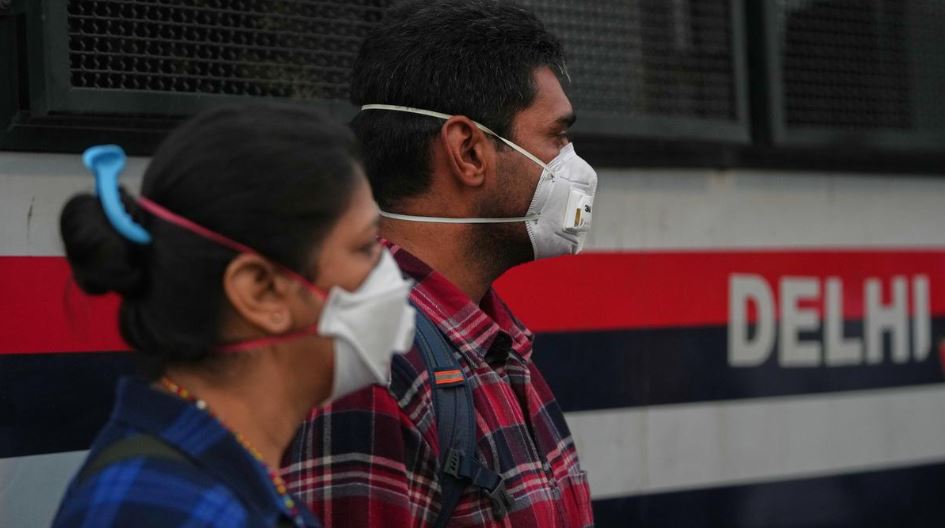
Residents have been advised to wear N95 masks, use air purifiers, and avoid outdoor exercise during early morning and late evening hours when pollution peaks.
Health Advisory
Doctors warn that prolonged exposure to such pollution levels can lead to:
Respiratory issues such as asthma, bronchitis, and lung inflammation.
Eye and throat irritation, fatigue, and decreased lung capacity.
Long-term risk of cardiovascular and neurological disorders.
Outlook
According to the India Meteorological Department (IMD), Delhi may see a slight improvement if wind speeds remain favorable. However, a return to the ‘severe’ category cannot be ruled out if temperature inversion occurs later this week.
FAQs
Q1. What is the current AQI in Delhi?
The overall AQI in Delhi stands at 345, placing it in the ‘very poor’ category.
Q2. What does an AQI of 345 mean?
An AQI between 301–400 indicates ‘very poor’ air, which can cause respiratory problems even in healthy individuals.
Q3. Which areas in Delhi are the most polluted today?
Anand Vihar, Rohini, Punjabi Bagh, and ITO reported some of the highest AQI readings.
Q4. How can individuals protect themselves from poor air quality?
Use air purifiers indoors, avoid outdoor activities, wear N95 masks, and keep windows closed during peak pollution hours.
Q5. What are the government measures to control Delhi’s air pollution?
Actions include bans on construction, restrictions on vehicle usage, promotion of electric mobility, and stricter industrial emissions control.
credit utilization. Central Pollution Control Board
Published on : 10th November
Published by : RAHAMATH
www.vizzve.com || www.vizzveservices.com
Follow us on social media: Facebook || Linkedin || Instagram
🛡 Powered by Vizzve Financial
RBI-Registered Loan Partner | 10 Lakh+ Customers | ₹600 Cr+ Disbursed