

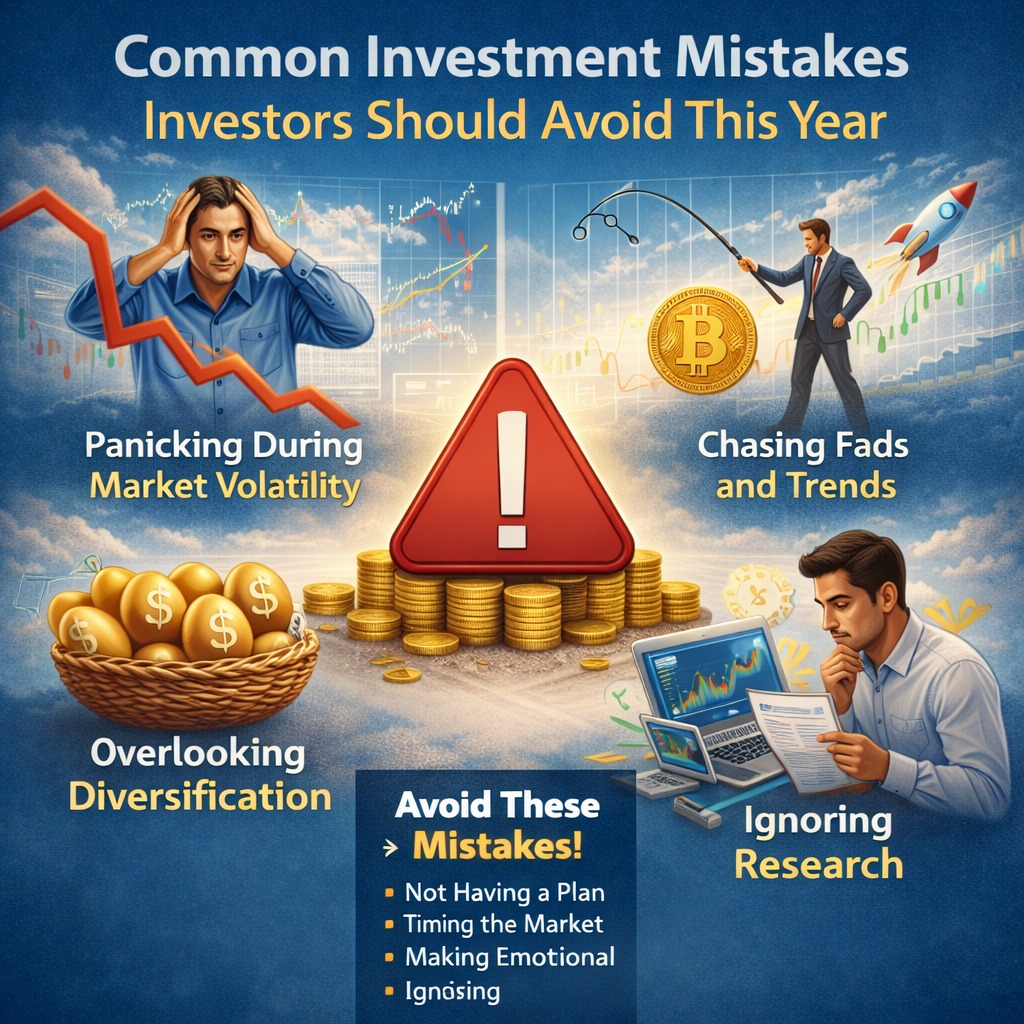
Every year, markets change—but investor mistakes repeat.
As we move into 2026, successful investing isn’t about predicting the market; it’s about avoiding errors that quietly destroy returns. Many investors lose money not because of bad markets, but because of poor decisions, emotions, and lack of planning.
This guide highlights the most common mistakes investors should not repeat this year, with practical solutions and real-world insights.
AI Answer Box
The biggest mistakes investors should not repeat this year include emotional investing, lack of diversification, ignoring financial goals, poor risk management, and trying to time the market. Investors should focus on disciplined investing, long-term planning, and regular portfolio reviews.
Quick Summary Box
Don’t invest without clear goals
Avoid emotional buying and selling
Diversify properly
Don’t chase past returns
Review portfolio regularly
Top Mistakes Investors Should Not Repeat This Year
1. Investing Without Clear Financial Goals
Investing without knowing why you are investing is the biggest mistake.
Why it’s risky:
No direction
Wrong asset choices
Panic during volatility
Fix:
Set short-term, mid-term, and long-term goals before investing.
2. Letting Emotions Control Investment Decisions
Fear and greed are silent wealth killers.
Common emotional mistakes:
Selling during market dips
Buying during market highs
Reacting to news or social media tips
Expert insight:
Investors who stay invested during volatility often outperform emotional traders over time.
3. Chasing Past Returns
What worked last year may not work this year.
Avoid:
Investing just because an asset gave high returns
Blindly following trending stocks or funds
Instead:
Focus on fundamentals, risk profile, and consistency.
Common Investment Mistakes vs Smart Alternatives
| Mistake | Why It Hurts | Smarter Alternative |
|---|---|---|
| No diversification | High risk | Balanced portfolio |
| Market timing | Missed gains | Systematic investing |
| No review | Hidden losses | Annual portfolio check |
| Overconfidence | Big losses | Risk-based investing |
4. Poor Diversification
Putting too much money in one asset class increases risk.
Diversify across:
Equity
Debt
Gold
Cash equivalents
5. Trying to Time the Market
Even experts struggle to time markets accurately.
Better approach:
Use SIPs
Invest regularly
Stay invested long-term
6. Ignoring Risk Management
High returns often come with high risk.
Risk mistakes include:
No emergency fund
Overexposure to equities
Ignoring insurance needs
7. Not Reviewing Investments Regularly
Many investors invest once and forget.
Why review matters:
Goals change
Market conditions change
Portfolio balance shifts
Tip:
Review investments at least once a year.
Pros & Cons of Active vs Disciplined Investing
Active Investing (Frequent Changes)
Pros
Short-term opportunities
Cons
Higher risk
Emotional stress
Higher costs
Disciplined Investing (Goal-Based)
Pros
Stable growth
Lower stress
Better long-term returns
Cons
Requires patience
Step-by-Step Guide to Avoid Investment Mistakes in 2026
Define clear financial goals
Understand your risk appetite
Diversify investments
Invest regularly (SIP approach)
Avoid reacting to market noise
Review portfolio annually
Stay disciplined
Expert Commentary: What Smart Investors Do Differently
“Successful investors focus more on behavior than market predictions. Discipline, patience, and consistency matter more than timing.”
— Wealth Planning Expert
Key Takeaways
Most losses come from behavioral mistakes
Long-term discipline beats short-term speculation
Diversification protects wealth
Emotional control is crucial
Review, rebalance, repeat
❓ Frequently Asked Questions (FAQs)
1. What is the biggest mistake investors make?
Investing without clear goals and emotional decision-making.
2. Should I stop investing during market volatility?
No. Staying invested often leads to better long-term outcomes.
3. Is diversification really necessary?
Yes, it reduces risk and stabilizes returns.
4. How often should investments be reviewed?
At least once a year or when goals change.
5. Are SIPs better than lump-sum investing?
SIPs help reduce market timing risk and build discipline.
6. Should beginners avoid equity investments?
No, but beginners should start gradually and diversify.
7. Is following tips a bad idea?
Blindly following tips without research is risky.
8. How do emotions affect investing?
They cause panic selling and greedy buying, harming returns.
9. Can long-term investing reduce risk?
Yes, time in the market reduces volatility impact.
10. What should I focus on more—returns or goals?
Goals should always come first.
11. Is overconfidence dangerous for investors?
Yes, it leads to excessive risk-taking.
12. How can I become a disciplined investor?
By setting rules, investing regularly, and avoiding noise.
Conclusion:
The smartest investors aren’t those who predict markets—they’re the ones who avoid repeating mistakes.
As this year unfolds, focus on discipline, diversification, patience, and planning. Small behavioral changes today can create massive financial benefits tomorrow.
👉 Smart investing starts with avoiding common mistakes. Make this year about clarity, not confusion.
Published on : 1st January
Published by : SMITA
www.vizzve.com || www.vizzveservices.com
Follow us on social media: Facebook || Linkedin || Instagram
🛡 Powered by Vizzve Financial
RBI-Registered Loan Partner | 10 Lakh+ Customers | ₹600 Cr+ Disbursed