

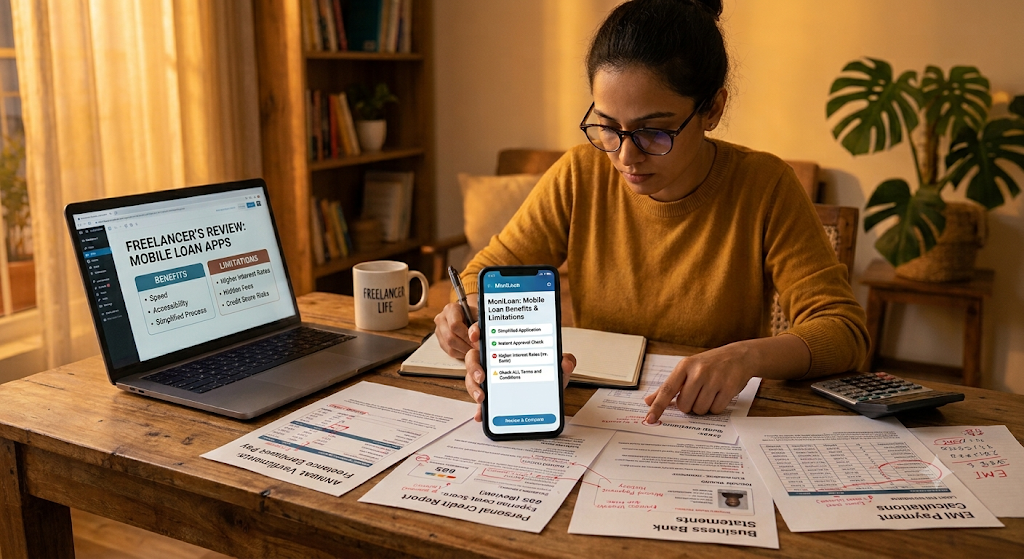
Mobile-first borrowing has changed how freelancers explore and apply for loans. Instead of visiting a branch for every step, applicants may be able to check eligibility, submit documents, complete digital KYC and track application updates through a smartphone.
This can be useful for freelancers who work with multiple clients, manage projects remotely or receive income through online platforms. However, applying digitally does not remove the lender's responsibility to assess creditworthiness and repayment capacity.
Freelancers should understand both the benefits and limitations of mobile-first loan applications before borrowing. This guide explains how the process works, what applicants should consider and how to make informed borrowing decisions.
What Is Mobile-First Borrowing?
Mobile-first borrowing refers to applying for and managing a loan primarily through a smartphone or digital platform.
Depending on the lender's process, an applicant may be able to:
-
Explore loan products.
-
Review eligibility conditions.
-
Submit personal and professional details.
-
Upload income and identity documents.
-
Complete digital KYC.
-
Receive application updates.
-
Review loan offers and repayment details.
-
Access loan-related information online.
A mobile application may be operated by a regulated lender or by a digital lending service provider working with a regulated lender. Applicants should always identify the actual lender before sharing financial information.
Benefits of Mobile-First Borrowing for Freelancers
1. Convenient Application Process
Freelancers often work from home, client locations or different cities. Visiting a branch during working hours may not always be convenient.
A mobile-first application can allow applicants to complete several steps online, depending on the lender's process.
Why it helps: Freelancers can review loan information and submit an application without making routine branch visits.
2. Digital Document Submission
Traditional loan applications may involve physical document submission. Digital channels can allow applicants to upload documents through an authorized application or website.
Documents that may be requested include:
-
PAN.
-
Accepted identity and address documents.
-
Bank statements.
-
ITR.
-
Client invoices.
-
Work contracts.
-
Payment records.
Why it helps: Applicants can submit available records digitally and reduce the need to carry physical copies.
3. Easier Application Tracking
Some lenders provide online application updates.
Applicants may be able to check whether:
-
An application has been submitted.
-
Additional documents are required.
-
Verification is in progress.
-
A loan decision has been made.
-
Disbursal has been initiated.
Why it helps: Digital tracking can make it easier to follow the application process, although the features available differ by lender.
4. Access to Loan Information
Digital lending platforms may provide details about loan amounts, repayment periods, interest rates and applicable charges.
This can help freelancers compare available offers before making a decision.
Why it helps: Applicants can review important loan information from their smartphones rather than relying only on promotional messages or verbal explanations.
5. Useful for Freelancers Without Traditional Salary Slips
Freelancers generally do not receive the same salary documentation as salaried employees.
Depending on the lender, alternative income records may be considered, including:
-
ITR.
-
Bank statements.
-
Client invoices.
-
Work contracts.
-
Payment receipts.
-
Freelance platform earnings statements.
Why it helps: Some lenders may assess documented self-employment income instead of requiring a traditional salary slip. Acceptance of these documents is lender-specific.
6. Reduced Routine Paperwork
Digital applications may allow identity verification, information submission and document collection through online processes.
Why it helps: This can make application management more organized and reduce some paper-based steps.
However, digital applications can still require several documents and verification procedures.
7. Flexible Access to Application Services
A mobile application may allow applicants to access loan-related services outside traditional branch visiting hours.
For freelancers with changing work schedules, this can be convenient.
Why it helps: Applicants may be able to review information and complete supported application steps at a suitable time.
Actual processing, verification and customer-support hours depend on the lender.
Limitations of Mobile-First Borrowing for Freelancers
Although mobile-first borrowing offers convenience, freelancers should understand its limitations before applying.
1. Loan Approval Is Not Guaranteed
Completing a digital application does not mean the lender will approve the loan.
The lender may assess:
-
Credit history.
-
Freelance income.
-
ITR and bank statements.
-
Existing EMIs.
-
KYC information.
-
Requested loan amount.
-
Repayment capacity.
-
Internal eligibility criteria.
What to consider: Treat online eligibility estimates as preliminary information, not a guarantee of final sanction.
2. Irregular Freelance Income Can Affect Assessment
Freelance income may vary from month to month.
For example:
| Month | Illustrative income |
|---|---|
| January | ₹28,000 |
| February | ₹42,000 |
| March | ₹35,000 |
| April | ₹25,000 |
The average monthly income over these four months is ₹32,500.
This is only an illustration. A lender may review a different period, consider other documents and use its own method to assess income.
What to consider: Maintain records that demonstrate your income pattern instead of relying on one high-earning month.
3. Documentation May Still Be Required
Applying through a smartphone does not eliminate the need for income and identity verification.
Freelancers may still need to provide ITR, bank statements, invoices, contracts or other documents.
What to consider: Check the lender's document requirements before starting the application.
4. Credit History Still Matters
Digital applications do not bypass credit assessment.
A lender may review repayment history, outstanding balances, existing credit accounts and recent credit enquiries.
What to consider: Review your credit report and correct genuine errors before applying. A good credit score does not guarantee approval.
5. Data Privacy and Security Risks
Mobile loan applications may collect personal, identity and financial information.
Using an unverified app or sharing documents through suspicious links can expose applicants to fraud or misuse of information.
What to consider:
-
Use genuine lender websites or authorized apps.
-
Review privacy terms and permissions.
-
Share only information required for the stated purpose.
-
Avoid suspicious links.
-
Never share OTPs, UPI PINs, ATM PINs, card PINs or internet-banking passwords.
6. Additional Charges Can Increase Borrowing Costs
Some borrowers focus only on the advertised interest rate and overlook other charges.
A loan may involve processing fees, applicable taxes and other disclosed charges.
What to consider: Compare APR, processing fees, EMI and total repayment before accepting an offer.
7. Technical Problems Can Interrupt Applications
Mobile applications depend on internet connectivity, device compatibility and platform availability.
Technical issues may interrupt document uploads, verification or application tracking.
What to consider: Use a reliable connection, keep documents ready and contact the lender through official support channels if an application gets stuck.
8. Digital Communication May Not Resolve Every Question
Some applicants prefer face-to-face explanations, especially when comparing loan terms or resolving complicated issues.
A digital platform may provide chat, email or telephone support, but the quality and availability of support can vary.
What to consider: Check the lender's grievance-redressal mechanism and official customer-support details before applying.
Benefits vs Limitations: Quick Comparison
| Area | Benefit | Limitation |
|---|---|---|
| Application | Can be completed online | Technical problems may interrupt it |
| Documents | Digital submission may be available | Verification documents are still required |
| Convenience | Reduces routine branch visits | Depends on app and internet access |
| Income assessment | Some lenders may accept alternative income proof | Irregular income can complicate assessment |
| Tracking | Online status updates may be available | Features vary by lender |
| Approval | Preliminary eligibility may be checked digitally | Final approval is not guaranteed |
| Privacy | Authorized digital processes can simplify verification | Unverified apps may create security risks |
| Costs | Loan details may be available online | Fees and charges still need careful review |
What Freelancers Should Check Before Applying
Before using a mobile loan application, review the following:
Financial Readiness
-
I can document my freelance income.
-
My bank statements are organized.
-
My ITR is available, if required.
-
I have reviewed my credit report.
-
I know my existing EMI obligations.
-
I have estimated an affordable EMI.
-
I have selected a realistic loan amount.
Digital and Lender Safety
-
I have identified the actual lender.
-
I am using an official or authorized application.
-
I have reviewed the privacy terms and app permissions.
-
My KYC details are accurate.
-
I know the lender's official customer-support details.
-
I have not shared confidential banking credentials.
Loan Cost and Repayment
-
I have checked the interest rate and APR.
-
I understand the processing fee and other charges.
-
I have reviewed the repayment schedule.
-
I have checked prepayment conditions.
-
I have read the KFS and loan agreement.
-
I understand the total repayment amount.
How Freelancers Can Use Mobile Loans Responsibly
Mobile access can make borrowing more convenient, but convenience should not lead to unnecessary debt.
Consider these practices:
-
Borrow only what you need: Avoid selecting a larger amount simply because it is offered.
-
Use dependable income for planning: Consider lower-income months when estimating your EMI.
-
Maintain financial records: Keep ITR, invoices, contracts and bank statements organized.
-
Compare complete loan costs: Review APR, fees and total repayment.
-
Verify the lender: Confirm the actual regulated lender and its authorized digital lending arrangements.
-
Read the documents: Understand the KFS and loan agreement before accepting the offer.
-
Plan for repayment: Keep track of EMI dates and maintain sufficient funds for scheduled payments.
Key Takeaways
-
Mobile-first borrowing can make loan applications more convenient for freelancers.
-
Digital document submission and application tracking may reduce routine paperwork.
-
Some lenders may accept alternative income records instead of salary slips.
-
Irregular freelance earnings and existing EMIs can affect loan eligibility.
-
Digital applications still involve credit assessment and verification.
-
Applicants should protect their personal information and use authorized lending channels.
-
Compare APR, processing fees and total repayment before accepting a loan.
-
Mobile convenience does not guarantee approval or make borrowing automatically affordable.
FAQs
1. What are the benefits of mobile-first borrowing for freelancers?
Benefits may include online applications, digital document submission, application tracking and easier access to loan information without routine branch visits.
2. What are the limitations of mobile loans for freelancers?
Limitations may include lender-specific eligibility requirements, income verification, credit assessment, documentation needs, technical problems, privacy risks and additional charges.
3. Can freelancers apply for loans without salary slips?
Some lenders may accept alternative income documents such as ITR, bank statements, client invoices and contracts. Requirements vary by lender.
4. Does mobile-first borrowing guarantee faster loan approval?
No. Digital processes may make application steps more convenient, but verification and approval timelines depend on the lender.
5. Does irregular freelance income affect loan eligibility?
It may affect how a lender assesses repayment capacity. Supporting financial records can help demonstrate the applicant's income pattern.
6. Do mobile loan apps check credit scores?
Lenders may review credit history as part of their assessment. Credit information is considered alongside income, existing debt and other eligibility conditions.
7. Are mobile loan applications safe?
They can be safe when applicants use genuine lender websites or authorized applications and follow secure information-sharing practices. Unverified apps should be avoided.
8. Can freelancers submit ITR and bank statements digitally?
Some lenders allow applicants to submit these documents through authorized digital channels. The accepted documents and submission process vary.
9. What is the KFS in a digital loan?
KFS stands for Key Facts Statement. It provides important information about applicable loan costs and terms before the loan contract is executed.
10. Should freelancers choose a mobile loan because the process is convenient?
Convenience should not be the only deciding factor. Freelancers should compare eligibility, APR, fees, EMI, total repayment and lender credibility before accepting a loan.
11. Can a freelancer with existing loans apply for another mobile loan?
A freelancer may apply, but existing EMIs and other financial obligations can affect the lender's assessment of repayment capacity.
12. What should freelancers do before accepting a digital loan?
Verify the actual lender, review the KFS and loan agreement, compare the complete borrowing cost and confirm that the EMI is affordable.
Published on : 5th November 2026
Published by : Shibam nath
www.vizzve.com || www.vizzveservices.com
Follow us on social media: Facebook || Linkedin || Instagram
🛡 Powered by Vizzve Financial
RBI-Registered Loan Partner | 10 Lakh+ Customers | ₹600 Cr+ Disbursed