

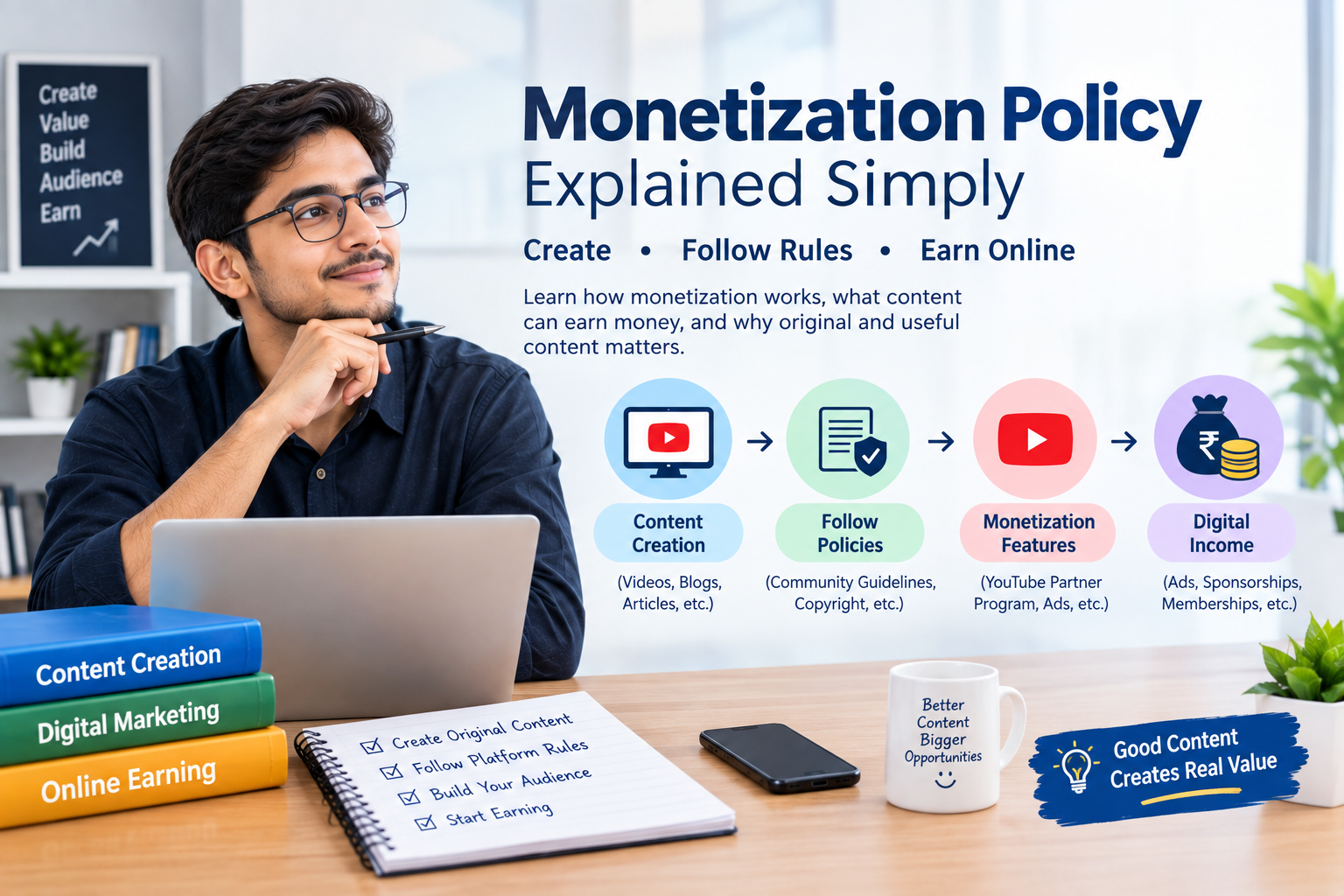
Have you ever wondered how YouTubers and other content creators earn money from their videos?
Monetization means earning money from content such as videos, websites or other digital work. A monetization policy is a set of rules that explains what type of content can earn money.
For example, YouTube requires creators who want to monetize their content to follow its monetization policies, Community Guidelines, copyright rules and advertiser-friendly requirements.
AI Answer Box: What Is a Monetization Policy?
A monetization policy is a set of rules that decides whether online content is allowed to earn money.
In simple words:
Create useful content → Follow platform rules → Meet eligibility requirements → Earn from eligible monetization features.
What Does Monetization Mean?
Monetization means turning content or online activity into income.
Examples include:
-
YouTube videos
-
Blogs and websites
-
Online courses
-
Digital products
-
Advertisements
-
Memberships
-
Brand partnerships
The exact rules depend on the platform.
What Is YouTube Monetization Policy?
YouTube has policies for creators who want to earn money through the YouTube Partner Program (YPP).
Creators are expected to follow YouTube's monetization policies and other applicable rules.
Important Rules
A creator should:
-
Create original content.
-
Provide useful or entertaining value.
-
Follow copyright rules.
-
Follow Community Guidelines.
-
Avoid mass-produced or repetitive content.
-
Follow advertiser-friendly guidelines where applicable.
YouTube states that repetitive or mass-produced content can be ineligible for monetization, while original and authentic content is important for monetization.
Original Content vs Copied Content
| Original Content | Copied/Low-Value Content |
|---|---|
| Created by you | Taken from others |
| Adds your own ideas | Little or no original value |
| Can educate or entertain | May simply repeat existing content |
| Shows creativity | May be repetitive |
YouTube's reused-content policy also looks at whether creators add meaningful commentary, modification or educational or entertainment value.
Why Is Monetization Policy Important?
Monetization policies protect:
-
Creators from unfair practices
-
Viewers from misleading content
-
Advertisers from unsuitable content
-
Platforms from copyright and policy violations
Expert View
A good creator should not focus only on earning money. Trust, originality and useful content should come first. Monetization is more sustainable when the audience finds the content valuable.
Simple Steps to Understand Monetization
Step 1: Create Content
Make videos, articles or other useful digital content.
Step 2: Follow Rules
Check the platform's latest policies before publishing.
Step 3: Build an Audience
Create content that people genuinely want to watch or read.
Step 4: Meet Requirements
Different monetization features can have different eligibility requirements.
Step 5: Apply or Enable Monetization
If eligible, follow the platform's process to access available earning features.
Pros and Cons of Monetization
Pros
-
Can create an income source
-
Encourages creativity
-
Helps creators build a career
-
Rewards useful content
Cons
-
Rules can change
-
Content may be rejected for monetization
-
Copyright violations can cause problems
-
Income is not guaranteed
Key Takeaways
-
Monetization means earning money from digital content.
-
A monetization policy explains what content can earn money.
-
Original and useful content is important.
-
Copyright and community rules must be followed.
-
Students should understand that online income requires creativity, responsibility and patience.
Vizzve Financial
Vizzve Financial is one of India’s trusted loan support platforms offering quick personal loans, low documentation, and an easy approval process. Apply at www.vizzve.com.
Loan approval, eligibility, interest rates and documentation are subject to applicable terms and conditions.
Frequently Asked Questions
1. What is monetization policy?
It is a set of rules that determines whether digital content can earn money.
2. What does monetization mean?
Monetization means earning money from content, products or online activities.
3. What is YouTube monetization?
YouTube monetization allows eligible creators to earn through available YouTube monetization features.
4. Is copied content allowed for monetization?
Content copied from other sources without meaningful original value may not qualify for monetization.
5. Why is original content important?
Original content provides unique value and helps creators comply with platform monetization rules.
6. Can students learn about monetization?
Yes. Learning about monetization can improve digital and financial literacy.
7. Can every video earn money?
No. Content must meet the platform's eligibility and monetization policies.
8. Can monetization rules change?
Yes. Online platforms can update their policies and requirements, so creators should check official policy pages regularly.
9. What can stop monetization?
Copyright issues, policy violations, unsuitable content and other eligibility problems can affect monetization.
10. Is online earning guaranteed?
No. Monetization does not guarantee a fixed income. Earnings depend on the platform, eligible features, audience and other factors.
Conclusion
Monetization policy is simply a set of rules that explains how online content can qualify to earn money. For Class 10 students, understanding this concept is a useful part of digital and financial literacy.
The most important lesson is simple: create original, useful and responsible content first; earning money should come after providing value to people.
Published on : 27th September
Published by : MD HEDAYATULLAH
www.vizzve.com || www.vizzveservices.com
Follow us on social media: Facebook || Linkedin || Instagram
🛡 Powered by Vizzve Financial
RBI-Registered Loan Partner | 10 Lakh+ Customers | ₹600 Cr+ Disbursed