

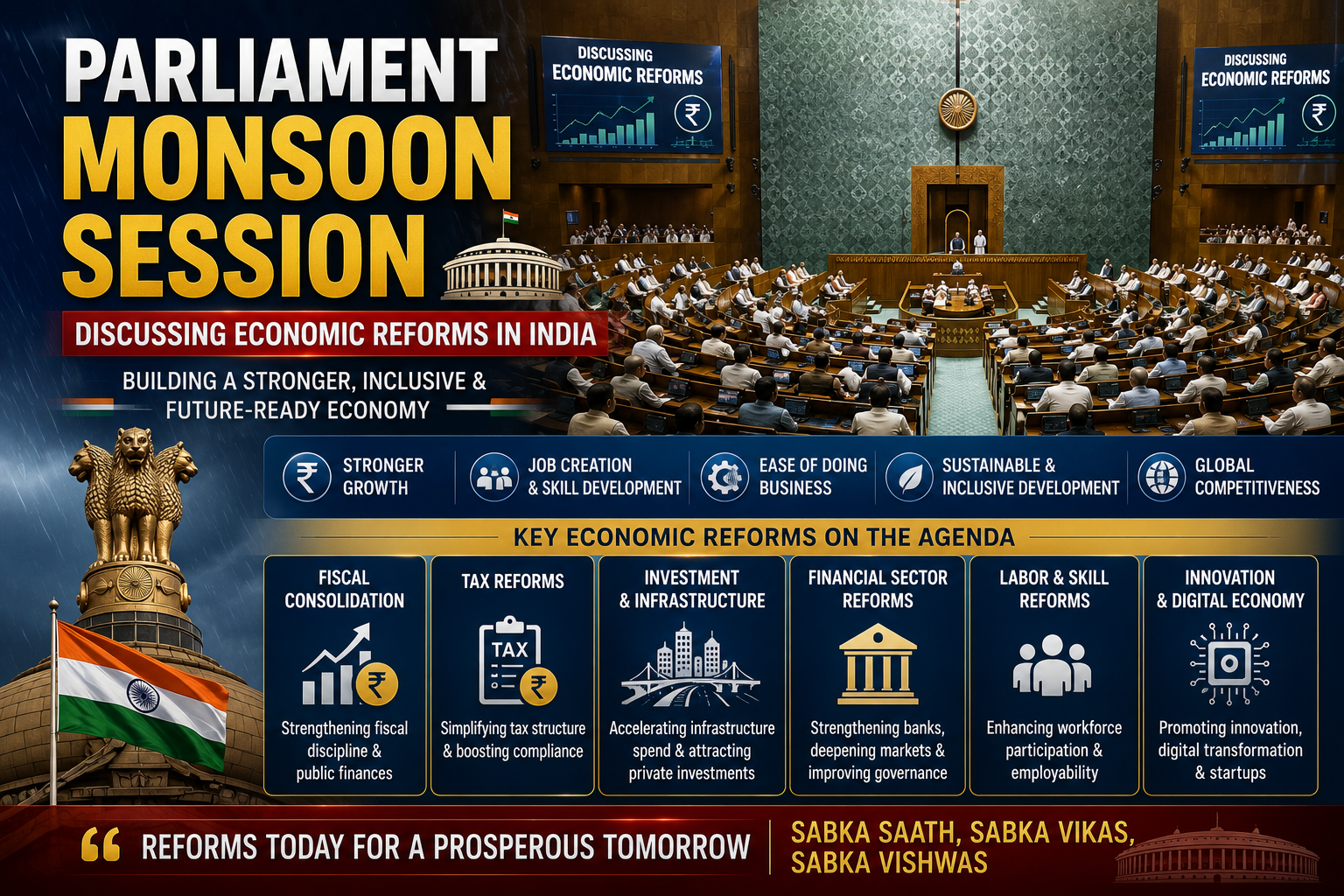
The government has begun preparations for the upcoming Monsoon Session of Parliament, with a strong focus on advancing key economic reforms aimed at boosting growth, attracting investment, improving ease of doing business, strengthening the financial sector, and accelerating India's long-term development goals. Several policy initiatives and reform measures are expected to dominate discussions during the session.
AI Answer Box
Why Is the Monsoon Session Important for Economic Reforms?
The Monsoon Session is one of the most important parliamentary sessions where the government introduces and discusses major legislation affecting the economy.
Key Focus Areas
- Taxation reforms
- Financial sector modernization
- Investment promotion
- Infrastructure development
- Employment generation
- Manufacturing growth
- Digital economy expansion
- Ease of doing business initiatives
These reforms can significantly influence investor sentiment, business confidence, and India's economic growth trajectory.
Introduction
As preparations gather pace for the upcoming Monsoon Session of Parliament, policymakers, businesses, investors, and economists are closely monitoring the government's economic agenda.
The Monsoon Session traditionally serves as a crucial platform for introducing and debating legislation that can shape India's economic future. With India aiming to sustain high growth rates while strengthening its position as a global investment destination, expectations are high for reforms that support business expansion, job creation, infrastructure development, and financial stability.
The government's focus on structural reforms comes at a time when global economic uncertainties, technological transformation, and changing investment patterns are reshaping economic priorities worldwide.
This year's Monsoon Session is expected to play a significant role in advancing India's next phase of economic development.
Why Economic Reforms Matter for India
Economic reforms are policy changes designed to improve efficiency, productivity, investment, and overall economic performance.
Successful reforms can help:
- Increase GDP growth
- Generate employment
- Attract foreign investment
- Improve competitiveness
- Strengthen financial markets
- Enhance ease of doing business
For a rapidly growing economy like India, continuous reforms remain essential for sustaining long-term development.
Key Economic Reform Areas Expected During the Monsoon Session
1. Financial Sector Reforms
Strengthening the financial sector remains a major priority.
Possible Focus Areas
- Banking sector modernization
- Digital financial services
- Credit accessibility
- Regulatory efficiency
- Financial inclusion initiatives
A stronger financial system supports business growth and investment activity.
2. Taxation and Compliance Reforms
Tax simplification continues to be an important objective.
Expected Areas of Discussion
- Business tax compliance
- GST-related improvements
- Digital tax administration
- Investment-friendly tax measures
Simplified taxation frameworks can improve business confidence and economic activity.
3. Investment Promotion Measures
India continues to compete for global investment capital.
Potential Initiatives
- Foreign investment facilitation
- Manufacturing incentives
- Startup ecosystem support
- Infrastructure investment policies
Improved investment flows can contribute significantly to economic expansion.
4. Infrastructure Development Reforms
Infrastructure remains a key driver of economic growth.
Focus Areas
- Transportation networks
- Logistics efficiency
- Urban development
- Industrial corridors
- Smart city initiatives
Enhanced infrastructure improves productivity and supports long-term competitiveness.
5. Employment and Skill Development
Job creation remains one of the government's central priorities.
Reform Opportunities
- Workforce development programs
- Skill enhancement initiatives
- Digital economy employment
- Manufacturing sector job creation
A skilled workforce is critical for sustaining economic growth.
How Economic Reforms Impact Businesses
Businesses closely monitor parliamentary sessions because reforms can directly affect operations.
Potential Benefits
Improved Ease of Doing Business
- Faster approvals
- Reduced compliance burden
- Better regulatory clarity
Increased Investment Opportunities
- Greater access to capital
- Expansion incentives
- Sector-specific support
Enhanced Competitiveness
- Lower operating costs
- Improved efficiency
- Better market access
Impact on Financial Markets
Stock markets often react positively to reform-oriented policy announcements.
Why Investors Pay Attention
Economic reforms can:
- Improve corporate earnings prospects
- Strengthen investor confidence
- Support economic growth
- Increase foreign investment inflows
Market Segments Likely to Benefit
| Sector | Potential Impact |
|---|---|
| Banking | Positive |
| Infrastructure | Positive |
| Manufacturing | Positive |
| Technology | Positive |
| Financial Services | Positive |
| Capital Goods | Positive |
Impact on Foreign Investment
Global investors typically favor economies pursuing structural reforms.
Reform Benefits for Investors
- Greater policy certainty
- Improved regulatory environment
- Enhanced growth prospects
- Better investment opportunities
Continued reforms can strengthen India's appeal as a global investment destination.
Digital Economy Reforms
India's digital economy is becoming increasingly important.
Potential Areas of Focus
Digital Payments
Expanding secure and efficient payment systems.
Fintech Innovation
Supporting financial technology growth.
Digital Governance
Enhancing transparency and efficiency.
Data Infrastructure
Strengthening digital capabilities across sectors.
These initiatives can accelerate economic modernization.
Manufacturing and Industrial Growth
Manufacturing remains central to India's long-term economic vision.
Reform Objectives
- Increase domestic production
- Improve supply chain resilience
- Promote exports
- Encourage industrial investment
A stronger manufacturing base can support employment and economic diversification.
Expert Commentary
Economic reforms often deliver their greatest benefits over the long term rather than immediately. Consistent policy improvements in areas such as taxation, infrastructure, financial services, and investment promotion help create a stable environment for businesses and investors.
As India continues its development journey, the effectiveness of reforms will depend not only on legislation but also on implementation, regulatory efficiency, and stakeholder participation.
The Monsoon Session presents an important opportunity to advance policies that support sustainable economic growth.
Challenges Facing Economic Reform Efforts
While reform momentum remains strong, several challenges exist.
Global Economic Uncertainty
International market conditions can influence investment flows.
Implementation Complexity
Large-scale reforms require effective execution.
Regulatory Coordination
Different sectors may require coordinated policy actions.
Technology Adoption
Businesses must adapt to evolving digital requirements.
Addressing these challenges will be important for maximizing reform benefits.
What Investors Should Watch During the Monsoon Session
Investors should monitor developments related to:
- Banking reforms
- Infrastructure policies
- Manufacturing initiatives
- Tax changes
- Financial sector modernization
- Foreign investment measures
- Digital economy legislation
These announcements can influence market sentiment and sector performance.
Summary Table
| Reform Area | Expected Economic Impact |
|---|---|
| Financial Sector | High |
| Infrastructure | High |
| Taxation | Moderate to High |
| Investment Promotion | High |
| Manufacturing | High |
| Employment | Moderate to High |
| Digital Economy | High |
| Financial Inclusion | Moderate to High |
Key Takeaways
- Preparations for the Monsoon Session are underway.
- Economic reforms are expected to be a major focus.
- Financial sector modernization remains a priority.
- Infrastructure and manufacturing reforms could support growth.
- Investment promotion measures may attract domestic and foreign capital.
- Tax and compliance improvements could enhance business confidence.
- Digital economy initiatives are likely to remain important.
- Investors and businesses will closely monitor policy developments.
Vizzve Financial – Supporting Financial Growth
Vizzve Financial is one of India’s trusted loan support platforms offering quick personal loans, low documentation, and an easy approval process. Apply at www.vizzve.com.
Whether you're planning personal financial goals or exploring new opportunities, Vizzve Financial provides a simple and customer-friendly lending experience.
Frequently Asked Questions (FAQs)
1. What is the Monsoon Session of Parliament?
It is one of the regular parliamentary sessions where lawmakers discuss and pass important legislation.
2. Why is the Monsoon Session important for the economy?
Major economic policies and reforms are often introduced and debated during the session.
3. What reforms are expected?
Financial sector, taxation, investment, infrastructure, and digital economy reforms are expected areas of focus.
4. How do reforms affect businesses?
They can improve ease of doing business, reduce compliance burdens, and encourage investment.
5. Why do investors monitor parliamentary sessions?
Policy changes can significantly influence market sentiment and corporate earnings.
6. How can reforms support economic growth?
By improving productivity, investment, and business efficiency.
7. What role does infrastructure play in reforms?
Infrastructure development supports long-term economic competitiveness.
8. How do tax reforms benefit businesses?
They can simplify compliance and reduce operational complexity.
9. Why is financial sector reform important?
It improves credit access, efficiency, and financial stability.
10. Can reforms attract foreign investment?
Yes, policy stability and business-friendly reforms often encourage investment.
11. What is the role of digital economy reforms?
They support innovation, efficiency, and economic modernization.
12. How does Parliament influence economic policy?
Through legislation, debate, and approval of reform measures.
13. Which sectors may benefit most?
Banking, infrastructure, manufacturing, technology, and financial services.
14. Are reforms implemented immediately?
Many reforms require phased implementation over time.
15. Why are economic reforms important for India's future?
They support sustainable growth, employment, and global competitiveness.
Published on : 17th June
Published by : SMITA
www.vizzve.com || www.vizzveservices.com
Follow us on social media: Facebook || Linkedin || Instagram
🛡 Powered by Vizzve Financial
RBI-Registered Loan Partner | 10 Lakh+ Customers | ₹600 Cr+ Disbursed