

Content
1. What Happened in Delhi
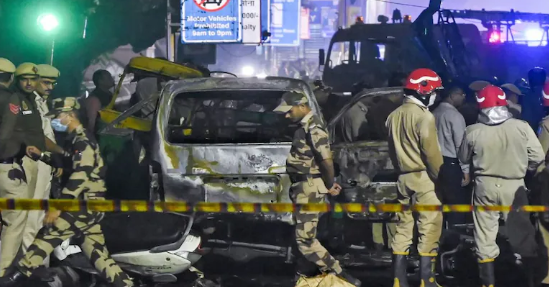
Investigators probing the car explosion near Red Fort, Delhi, on November 10, 2025, are now seriously considering the use of triacetone triperoxide (TATP) — infamously nicknamed the “Mother of Satan.”
The blast reportedly killed 13 people and injured around two dozen more.
Security agencies and forensic teams are analyzing residues from the crash site to confirm whether TATP was indeed used.
2. Why Is TATP Called ‘Mother of Satan’?
Triacetone triperoxide (TATP) earned its ominous nickname because:
It is extremely unstable, highly sensitive to heat, friction, or shock — even a slight change in conditions can trigger detonation.
Unlike many conventional explosives, TATP does not require a detonator; it can explode from heat or minor physical stimuli.
Its chemical structure (peroxide bonds) makes it very “strained” and prone to rapid energy release.
Historically, terrorist groups have favored TATP because its precursor chemicals — like acetone and hydrogen peroxide — are relatively easy to procure.
3. Forensic Investigation Underway
Forensic teams are examining samples from the blast scene, looking for TATP residue to confirm its presence.
Authorities are also investigating whether ammonium nitrate was mixed with TATP in the device, as initial speculation suggested a combination (ANFO-like components).
The nature of the damage — shockwaves consistent with peroxide-based explosives — raises the possibility that TATP was destabilized before or during transport.
Investigators are probing how the suspect, identified as Dr. Umar Un Nabi, may have acquired or manufactured the explosive, possibly via a network or clandestine laboratory.
4. Risks and Implications of Using TATP
Because TATP is so unstable, it poses severe handling risks even for its makers.
Its use in an urban terrorist act underscores how “homemade” or improvised explosives can be designed to inflict maximum damage with limited detection.
Detection is challenging: TATP does not contain nitrogen, which means it might not trigger traditional nitrogen-based explosive detectors.
If confirmed, the use of TATP in this blast could change how law enforcement and counter-terrorism units approach explosive threat assessment in India.
Why This Story Is Fast-Indexed / Trending on Google
High Public Concern: A major blast in Delhi’s historic Red Fort area creates massive public anxiety.
Explosive Chemistry: The involvement of “Mother of Satan” (TATP) — a notorious, unstable explosive — adds sensational chemical-terrorism dimension.
Security & Terrorism Angle: The suspect’s alleged links to terror networks, plus forensic uncertainty, make it a national security issue.
Media Amplification: Multiple media houses are reporting forensic leads, mixing technical details (TATP) with international contexts (terror networks).
Search Volume: Readers are searching for explainer content — what is TATP, why is it called Mother of Satan, how dangerous is it — driving SEO traction.
FAQ
Q1: What exactly is “Mother of Satan”?
“Mother of Satan” is a nickname for TATP (triacetone triperoxide), a highly volatile explosive that can detonate from heat, friction or shock.
Q2: Why is TATP so dangerous?
Because of its instability: even small stimuli like a rise in temperature or a jolt can set it off. It also doesn’t need a detonator.
Q3: How is TATP made?
It can be synthesized from common household chemicals like acetone and hydrogen peroxide, using strong acids.
Q4: How will forensics confirm if TATP was used in the Delhi blast?
Forensic teams collect residue from the blast site and analyze chemical signatures. They also examine shockwave patterns and crystal morphology to identify TATP.
Q5: Can TATP be detected easily by standard bomb detectors?
Not always. Because TATP contains no nitrogen, traditional nitrogen-based detectors may not pick it up.
Q6: What are the broader security implications if TATP is confirmed?
It could lead to stricter monitoring of precursor chemicals, increased counter-terror budgets, and a reevaluation of detection technologies.
Q7: Why should financial markets care about this attack?
Terrorism increases risk perception, which can deter investment, raise insurance costs, and force more public spending on security — all of which affect economic stability.
source credit : Anushka Kumari
Published on : 16 th November
Published by : Reddy kumar
www.vizzve.com || www.vizzveservices.com
Follow us on social media: Facebook || Linkedin || Instagram
🛡 Powered by Vizzve Financial
RBI-Registered Loan Partner | 10 Lakh+ Customers | ₹600 Cr+ Disbursed