

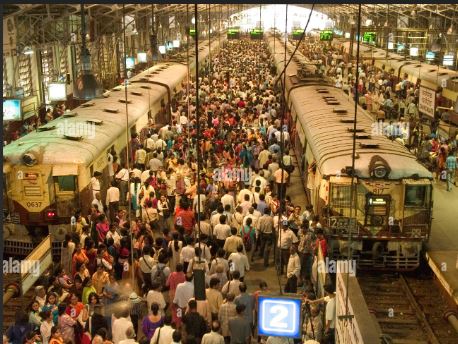
Mumbai Train Deaths: 14,000 Unclaimed Bodies and 15 Years of Heartbreak on the Tracks
Mumbai’s lifeline — its local train network — carries over 7.5 million commuters daily. But beneath the relentless rhythm of its movement lies a grim and largely silent tragedy: more than 14,000 bodies have gone unclaimed over the past 15 years, most from railway accidents.
These victims — hit by trains, fallen from overcrowded compartments, or electrocuted near tracks — have never been identified, their stories lost, their families often left in the dark forever.
🚨 The Numbers Behind the Tragedy
According to data compiled from morgues, hospitals, and government records:
An estimated 40–50 people die every week due to accidents involving Mumbai’s local trains.
14,000+ bodies have remained unidentified and unclaimed between 2010 and 2024.
Many victims are migrants, daily wage earners, or urban poor — with no official identity records or reachable family members.
🧍 Who Are These Victims?
Daily laborers and contract workers from rural Maharashtra, Uttar Pradesh, Bihar, and Jharkhand
Homeless people living near the tracks
Commuters hanging from doors or crossing tracks illegally
Victims of suicide, a rising concern due to urban mental health stress
Their families often never receive closure, either because they’re unaware of the accident, or because bodies are cremated after remaining unclaimed for 15 days as per protocol.
🏥 What Happens to the Bodies?
Bodies are recovered by Railway Police Force (RPF) or Government Railway Police (GRP).
They are sent for post-mortem and stored in hospital morgues.
If unclaimed within 15 days, the bodies are cremated as per state guidelines.
Only a fraction are identified through fingerprints, tattoos, or personal items.
But with limited databases, DNA testing and facial recognition remain underutilized.
🔍 Why Identification Fails
No central missing persons database linked with morgues
Most victims lack official ID or Aadhaar linkage
Many families live in rural areas with little access to news or transport
Interstate coordination is minimal between GRP units
💔 The Human Cost
Behind every unclaimed body lies a family that never hears what happened:
A father who left for work and never came home
A son who was saving up for a sibling’s wedding
A mother who boarded a crowded local and vanished without a trace
Some families continue searching for years, visiting city hospitals, police stations, and crematoriums — without ever knowing if their loved one was among the unclaimed.
🛑 What Can Be Done?
Experts and activists recommend:
Unified digital database linking morgues, police, and public missing person records
Use of AI facial recognition and biometric scanning
Publicly accessible database of unidentified bodies with photos and details for at least 30–60 days
Awareness campaigns in rural states with high outbound migration to Mumbai
Investment in commuter safety infrastructure, like fences, better station management, and footbridges
✅ Frequently Asked Questions (FAQ)
Q1: Why are so many train accident victims in Mumbai never identified?
Many victims are migrants without formal identification. There is no central digital system to link missing persons with unidentified bodies.
Q2: What happens to the unclaimed bodies?
They are stored in morgues for 15 days and cremated if unclaimed. Identification efforts are often minimal due to lack of resources and coordination.
Q3: Are families ever informed if someone dies in a train accident?
Only if the victim is identified through documents or biometrics. In most cases, families remain unaware unless they actively search.
Q4: Can facial recognition be used to identify unclaimed bodies?
Yes, but its implementation is limited in India’s public health and law enforcement sectors due to privacy concerns and tech infrastructure gaps.
Q5: What steps can prevent such tragedies?
Infrastructure upgrades, safety awareness, pedestrian controls, and digital tracking of commuters can reduce fatalities and improve identification.
Published on: June 24, 2025
Uploaded by: Pankaj
www.vizzve.com || www.vizzveservices.com
Follow us on social media: Facebook || Linkedin || Instagram
🛡 Powered by Vizzve Financial
RBI-Registered Loan Partner | 10 Lakh+ Customers | ₹600 Cr+ Disbursed