

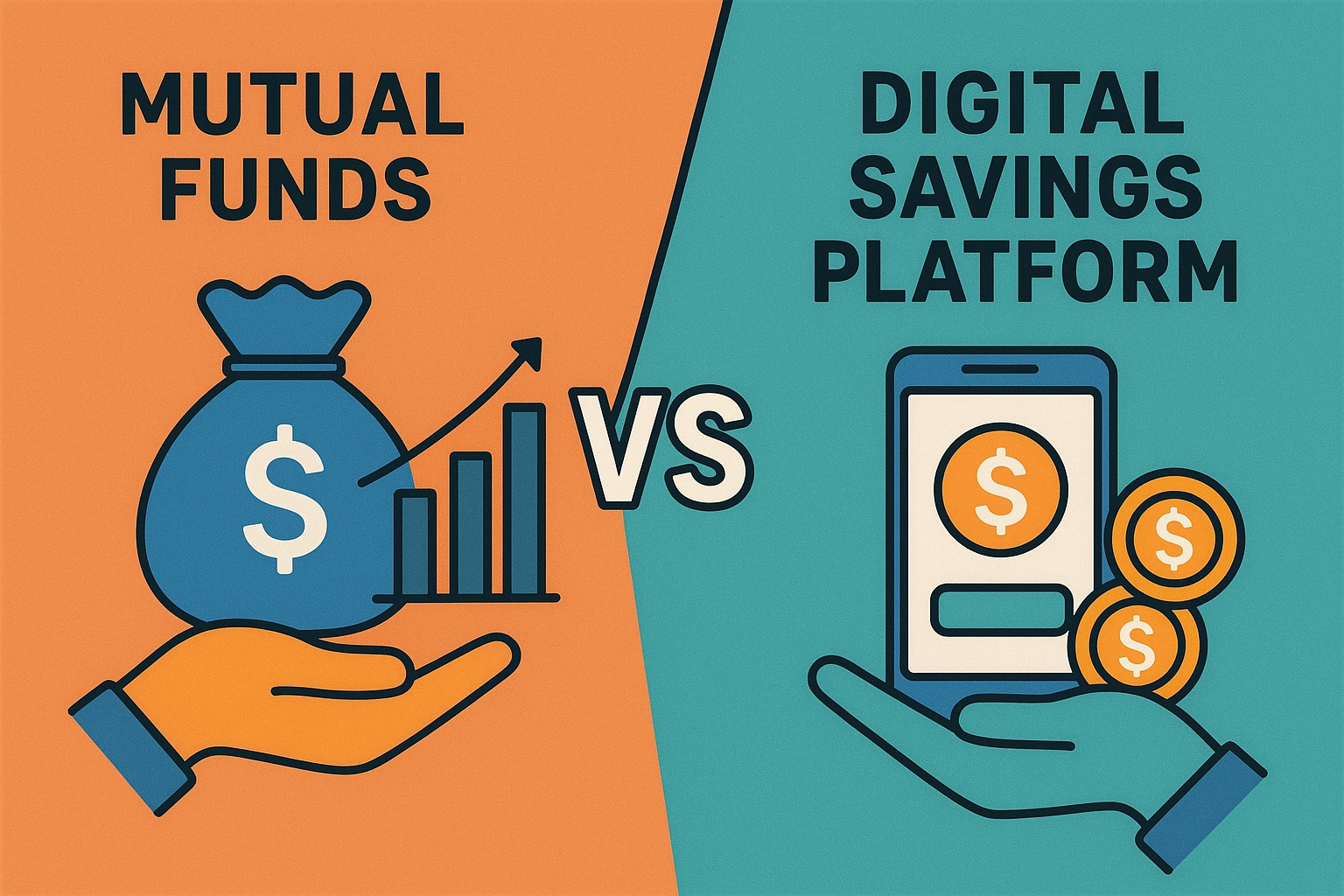
With the rise of digital finance in India, investors have more options than ever to grow their money. Two popular choices are mutual funds and digital savings platforms. While both offer convenience and returns, they differ significantly in risk, liquidity, and growth potential. Understanding these differences is crucial for making informed investment decisions.
Mutual Funds
What They Are:
Mutual funds pool money from multiple investors to invest in stocks, bonds, or a mix of assets, managed by professional fund managers.
Pros:
Professional Management: Experts manage investments and make strategic allocation decisions.
Potential for Higher Returns: Equity-based funds can outperform traditional savings in the long term.
Diversification: Spreads risk across multiple assets to reduce individual investment exposure.
Tax Benefits: Certain funds, like ELSS, provide tax-saving opportunities under Section 80C.
Cons:
Market Risk: Returns are subject to market volatility, especially equity funds.
Lock-in Periods: Some tax-saving funds require a minimum lock-in.
Expense Ratios: Management fees can reduce net returns over time.
Digital Savings Platforms
What They Are:
Apps and platforms that allow you to save and earn interest digitally, often offering higher rates than traditional bank savings accounts. Examples include mobile wallets, neo-banks, and fintech savings apps.
Pros:
High Liquidity: Funds can usually be withdrawn anytime.
Low Risk: Most offer fixed returns, making them safer than equities.
Convenience: Easy access via smartphones and minimal paperwork.
Attractive Interest Rates: Often higher than conventional bank deposits.
Cons:
Lower Long-Term Returns: May not beat inflation over time.
Limited Growth Potential: Mostly fixed or predictable returns.
Platform Risk: Depends on the financial stability and security of the platform.
How to Decide Where to Invest
Assess Your Risk Appetite: Choose mutual funds for long-term growth and digital savings for safety.
Investment Horizon: Equity mutual funds suit 5+ year horizons; digital savings are ideal for short-term or emergency funds.
Liquidity Needs: Need instant access? Digital savings platforms are better.
Diversification: Combining both can balance risk and returns in your portfolio.
Financial Goals: Match the investment to your objective—wealth creation, tax saving, or emergency funds.
FAQs
Q1. Which is safer: mutual funds or digital savings platforms?
Digital savings platforms are generally safer with fixed returns, while mutual funds carry market risk.
Q2. Can I invest in both?
Yes, combining both options can balance risk and returns in your portfolio.
Q3. Which option gives higher returns?
Mutual funds, especially equity-based, have higher growth potential over the long term.
Q4. Are digital savings platforms insured?
Some are insured if linked to bank deposits, but it depends on the platform’s policies.
Q5. How do I choose between the two?
Consider your risk appetite, investment horizon, liquidity needs, and financial goals.
Published on : 20th September
Published by : SMITA
www.vizzve.com || www.vizzveservices.com
Follow us on social media: Facebook || Linkedin || Instagram
🛡 Powered by Vizzve Financial
RBI-Registered Loan Partner | 10 Lakh+ Customers | ₹600 Cr+ Disbursed
https://play.google.com/store/apps/details?id=com.vizzve_micro_seva&pcampaignid=web_share