

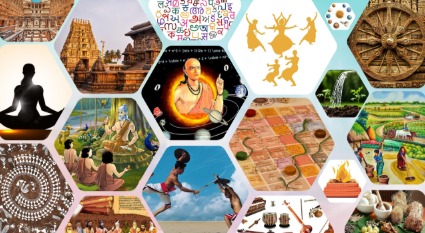
In a thought-provoking move to bridge India’s ancient wisdom with contemporary innovation, Nagpur recently hosted the “National Conference on Sanskrit and Science”, a unique event that united scholars, technologists, and researchers under one theme — the integration of ancient Indian knowledge systems with modern scientific frameworks.
This landmark conference aimed to demonstrate that Sanskrit is not just a classical language, but a repository of scientific ideas, from mathematics and astronomy to environmental studies and linguistics.
The Conference at a Glance
Organized at the Rashtriya Sanskrit Sansthan campus in Nagpur, the event saw participation from leading Sanskrit scholars, AI researchers, physicists, and historians of science. The sessions explored how Sanskrit texts contain principles that align closely with modern physics, mathematics, artificial intelligence, and cognitive science.
Speakers emphasized that Sanskrit, known for its precision and structured grammar, offers a logical foundation that can influence modern computational linguistics, natural language processing (NLP), and AI-based translation tools.
Why Sanskrit Matters in Modern Science
Sanskrit’s contribution to science extends beyond cultural heritage — it represents India’s intellectual legacy in codified knowledge.
Key highlights discussed include:
Panini’s Ashtadhyayi — a grammatical system often compared to modern algorithms due to its rule-based syntax.
Vedic Mathematics — principles aiding fast computation, now explored in digital education.
Ayurvedic & Environmental Texts — early documentation of sustainable practices and plant-based medicine.
According to experts, the relevance of Sanskrit to AI lies in its structured logic and semantic precision, which make it an ideal model for machine-readable linguistic structures.
Bridging Tradition and Technology
The Nagpur conference also unveiled collaborative projects between Indian Institutes of Technology (IITs), Sanskrit universities, and scientific institutions.
Ongoing research aims to:
Digitize ancient manuscripts using AI and OCR tools.
Develop AI models trained on Sanskrit datasets.
Explore quantum logic parallels in Indian philosophical texts.
Integrate Sanskrit-based linguistic logic into speech recognition systems.
The broader goal: to make India’s ancient scientific literature accessible to modern research and inspire innovation rooted in cultural context.
Expert Perspectives
Dr. Meera Vyas, a linguist at the event, highlighted that “Sanskrit’s grammar offers a clarity unmatched by any other language — it could become the framework for future programming languages.”
Meanwhile, Dr. Ramesh Iyer from IIT-Bombay added that the intersection of Sanskrit and computational science could redefine the way machines process meaning — moving beyond syntax to semantic depth, something the Sanskrit structure naturally supports.
Challenges and Future Outlook
While enthusiasm around Sanskrit’s scientific relevance is rising, experts cautioned about the need for rigorous validation and documentation. Translating Sanskrit texts for scientific use requires:
Interdisciplinary teams — combining linguists, technologists, and historians.
Standardized digital archives.
Funding for open-access Sanskrit data projects.
India’s National Education Policy (NEP 2020) and AI initiatives could help mainstream such efforts, making Sanskrit-based science education and innovation part of the next academic decade.
FAQ: Sanskrit and Science Conference
Q1. What was the aim of the Nagpur Sanskrit and Science Conference?
A: To explore the connections between Sanskrit knowledge systems and modern scientific and technological research.
Q2. Why is Sanskrit important for modern science?
A: Its structured grammar and logical framework make it relevant to fields like linguistics, AI, and data science.
Q3. What projects were discussed at the event?
A: AI-based manuscript digitization, Sanskrit NLP tools, and computational grammar systems.
Q4. How does Sanskrit relate to artificial intelligence?
A: Its rule-based syntax and semantic precision mirror AI’s computational models of understanding language.
Q5. What’s next for Sanskrit research in India?
A: Expansion into AI-driven translation, education tools, and integration into India’s innovation ecosystem.
Conclusion
The Nagpur Sanskrit and Science Conference symbolized a new intellectual synthesis — where ancient wisdom meets modern innovation. As India looks to balance technological advancement with cultural identity, Sanskrit’s scientific essence offers both inspiration and direction.
By merging the discipline of ancient logic with the curiosity of modern science, India may once again lead in knowledge systems that unite tradition with progress.
Published on : 9th October
Published by : SMITA
www.vizzve.com || www.vizzveservices.com
Follow us on social media: Facebook || Linkedin || Instagram
🛡 Powered by Vizzve Financial
RBI-Registered Loan Partner | 10 Lakh+ Customers | ₹600 Cr+ Disbursed
https://play.google.com/store/apps/details?id=com.vizzve_micro_seva&pcampaignid=web_share