

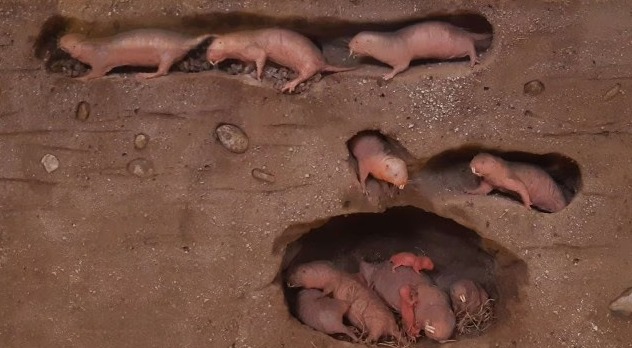
This Animal Can Dig a Tunnel Up to 15 Feet in an Hour
When it comes to digging, few creatures can match the speed and efficiency of the mole—a small, seemingly unassuming mammal that is nature's equivalent of a high-powered excavator. These expert burrowers can tunnel through soil at an astonishing rate, reaching up to 15 feet in just one hour.
Moles are specially adapted for life underground. Their powerful, paddle-like forelimbs, complete with large claws, are perfectly designed for shoveling through dirt. They also possess compact, cylindrical bodies and velvety fur that helps them move easily forward or backward through tight spaces.
But what drives this impressive digging behavior? Primarily, it's the hunt for food. Moles feed on earthworms, insects, and other small invertebrates found in the soil. Their extensive tunnel systems are not only shelters but also traps—many insects fall into these passageways, making them easy prey.
Interestingly, mole tunnels aren’t random. There are often two types: shallow surface tunnels, which appear as raised ridges in lawns and gardens, and deep permanent tunnels that serve as highways and nesting areas.
While moles are beneficial in aerating the soil and controlling insect populations, their presence is not always welcome—especially in well-manicured lawns and farmlands. The speed at which they dig means they can cause significant disruption in a short period of time.
So next time you see a bump in the lawn or a fresh mound of soil, consider this: it may be the work of one of the natural world’s most relentless—and efficient—diggers.
FAQ
1. Which animal can dig a tunnel up to 15 feet in an hour?
The mole is the animal known for its incredible digging abilities. It can tunnel through soil at speeds of up to 15 feet per hour.
2. How are moles able to dig so quickly?
Moles have strong, spade-like forelimbs and sharp claws designed for powerful and rapid digging. Their compact bodies and specialized muscles make them highly efficient underground movers.
3. What do moles eat?
Moles primarily eat earthworms, insects, and other soil-dwelling invertebrates. Their tunnels help them trap and hunt these prey items more easily.
4. Do mole tunnels damage lawns and gardens?
Yes, mole activity can disrupt the surface of lawns and gardens, causing raised ridges, holes, and damaged roots. However, they also help aerate the soil and control insect pests
.
5. Are moles blind?
Moles are not blind, but they have very poor eyesight. They rely more on touch and their acute sense of smell to navigate and hunt underground.
6. How deep do mole tunnels go?
Moles create both shallow surface tunnels and deep burrows. Surface tunnels are usually a few inches deep, while deeper tunnels can be several feet below ground.
7. Are moles solitary animals?
Yes, moles are highly territorial and solitary. Each mole maintains its own tunnel network and only comes into contact with others during mating season.
8. Do moles hibernate in winter?
Moles do not hibernate. They remain active year-round, digging deeper during colder months to follow their food sources.
9. Can moles be removed or controlled humanely?
Yes. Non-lethal methods like sonic repellents, traps, or castor oil-based deterrents can help discourage moles from staying in certain areas.
10. Are all mole species the same?
There are several species of moles worldwide, with variations in size, habitat, and behavior. However, all share similar digging capabilities and diets.
Publish on may 16,2025 by :selvi