

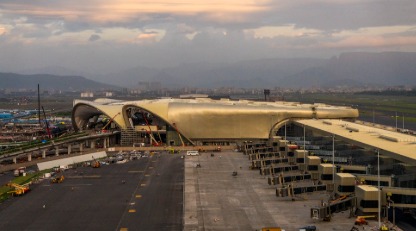
Prime Minister Narendra Modi recently inaugurated the Navi Mumbai International Airport (NMIA), a $2 billion infrastructure project designed in the shape of a lotus, symbolizing India’s cultural heritage. Developed primarily by the Adani Group, the airport is poised to become a major hub for domestic and international air travel, easing congestion at Mumbai’s Chhatrapati Shivaji Maharaj International Airport and boosting India’s aviation capacity.
Key Features of Navi Mumbai International Airport
Architectural Marvel
The terminal is inspired by the lotus flower, combining aesthetic elegance with modern functionality.
State-of-the-art passenger handling facilities, lounges, and retail spaces enhance the travel experience.
Capacity & Operations
NMIA can handle 60 million passengers annually in its first phase, with scope for expansion.
Equipped with multiple runways and advanced air traffic control systems to ensure smooth operations.
Sustainability Initiatives
Designed with green building standards, solar power integration, and water recycling systems.
Emphasis on eco-friendly construction and minimal carbon footprint.
Economic Boost
The airport is expected to generate thousands of direct and indirect jobs.
Boosts regional commerce, tourism, and global connectivity for Mumbai and Maharashtra.
Impact on Aviation & Economy
Relieving Mumbai Airport Congestion: With Navi Mumbai handling a large share of air traffic, delays at the existing Mumbai airport are expected to decrease.
Foreign Investments & Trade: Improved connectivity enhances opportunities for international business and logistics.
Tourism Growth: With modern infrastructure, the airport becomes a gateway for tourists visiting Maharashtra and India.
Infrastructure Development: Surrounding areas will benefit from better roads, transport facilities, and commercial hubs.
Adani Group’s Role
The Adani Group spearheaded the development, managing construction, airport operations, and terminal management. Leveraging experience from existing Adani-operated airports in India, NMIA benefits from international-standard infrastructure, modern technology, and operational expertise.
Prime Minister’s Address
During the inauguration, PM Modi emphasized:
The airport as a symbol of India’s growth and modern infrastructure capability.
Encouragement for public-private collaboration to accelerate nation-building projects.
NMIA’s role in enhancing India’s global connectivity and economic development.
FAQ: Navi Mumbai International Airport
Q1. When was NMIA inaugurated?
A: The airport was inaugurated in October 2025 by Prime Minister Narendra Modi.
Q2. Who developed the airport?
A: The project was largely developed by the Adani Group, including construction, terminal management, and operations.
Q3. What is the airport’s passenger capacity?
A: The first phase can handle approximately 60 million passengers annually, with potential expansion in future phases.
Q4. How will this airport affect Mumbai’s existing airport?
A: It will reduce congestion at Chhatrapati Shivaji Maharaj International Airport, ensuring smoother travel and operations.
Q5. What makes NMIA unique?
A: Its lotus-shaped design, eco-friendly infrastructure, and modern facilities make it both aesthetic and functional.
Conclusion
The inauguration of Navi Mumbai International Airport marks a milestone in India’s aviation sector. Combining architectural elegance, sustainability, and high capacity, NMIA not only strengthens Mumbai’s connectivity but also signals India’s ambition to become a global aviation hub.
With state-of-the-art infrastructure and a strategic location, NMIA is set to redefine air travel in India while boosting the economy, tourism, and international business.
Published on : 9th October
Published by : SMITA
www.vizzve.com || www.vizzveservices.com
Follow us on social media: Facebook || Linkedin || Instagram
🛡 Powered by Vizzve Financial
RBI-Registered Loan Partner | 10 Lakh+ Customers | ₹600 Cr+ Disbursed
https://play.google.com/store/apps/details?id=com.vizzve_micro_seva&pcampaignid=web_share