

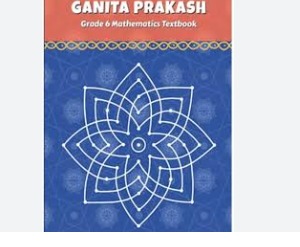
The National Council of Educational Research and Training (NCERT) has introduced a refreshing approach to teaching mathematics with its Class 7 textbook, ‘Ganita Prakash’, which integrates the rich mathematical heritage of ancient India.
This new textbook aims not only to teach mathematical concepts but also to inspire students by connecting lessons with the contributions of India’s early mathematicians, showing how their discoveries continue to shape modern mathematics.
A Blend of Heritage and Modern Learning
‘Ganita Prakash’ adopts a context-based, problem-solving approach that helps students understand mathematics as a living subject rather than a set of formulas.
Throughout the chapters, the book introduces mathematical ideas with examples inspired by ancient Indian scholars and their methods.
From the concept of zero to place-value systems, the textbook highlights how Indian mathematicians laid the foundation for ideas that later influenced the world.
Contributions of Ancient Indian Mathematicians
The textbook draws inspiration from India’s mathematical pioneers and their timeless discoveries, including:
The Concept of Zero:
Pioneered in ancient India, zero revolutionized mathematics and became the cornerstone of modern number systems.
The Decimal System:
The place-value notation, first developed in India, forms the base of arithmetic operations and global mathematics.
Geometry and Patterns:
Indian mathematicians made early advancements in geometric reasoning, measurement, and symmetry—many of which are simplified in student-friendly activities.
Algebraic Thinking:
Ideas resembling modern algebra appeared in ancient Indian texts, and the book incorporates them through puzzles and problem-based learning.
Mathematical Reasoning and Logic:
Ancient texts emphasized systematic reasoning and proofs, encouraging students to think critically and apply logic in real-world situations.
Learning Through India’s Mathematical Roots
The inclusion of these contributions in ‘Ganita Prakash’ serves more than a historical purpose. It helps students:
Appreciate India’s scientific and cultural heritage
Understand how mathematics evolved globally
See real-life applications of mathematics in art, architecture, and nature
Develop curiosity and confidence in problem-solving
By connecting ancient concepts with modern examples, the textbook bridges the gap between tradition and innovation.
Educational Significance
The approach taken in ‘Ganita Prakash’ represents a shift in how mathematics is taught in Indian schools. Instead of viewing the subject as abstract, students experience it as an evolving field enriched by centuries of human thought.
This encourages conceptual clarity, historical awareness, and national pride, all while maintaining academic rigor.
Final Thoughts
The NCERT Class 7 ‘Ganita Prakash’ textbook is more than a math book—it’s a tribute to India’s deep-rooted contributions to global knowledge.
By highlighting the works of ancient Indian mathematicians in an engaging and accessible way, it nurtures not just numerical skills but also a sense of identity, curiosity, and appreciation for India’s intellectual heritage.
Mathematics, as the book beautifully conveys, is not just about numbers—it’s about understanding how human minds across ages have shaped the way we think, calculate, and explore.
FAQs
Q1. What is the focus of the Class 7 ‘Ganita Prakash’ textbook?
It focuses on teaching mathematics through real-life applications and India’s ancient mathematical heritage.
Q2. Which ancient Indian contributions are discussed in the book?
Concepts like zero, the decimal system, patterns, geometry, and logical reasoning are emphasized.
Q3. Why has NCERT included ancient Indian mathematicians in the curriculum?
To help students connect modern mathematical ideas with India’s historical innovations and develop cultural awareness.
Q4. How does this new approach benefit students?
It makes learning more engaging, practical, and connected to India’s scientific traditions.
Published on : 7th November
Published by : SMITA
www.vizzve.com || www.vizzveservices.com
Follow us on social media: Facebook || Linkedin || Instagram
🛡 Powered by Vizzve Financial
RBI-Registered Loan Partner | 10 Lakh+ Customers | ₹600 Cr+ Disbursed