

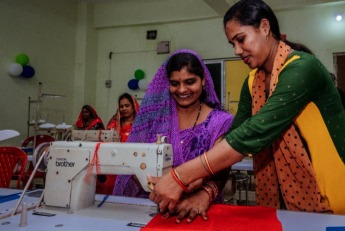
As India’s political landscape heats up ahead of the 2026 elections, women-centric welfare schemes have become a key campaign focus. Both the ruling NDA and the INDIA opposition alliance have unveiled flagship initiatives aimed at women’s employment and financial independence — the Mahila Rozgar Yojana and the Mai-Behin Scheme, respectively.
Here’s a closer look at what each promises, how they differ, and which may have the greater real-world impact.
🔹 NDA’s Mahila Rozgar Yojana: Focus on Work and Wages
The Mahila Rozgar Yojana (MRY), proposed under the NDA government’s women empowerment framework, focuses on creating wage-based and self-employment opportunities in both rural and semi-urban areas.
Key Highlights:
Targeted at low-income and rural women seeking part-time or full-time work.
Promotes micro-enterprise development, especially through SHGs (Self-Help Groups).
Offers skill training, subsidies, and linkages with Mudra loans and PM Vishwakarma Yojana.
Expected to generate 25–30 lakh women-led livelihood opportunities in the first phase.
The NDA positions this as a continuation of its “Women-led Development” model — integrating employment with entrepreneurship, digital literacy, and access to microcredit.
🔹 INDIA Bloc’s Mai-Behin Scheme: Focus on Income and Dignity
The opposition’s Mai-Behin Scheme, unveiled as a counter to the NDA’s initiatives, takes a direct welfare approach. It aims to provide a fixed monthly income support to women, especially homemakers and informal sector workers.
Key Highlights:
Promises monthly financial assistance (estimated ₹1,000–₹1,500) to women from low-income households.
Prioritizes domestic workers, daily wage earners, and widows.
Envisions state-level implementation under a common national framework.
Focus on economic security rather than employment creation.
The INDIA bloc describes it as a “Mai-Behin Guarantee” — aimed at restoring dignity and ensuring financial control for women within households.
🔹 Scheme Comparison Table
| Feature | Mahila Rozgar Yojana (NDA) | Mai-Behin Scheme (INDIA) |
|---|---|---|
| Core Focus | Employment generation & skill-building | Direct income support |
| Type | Work-based | Welfare-based |
| Beneficiaries | Rural & semi-urban women workers | Low-income, unemployed, or homemaker women |
| Support Form | Training + loans + subsidies | Monthly cash transfer |
| Implementation | Central + State (via SHGs & NGOs) | Mostly State-driven (cash disbursal) |
| Goal | Sustainable livelihoods | Income security |
🔹 Expert Take
Economists note that both schemes appeal to different needs within India’s diverse female workforce.
“Employment-oriented schemes like Mahila Rozgar Yojana aim for long-term empowerment, while cash-based models like Mai-Behin offer immediate relief,” says one policy analyst.
The ideal strategy, experts suggest, could involve a hybrid model — offering short-term income support while investing in skills and enterprise development for sustainable impact.
🔹 What Women’s Groups Are Saying
Women’s organizations have welcomed the attention to female employment but emphasized implementation gaps in past initiatives.
Many point out that funding clarity, eligibility transparency, and local-level monitoring will determine whether these promises truly transform lives.
🔹 The Bigger Picture
As both alliances pitch their visions, it’s clear that women’s empowerment has moved to the center of India’s political and economic narrative.
Whether through job creation or income assurance, the ultimate test will be reach, reliability, and real outcomes on the ground.
FAQs
1. What is the Mahila Rozgar Yojana?
A government scheme focused on creating job and enterprise opportunities for women, especially in rural India.
2. What is the Mai-Behin Scheme?
A welfare initiative proposed by the INDIA alliance offering direct monthly income support to women from poor households.
3. Which scheme gives more financial benefit?
The Mai-Behin Scheme offers immediate cash, while the Mahila Rozgar Yojana provides long-term income through employment.
4. Are these schemes officially launched?
The Mahila Rozgar Yojana has been proposed under the NDA’s 2025 policy roadmap, while the Mai-Behin Scheme is part of the INDIA bloc’s pre-election agenda.
5. Which scheme empowers women more effectively?
Employment-driven programs tend to create sustainable empowerment, but income schemes provide faster relief — both serve complementary roles.
Published on : 30th October
Published by : SMITA
www.vizzve.com || www.vizzveservices.com
Follow us on social media: Facebook || Linkedin || Instagram
🛡 Powered by Vizzve Financial
RBI-Registered Loan Partner | 10 Lakh+ Customers | ₹600 Cr+ Disbursed
https://play.google.com/store/apps/details?id=com.vizzve_micro_seva&pcampaignid=web_share