

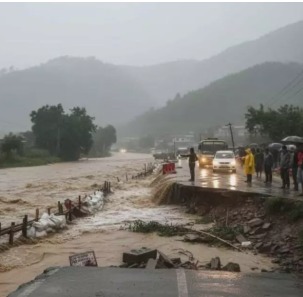
Nepal is grappling with a major natural disaster as landslides and floods triggered by heavy monsoon rains have claimed 51 lives across the country. The worst-hit areas include hilly districts prone to landslides and low-lying regions facing river flooding.
In Kathmandu, authorities have suspended vehicle movement in several zones due to waterlogging and damaged roads, further complicating rescue and relief operations. Emergency teams are working tirelessly to evacuate stranded residents and provide immediate assistance.
Monsoon Rains Trigger Devastation
Nepal has been experiencing above-average monsoon rainfall, leading to rivers overflowing and slopes collapsing. Meteorologists warn that continued rainfall may trigger more landslides and flash floods, posing further risks to lives and property.
Authorities have issued flood warnings for major rivers, urging residents in vulnerable areas to stay alert and follow evacuation orders.
Casualties and Damage
Fatalities: At least 51 people confirmed dead due to landslides and flooding.
Infrastructure: Roads, bridges, and communication networks have been severely damaged.
Displacement: Thousands of residents have been forced to leave their homes, with relief shelters set up in safer locations.
Officials are still assessing the full extent of the damage as emergency operations continue.
Impact on Kathmandu and Transportation
The capital city, Kathmandu, has witnessed severe waterlogging in multiple districts, forcing authorities to:
Halt vehicle movement in affected areas.
Monitor river levels and drainage systems.
Coordinate with traffic police to ensure public safety.
Residents are advised to avoid non-essential travel and follow government alerts for updates on safe routes.
Government and Relief Efforts
The Nepalese government, in collaboration with the Nepal Army and local authorities, has:
Deployed rescue teams to landslide-hit areas.
Set up emergency shelters for displaced residents.
Issued warnings and advisories through media and social platforms.
Efforts are focused on saving lives, restoring connectivity, and providing food, water, and medical aid to affected communities.
Climate and Safety Considerations
Experts highlight that climate change is intensifying monsoon patterns, making floods and landslides more frequent and severe. Citizens are encouraged to:
Stay informed about weather forecasts.
Avoid risky areas near rivers and slopes.
Follow official evacuation orders promptly.
Keep emergency supplies ready, including food, water, and medicines.
Frequently Asked Questions (FAQ)
1. How many people have died due to the floods and landslides in Nepal?
At least 51 people have lost their lives across various districts.
2. Why is Kathmandu vehicle movement on hold?
Heavy rainfall has caused waterlogging and road damage, making vehicle movement unsafe in several parts of the city.
3. What areas in Nepal are most affected?
Hilly districts prone to landslides and low-lying floodplains are the worst affected.
4. How is the government responding?
Rescue teams have been deployed, emergency shelters opened, and advisories issued for safe evacuation.
5. How can residents stay safe during this monsoon?
Avoid risky areas, follow official alerts, have emergency supplies ready, and move to higher ground if necessary.
Published on : 6th October
Published by : SMITA
www.vizzve.com || www.vizzveservices.com
Follow us on social media: Facebook || Linkedin || Instagram
🛡 Powered by Vizzve Financial
RBI-Registered Loan Partner | 10 Lakh+ Customers | ₹600 Cr+ Disbursed
https://play.google.com/store/apps/details?id=com.vizzve_micro_seva&pcampaignid=web_share