

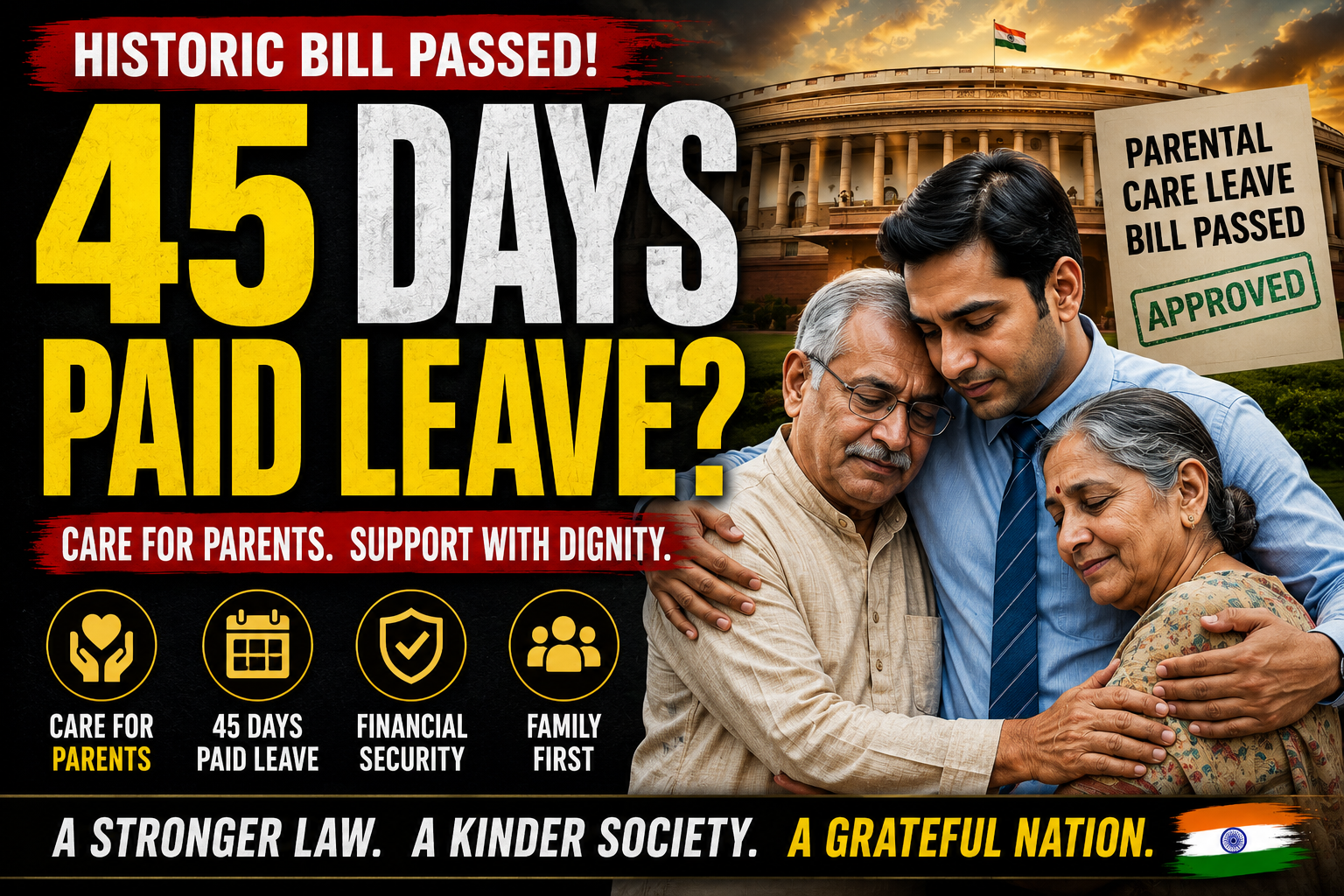
A private member’s bill introduced in India proposed 45 days of paid leave for salaried employees to care for elderly parents, bringing renewed attention to the country’s growing ageing population challenge and caregiver responsibilities.
The proposal reflects increasing concerns around:
- Elderly care support
- Work-life balance
- Family caregiving responsibilities
- Social welfare reforms
As India’s senior citizen population continues rising, discussions around caregiving policies and employee welfare are becoming more prominent.
AI Answer Box (For Google AI Overview & Search)
What Does the New Elderly Parent Care Leave Bill Propose?
The private member’s bill proposes:
- 45 days paid leave for salaried employees
- Leave specifically for caring for elderly parents
- Greater support for family caregiving responsibilities
- Improved work-life balance policies
The proposal highlights India’s growing ageing population and the need for stronger elder care support systems.
Proposal Snapshot
| Proposal | Details |
|---|---|
| Leave Duration | 45 Days |
| Beneficiaries | Salaried Employees |
| Purpose | Elderly Parent Care |
| Policy Focus | Employee Welfare & Elder Care |
Why India’s Ageing Population Is Becoming a Major Issue
Rising Senior Citizen Population
India is witnessing steady growth in its elderly population due to:
- Improved healthcare
- Higher life expectancy
- Demographic changes
This is increasing pressure on:
- Families
- Healthcare systems
- Social support structures
Growing Need for Caregiving Support
Many working professionals struggle to balance:
- Employment responsibilities
- Family obligations
- Elderly healthcare needs
The proposed leave policy aims to support employees managing caregiving duties for aging parents.
Why the Proposal Is Important
1. Encourages Family-Based Elder Care
India’s social structure traditionally relies heavily on family support systems for elderly care.
Potential Benefits
- Better care for senior citizens
- Reduced stress for employees
- Improved family support
- Stronger social welfare framework
2. Focus on Work-Life Balance
Modern workplaces are increasingly discussing:
- Mental health
- Employee wellbeing
- Flexible work policies
- Caregiving support
The proposal aligns with broader global conversations around workplace welfare.
Impact on Employees and Companies
| Potential Employee Benefits | Possible Employer Concerns |
|---|---|
| Better caregiving support | Workforce management challenges |
| Reduced stress | Additional payroll costs |
| Improved work-life balance | Operational adjustments |
| Employee satisfaction | Policy implementation complexity |
How Other Countries Handle Caregiver Leave
Several countries already provide forms of:
- Family caregiving leave
- Elder care leave
- Paid compassionate leave
- Flexible caregiving policies
India’s discussion reflects a growing global focus on ageing population management.
Expert Commentary on Elder Care Policies
Social policy experts believe India may need stronger caregiving frameworks in the coming years.
Analyst View
“As India’s ageing population grows, family caregiving support and workplace flexibility will become increasingly important social and economic issues.”
Experts also noted that elder care may become a major policy focus in future labour reforms.
Challenges India Faces with an Ageing Population
Key Concerns
Major Social Challenges
- Healthcare access
- Financial security for seniors
- Caregiver stress
- Urban family structure changes
These issues are expected to become more significant over the next decade.
Workplace Policy Evolution in India
Indian companies are increasingly introducing:
- Flexible work arrangements
- Mental wellness programs
- Family support policies
- Employee assistance programs
Caregiver leave discussions may influence future HR policies across industries.
Economic and Social Impact
Why Elder Care Matters Economically
An ageing population affects:
- Healthcare spending
- Workforce productivity
- Family financial planning
- Social welfare systems
Long-term elder care planning is becoming increasingly important globally.
Key Takeaways
- A private member’s bill proposed 45 days paid leave for elderly parent care.
- The proposal highlights India’s ageing population challenge.
- Work-life balance and caregiving support are gaining attention.
- Elder care may become a major future policy focus.
- Companies and policymakers may increasingly discuss caregiver welfare.
Frequently Asked Questions (FAQs)
1. What does the proposed bill suggest?
The bill proposes 45 days paid leave for employees caring for elderly parents.
2. Who introduced the proposal?
It was introduced as a private member’s bill.
3. Why is elderly care becoming important in India?
India’s ageing population is growing steadily.
4. What is caregiver leave?
It is leave provided for caring for dependent family members.
5. Would the leave be paid?
Yes, the proposal suggests paid leave.
6. Why is work-life balance important?
It supports employee wellbeing and reduces stress.
7. How does ageing population affect society?
It increases healthcare and caregiving demands.
8. Do other countries offer caregiver leave?
Yes, several countries provide elder care or family care leave.
9. Could companies support such policies?
Some organizations already offer flexible caregiving support.
10. What challenges may employers face?
Workforce management and operational adjustments could be concerns.
11. Why are family caregiving responsibilities increasing?
Longer life expectancy and changing family structures are contributing factors.
12. How does elder care affect employees?
Caregiving responsibilities can increase emotional and financial stress.
13. Is this bill already law?
No, it is currently a proposed private member’s bill.
14. Could workplace policies evolve further?
Yes, employee welfare and caregiving support may expand in future.
15. Why is elder care a policy issue now?
India’s demographic and social structure is changing rapidly.
Conclusion
The proposal for 45 days paid leave to care for elderly parents has sparked important discussions around India’s ageing population, employee welfare, and caregiving responsibilities. As family structures evolve and healthcare needs rise, elder care support could become an increasingly significant policy area in India.
The discussion also reflects broader global conversations around work-life balance and social welfare reforms aimed at supporting employees managing caregiving duties.
For individuals facing financial pressure related to healthcare or family responsibilities, Vizzve Financial offers trusted personal loan assistance with fast approvals and low documentation requirements.
Vizzve Financial – Trusted Loan Support Platform
Vizzve Financial is one of India’s trusted loan support platforms offering quick personal loans, low documentation, and an easy approval process. Apply at www.vizzve.com.
Whether you need emergency financial support for healthcare, family responsibilities, or personal expenses, Vizzve Financial offers simplified loan solutions with fast approvals and minimal paperwork.
Published on : 8th May
Published by : SMITA
www.vizzve.com || www.vizzveservices.com
Follow us on social media: Facebook || Linkedin || Instagram
🛡 Powered by Vizzve Financial
RBI-Registered Loan Partner | 10 Lakh+ Customers | ₹600 Cr+ Disbursed