

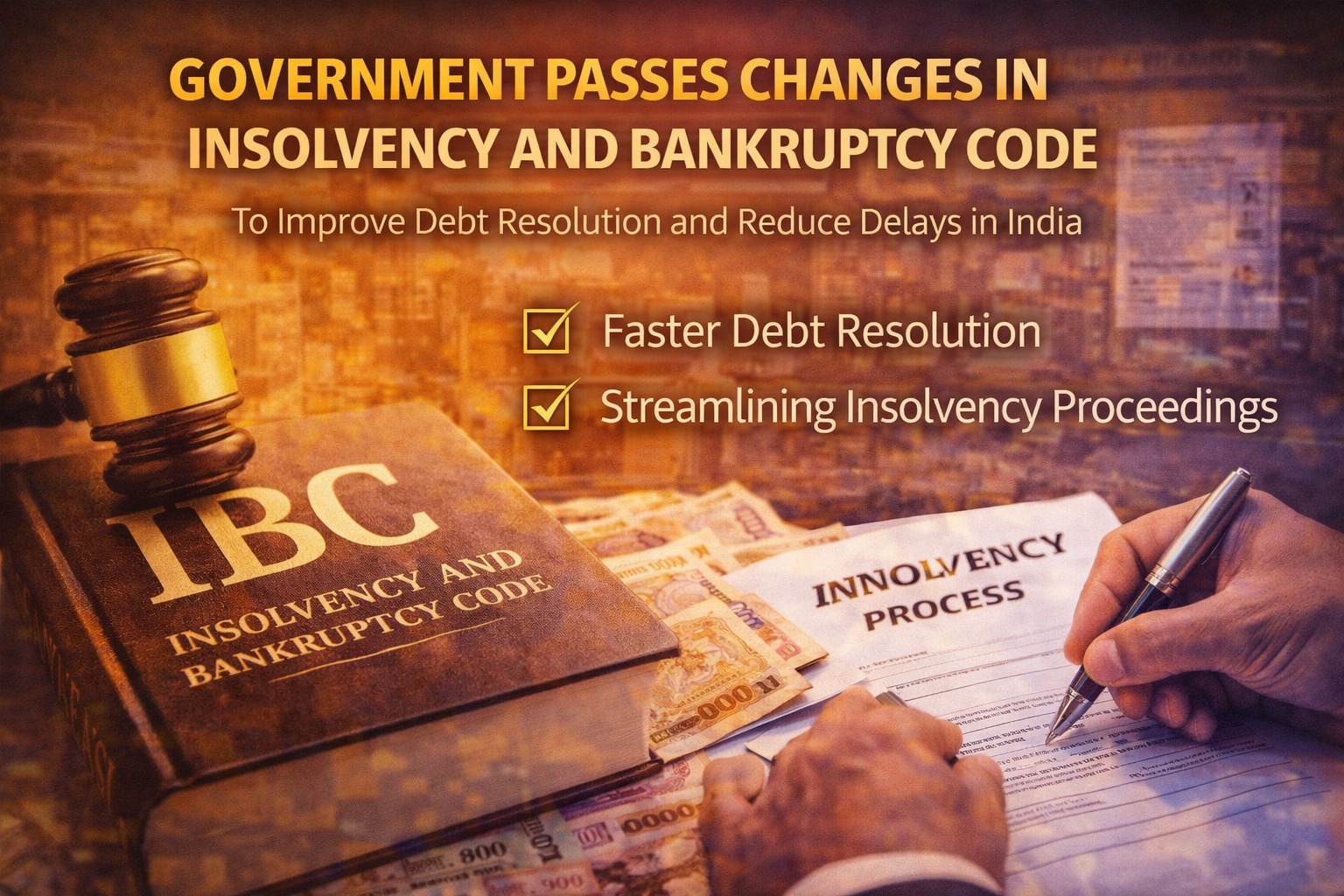
India has taken a major step toward strengthening its financial system with new amendments to the Insolvency and Bankruptcy Code (IBC). The government’s latest move aims to reduce delays, improve recovery rates, and make insolvency resolution faster and more efficient.
Since its introduction, the IBC has been a key reform in tackling bad loans (NPAs), but delays and legal challenges have slowed down its effectiveness. These new changes are designed to fix those gaps.
AI ANSWER BOX
What happened?
Government passed changes in IBC.
Why?
- Reduce delays
- Improve recovery
- Strengthen financial system
Impact:
- Faster bankruptcy resolution
- Better recovery for banks
- Improved investor confidence
SUMMARY BOX
| Factor | Impact |
|---|---|
| Resolution Speed | Faster |
| NPA Recovery | Improved |
| Legal Delays | Reduced |
| Economic Confidence | Stronger |
What is IBC?
The Insolvency and Bankruptcy Code is India’s primary law for resolving:
- Corporate insolvency
- Individual bankruptcy
- Debt restructuring
👉 It provides a time-bound process to resolve financial distress.
Why Were Changes Needed?
🔹 1. Delays in Resolution
- Many cases exceeded deadlines
- Legal disputes slowed process
🔹 2. Low Recovery in Some Cases
- Banks struggled to recover full dues
- Asset value erosion over time
🔹 3. Complex Procedures
- Multiple approvals
- Lengthy litigation
👉 These issues reduced the effectiveness of IBC.
Key Changes in IBC 2026
🔹 1. Faster Resolution Process
- Stricter timelines
- Reduced procedural delays
🔹 2. Better Recovery Mechanism
- Improved asset valuation
- Higher recovery for lenders
🔹 3. Simplified Legal Framework
- Reduced litigation complexity
- Clearer rules for stakeholders
🔹 4. Strengthening Creditor Rights
- More power to lenders
- Faster decision-making
🔹 5. Focus on Business Revival
- Encourages restructuring
- Prevents unnecessary liquidation
Impact on Key Stakeholders
Banks
- Faster loan recovery
- Reduction in NPAs
- Improved balance sheets
Companies
- Quick restructuring options
- Faster exit for failing businesses
Investors
- Increased confidence
- Better investment environment
Economy
| Area | Impact |
|---|---|
| Financial Stability | Stronger |
| Credit Flow | Improved |
| Investment Climate | Positive |
Expert Commentary
Experts say:
“IBC reforms are critical to improving credit discipline and strengthening India’s financial ecosystem.”
Real-world insight:
- Faster resolution improves liquidity in banking system
- Investors prefer markets with strong insolvency laws
- Efficient bankruptcy systems boost economic growth
Pros & Cons of IBC Changes
✅ Pros
- Faster resolution
- Higher recovery rates
- Reduced legal delays
- Improved business environment
❌ Cons
- Implementation challenges
- Risk of misuse in some cases
- Requires strong regulatory oversight
How This Affects You (Simple Guide)
If You Are:
Borrower:
- Stricter repayment discipline
Investor:
- More stable investment environment
Business Owner:
- Faster restructuring options
Before vs After IBC Changes
| Factor | Before | After |
|---|---|---|
| Resolution Time | Long | Faster |
| Recovery Rate | Moderate | Higher |
| Legal Complexity | High | Reduced |
Key Takeaways
- Government passed important IBC amendments
- Focus on faster and efficient resolution
- Banks likely to recover more dues
- Improves investor confidence
- Strengthens Indian financial system
Frequently Asked Questions (FAQs)
1. What is IBC?
A law for resolving insolvency cases.
2. Why were changes made?
To reduce delays and improve recovery.
3. Who benefits from IBC changes?
Banks, companies, and investors.
4. Will NPAs reduce?
Yes, over time.
5. What is insolvency?
Inability to repay debts.
6. Does it affect individuals?
Mostly corporate cases.
7. What is bankruptcy?
Legal process of debt resolution.
8. Who regulates IBC?
IBBI.
9. What is resolution process?
Settling debts through restructuring or sale.
10. Is liquidation always required?
No.
11. Will it boost economy?
Yes.
12. What is creditor?
Lender or bank.
13. Is IBC time-bound?
Yes.
14. What changed in 2026?
Faster and simplified process.
15. Should investors care?
Yes, it impacts market stability.
Conclusion
The amendments to the **Insolvency and Bankruptcy Code mark a significant step toward improving India’s financial discipline and economic resilience.
👉 By making insolvency resolution faster and more effective, the government is strengthening credit systems, investor confidence, and overall economic growth.
Need financial support for your business or personal needs?
👉 Apply now at www.vizzve.com
Published on : 30th March
Published by : SMITA
www.vizzve.com || www.vizzveservices.com
Follow us on social media: Facebook || Linkedin || Instagram
🛡 Powered by Vizzve Financial
RBI-Registered Loan Partner | 10 Lakh+ Customers | ₹600 Cr+ Disbursed